
Drilling companies want to explore for hydrogen in Minnesota’s Iron Range

A federal report found that Minnesota could be home to large reserves of hydrogen, a carbon-free fuel.

The Minnesota Star Tribune
October 29, 2025 at 10:41PM
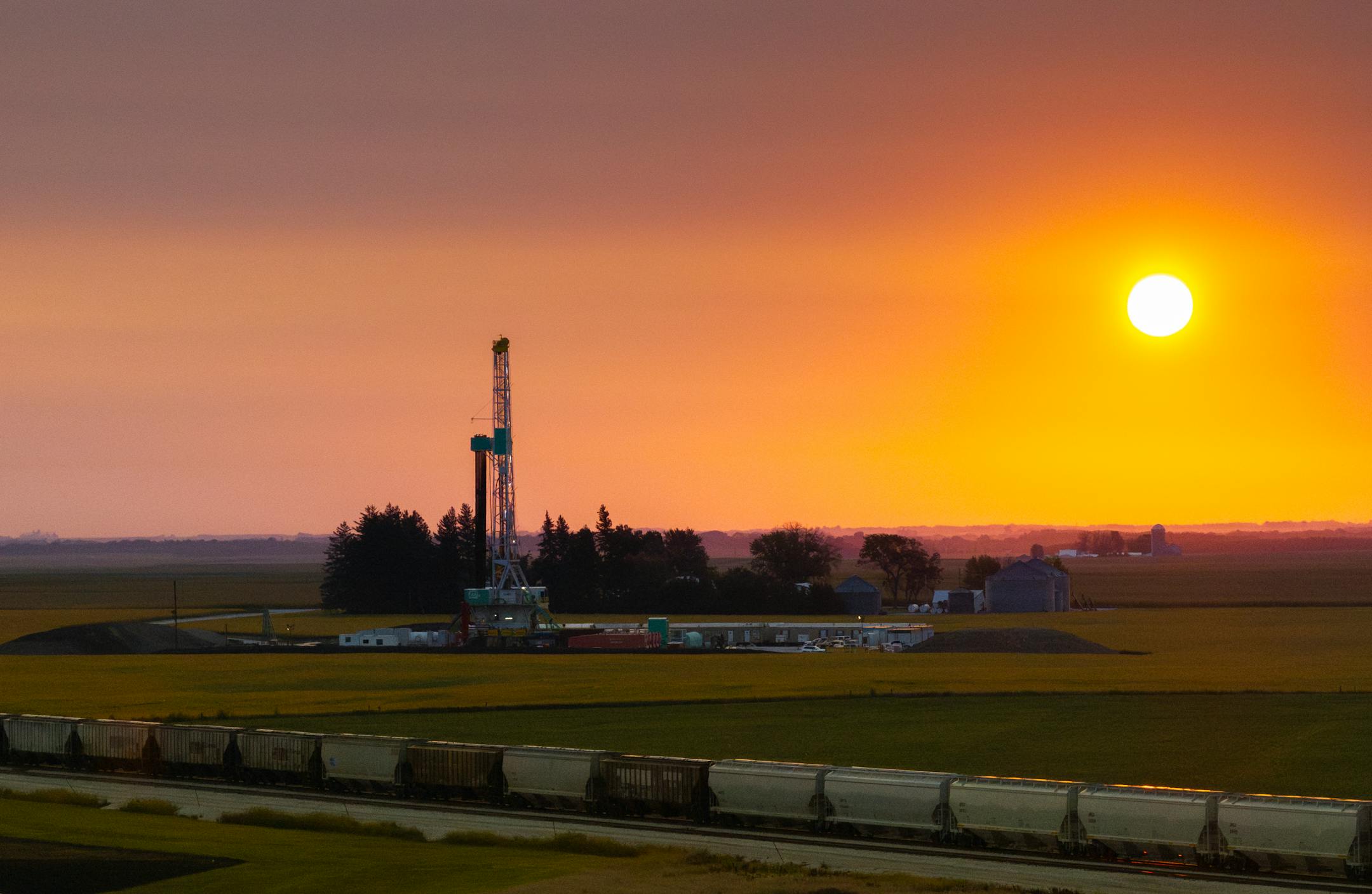
A view of Koloma's hydrogen well in Iowa in 2022. The company is pursuing permits and mineral rights to search for deposits of the clean-burning gas in Minnesota. (Courtesy of Koloma) (Steve Rasmussen)

Minnesota could soon find itself at the center of a burgeoning clean energy industry — and it’s not solar, wind or hydropower.

Hydrogen gas burns without producing carbon dioxide, unlike fossil fuels. Minnesota could be sitting on large reserves of hydrogen that formed over hundreds of millions of years, according to a federal report released earlier this year.

That report has drawn the attention of three hydrogen prospecting companies, which in recent months have purchased mineral rights and applied for permits to explore for the gas. If they discover major hydrogen deposits, they say it could make Minnesota a player in an emerging industry aimed at reducing the carbon emissions of heavy industries.

“We’re talking about directly powering data centers … also sustainable aviation fuel. We’re talking long-haul shipping and trucking. So, it’s really like this Swiss-Army-knife resource that can clean up multiple large sectors that are hard to clean up,” said Kristen Delano, an executive for Koloma, a hydrogen exploration company based out of Colorado.

Delano said her company hopes to begin initial surveys by the end of the year.

“We’re raring and ready to go,” she said.

Canada-based Pulsar Helium, as well as Orvian Natural Resources, which is jointly owned by two international companies based in Canada and Switzerland, are also in talks with Minnesota officials.

Extracting hydrogen gas from the earth could make it economically viable as a fuel, as producing the gas artificially is labor intensive and expensive. Some 10 million metric tons of hydrogen is produced annually in the United States, largely as a byproduct of petroleum refining. It’s then typically sold to manufacture ammonia for fertilizers.

In recent years, Democrats have hoped to spur innovations in domestic hydrogen production. The Biden administration earmarked billions of dollars to fund hydrogen production hubs, including one that would span much of the Midwest. The Inflation Reduction Act established a hydrogen production tax credit, though that credit will phase out early in 2028 instead of 2033 thanks to a law signed this year by President Donald Trump.

In Minnesota, CenterPoint Energy launched a pilot project in 2022 to study the feasibility of producing hydrogen gas with renewable energy. Currently, CenterPoint is mixing the hydrogen produced by that project into their natural gas, which they say has helped reduce its annual carbon emissions by up to 1,200 tons.

Some environmentalists have expressed concerns over hydrogen drilling, worried it could have environmental risks similar to fracking. State officials and hydrogen companies, however, say the process is different from fracking and should have a smaller environmental footprint.

So far, hydrogen companies have obtained mineral rights for areas in Minnesota’s Iron Range, saying the geological makeup there looks promising. The federal report found a high probability that hydrogen formed along the midcontinent rift, which travels diagonally across the Midwest from Kansas to Duluth.

Mike Liljegren, assistant director of the Minnesota Department of Natural Resources’ lands and minerals division, said companies can start exploring for hydrogen but will have to wait to extract it until after new rules are written for the industry.

Unlike oil- and gas-producing states, Minnesota doesn’t have regulations for gas extraction, but state officials are now working quickly to establish that framework after drillers accidentally discovered a deposit of helium — another valuable gas — last year. The new rules, Liljegren said, would apply to both helium and hydrogen.

One of the biggest questions state regulators must answer is how to determine the mineral rights on adjacent properties. Unlike solid minerals, like iron or quartz, gas moves underground, so understanding exactly where the gas is coming from can be tricky, Liljegren said.

“If you own 40 acres of mineral rights, that goes straight down. It’s like you own those mineral rights down to the core of the earth,” Liljegren said. “For gas … it’s coming from all over. It’s not staying within that little 40-acre piece of land.”

State officials expect to release a draft of the new rules next May, with hopes to release a final version at the end of 2026 or early 2027.

Correction: A previous version of this story misspelled the first name of Kristen Delano.
about the writer

about the writer

Kristoffer Tigue

Reporter

Kristoffer Tigue is a reporter for the Minnesota Star Tribune.

See Moreicon

More from Environment

See More
card image
Voyageurs Wolf Project

A decade after scientists found “no resident lynx” in the park, a feline family passing by a trail camera gives hope.

Rising above the treeline (Top of this photo), on the shore of Birch Lake, the Twin Metals Copper Nickel Mine Plant site and Tailings Management site is part of the proposed plan. ] In theory, the copper-nickel mine Twin Metals wants to build in the headwaters of the Boundary Waters Canoe Area Wilderness is a zero-discharge mine -- a closed loop that will endlessly recycle millions of gallons of water, including rainwater and the polluted process water it uses to extract ore and
card image