

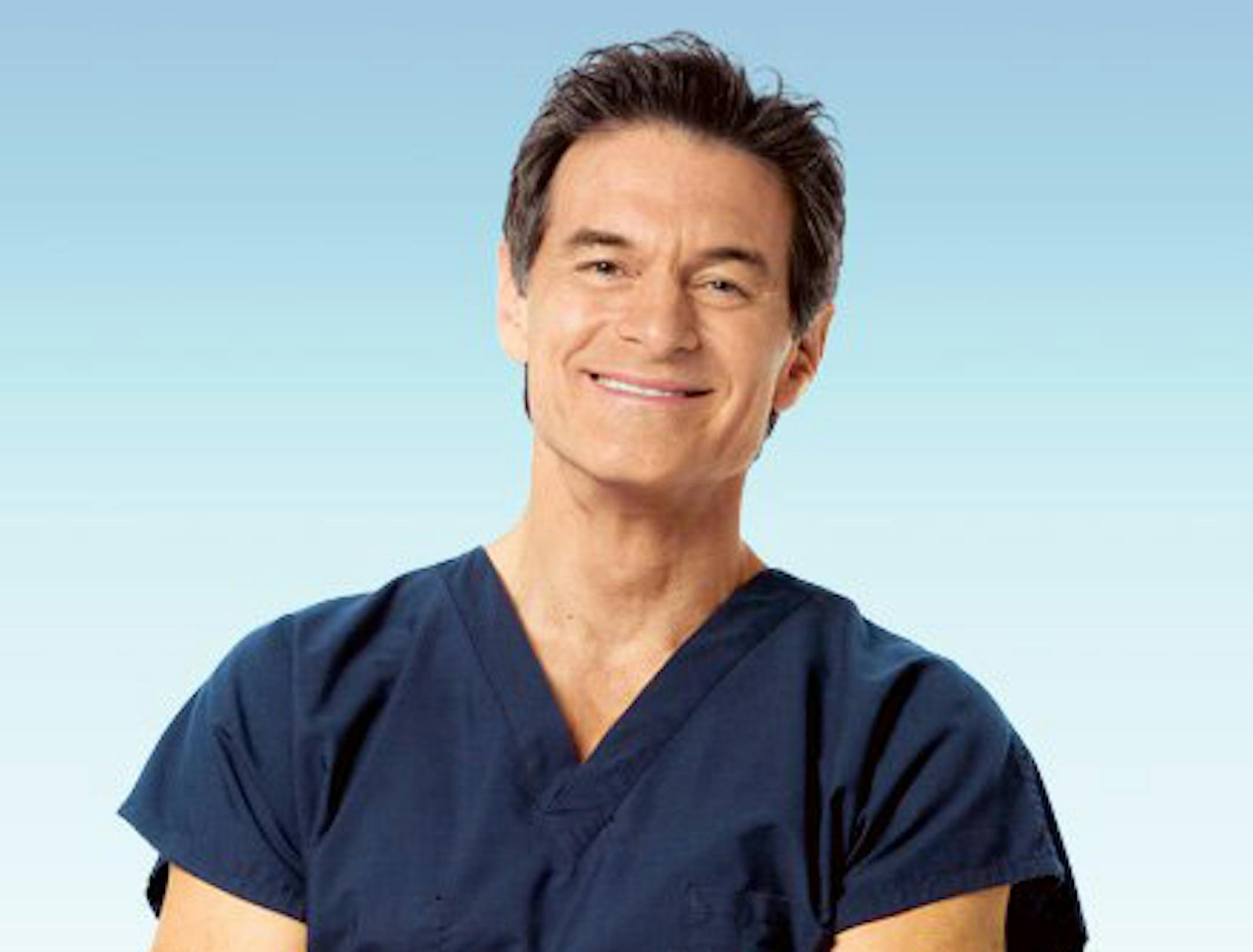
As people were getting ready for the holiday season and its accompanying waist expansion late last year, Dr. Mehmet Oz let viewers of his TV show in on a timely little secret. "Everybody wants to know what's the newest, fastest fat buster," said the board-certified cardiothoracic surgeon and one of People magazine's sexiest men alive. "How can I burn fat without spending every waking moment exercising and dieting?"
He then told his audience about a "breakthrough," "magic," "holy grail," even "revolutionary" new fat buster. "I want you to write it down," America's doctor urged his audience with a serious and trustworthy stare. After carefully wrapping his lips around the exotic words "Garcinia cambogia," he added, sternly: "It may be the simple solution you've been looking for to bust your body fat for good."
In Dr. Oz's New York City studio, garcinia extract - or hydroxycitric acid found in fruits like purple mangosteen - sounded fantastic, a promising new tool for the battle against flab. Outside the Oprah-ordained doctor's sensational world of amazing new diets, there's no real debate about whether garcinia works: The best evidence is unequivocally against it.
The miracle cure isn't really a miracle at all. It's not even new. Garcinia cambogia has been studied as a weight-loss aid for more than 15 years. A 1998 randomized controlled trial looked at the effects of garcinia as a potential "antiobesity agent" in 135 people. The conclusion: The pills were no better than placebo for weight and fat loss.
More recently, a group of researchers summarized the evidence for this "breakthrough" extract in a systematic review of 12 randomized trials involving 706 participants. Some trials reported short-term slimming, but the overall effects were so small and most studies were so methodologically flawed that the authors were unable to conclude that garcinia extract has an impact on body weight.
One of those authors, Edzard Ernst, has dedicated his career to analyzing research on alternative and complementary medicine; he found that the supplement may be linked to adverse gastrointestinal effects. He told us, "Dr. Oz's promotion of this and other unproven or disproven alternative treatments is irresponsible and borders on quackery."
Still, people march into pharmacies or their physicians' offices every day asking for Dr. Oz-endorsed treatments - even when these treatments are backed by the barest of evidence or none at all. Oz's satellite patients spend tremendous amounts of money on products he recommends, a phenomenon that has been dubbed the "Oz Effect." After he promoted neti pots, for example, Forbes magazine reported sales and online searches for the nasal irrigation system rose by 12,000 percent and 42,000 percent, respectively.
Who can blame his viewers? Oz may be the most credentialed of celebrity health promoters. He's a professor and vice-chair of surgery at Columbia University College of Physicians and Surgeons. He earned his degrees at Ivy League universities, namely Harvard and the University of Pennsylvania. He's won a slew of medical awards (in addition to his Emmys) and co-authored hundreds of academic articles. He's clearly a smart guy with qualifications, status and experience. It's reasonable to assume he is well-versed in the scientific method and the principles of evidence-based medicine. "Because he's a physician, that lends a certain authority and credibility to his opinions," said Steven Novella, a clinical neurologist and assistant professor at Yale University School of Medicine who has taken Oz to task for his science. "But it lends credibility to anything he says."


