

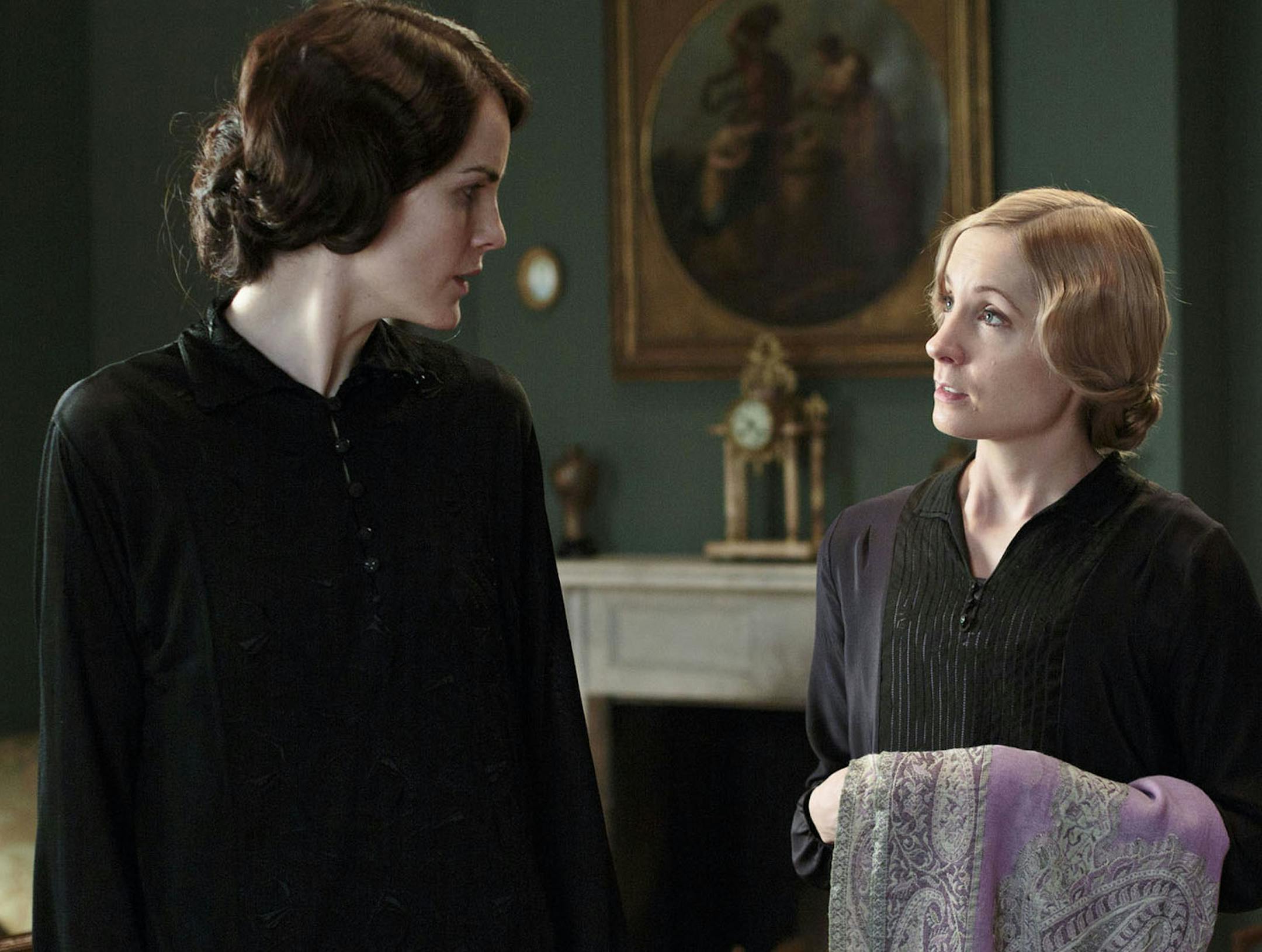
In real life, Americans may keen about income inequality. But on TV, they're keen for it.
"Downton Abbey" continued its upward ascent with viewers Sunday night, a gushing embrace of class snobbery that hasn't been seen since friends clustered across the country in 1981 — wearing black tie and clutching Teddy bears and champagne glasses — to watch "Brideshead Revisited."
I've resisted the "Downton Abbey" fervor. My grandmother and her nine sisters were tall, strapping women who immigrated to America from Ireland in the second decade of the 20th century and found jobs as maids, cooks and nannies for rich families with names like Gore and Mellon. So heaven forfend that I would enjoy watching Lord Grantham erupt in horror when his youngest daughter wants to marry the cute Irish chauffeur. At the start of Downton's fourth season, Maggie Smith's caustic Dowager Countess still can't stomach calling the Irishman by his first name, even now that the widowed Tom Branson is the estate manager and father of her great-granddaughter (dubbed a wicked "crossbreed" by the nanny).
As my great-aunts worked tirelessly to grasp shards of the American dream, they were not gliding about mansions playing confidantes to malleable employers, much less co-conspirators in moving the bodies of dead lovers. It was a much tougher life than the democratized fantasy shown in "Downton Abbey." Sure, Downton creator Julian Fellowes' servants have to iron the newspapers, choose cuff links and scan for scratches in the silver candelabra, but basically the upstairs-downstairs hierarchies work in contented concert, mingling like family — warmly and sometimes spitefully.
Just as there is a yawning gulf between "Gone With the Wind" and the harrowing "12 Years a Slave," there is a yawning gulf between the Panglossian PBS soap opera of manners and the dehumanizing life most servants led.
In "Castle Rackrent," an 1800 work that was a pioneer of the historical novel, Maria Edgeworth skewered her own British landlord class for viciousness to the Irish peasantry. Speaking of the grand lady of the house, Edgeworth wrote: "She was a strict observer, for self and servants, of Lent, and all fast-days, but not holidays. One of the maids having fainted three times the last day of Lent, to keep soul and body together, we put a morsel of roast beef in her mouth, which came from Sir Murtagh's dinner, who never fasted, not he; but somehow or other it unfortunately reached my lady's ears, and the priest of the parish had a complaint made of it the next day, and the poor girl was forced, as soon as she could walk, to do penance for it, before she could get any peace or absolution, in the house or out of it."
Niall O'Dowd, the founder of The Irish Voice, IrishCentral.com and Irish America magazine, asserted: "For this generation of Americans, the 'Downton Abbey' 'Yes, m'Lady' servants are the equivalent to the old minstrel shows on the Bowery. It reflects the colonial cringe, casting an ameliorating light over a period that was full of pretty desperate stuff for people trapped in a rigid, notorious caste system."
Americans cast off the British monarchy, but they go nuts for Kate Middleton's procreation story. ("Rich woman has baby," O'Dowd notes dryly.) And they savor watching a Downton aristocrat dress down a servant for noting inelegantly, "Dinner is on the table."


