

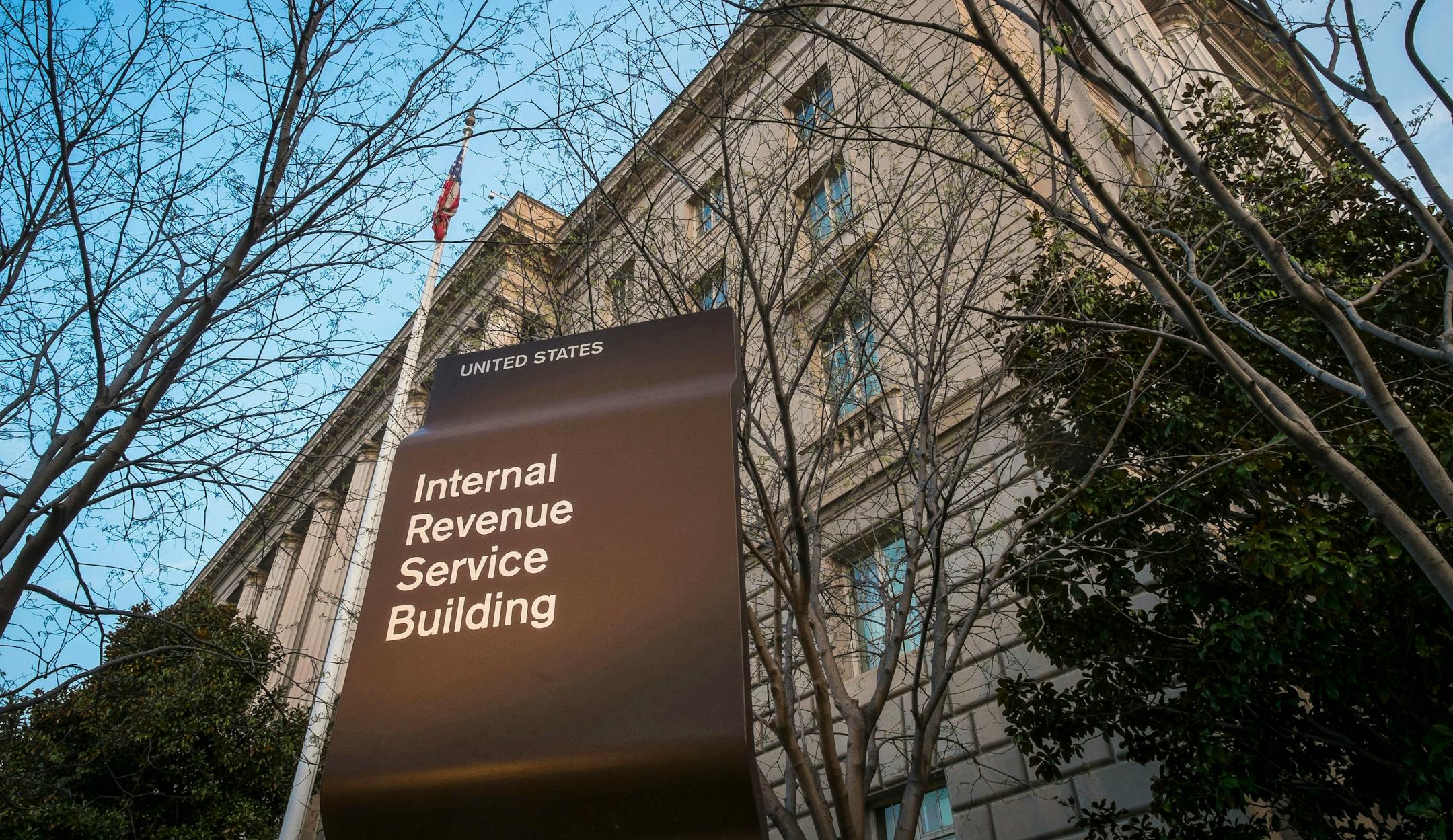
With tax season already underway — the filing deadline this year is April 18 — complaints about the Internal Revenue Service are already rolling in.
We're not referring to complaints about taxes in general — those are always with us, after all — but complaints about the agency's customer services. Issues such as how long it takes to answer the phone, process returns and refunds and so on.
Those tend to peak as tax day bulks large on the horizon. This year is no exception. The complaints are most vociferously sounded on the right — two recent examples come from National Review and the Cato Institute.
Blogger Kevin Drum rightfully condemns their grousing as manifestations of "brass," for reasons we'll cover in a moment. But they're felt by any taxpayer who, for one reason or another, needs to speak personally with an IRS representatives.
Things got worse during the pandemic: One member of my immediate family didn't receive his 2019 refund until the summer of 2021, for instance.
But those who suggest that the IRS is responsible for its own problems are blowing a thick cloud of smoke. That's because finding the reason for the agency's underperformance in customer terms requires looking elsewhere — specifically, on Capitol Hill.
Anti-tax conservatives in Congress have been systematically impoverishing the IRS for decades, with the unmistakable goal of undermining its ability to do its job, not to mention its public reputation.
Here are the relevant statistics: In 1991, the agency employed more than 114,600 full-time staff to serve a population of 254 million and collect about $1.1 trillion in revenue. In 2020, according to the most recent IRS Fact Book, full-time employment was fewer than 75,800, serving more than 330 million Americans and collecting $3.5 trillion.


