

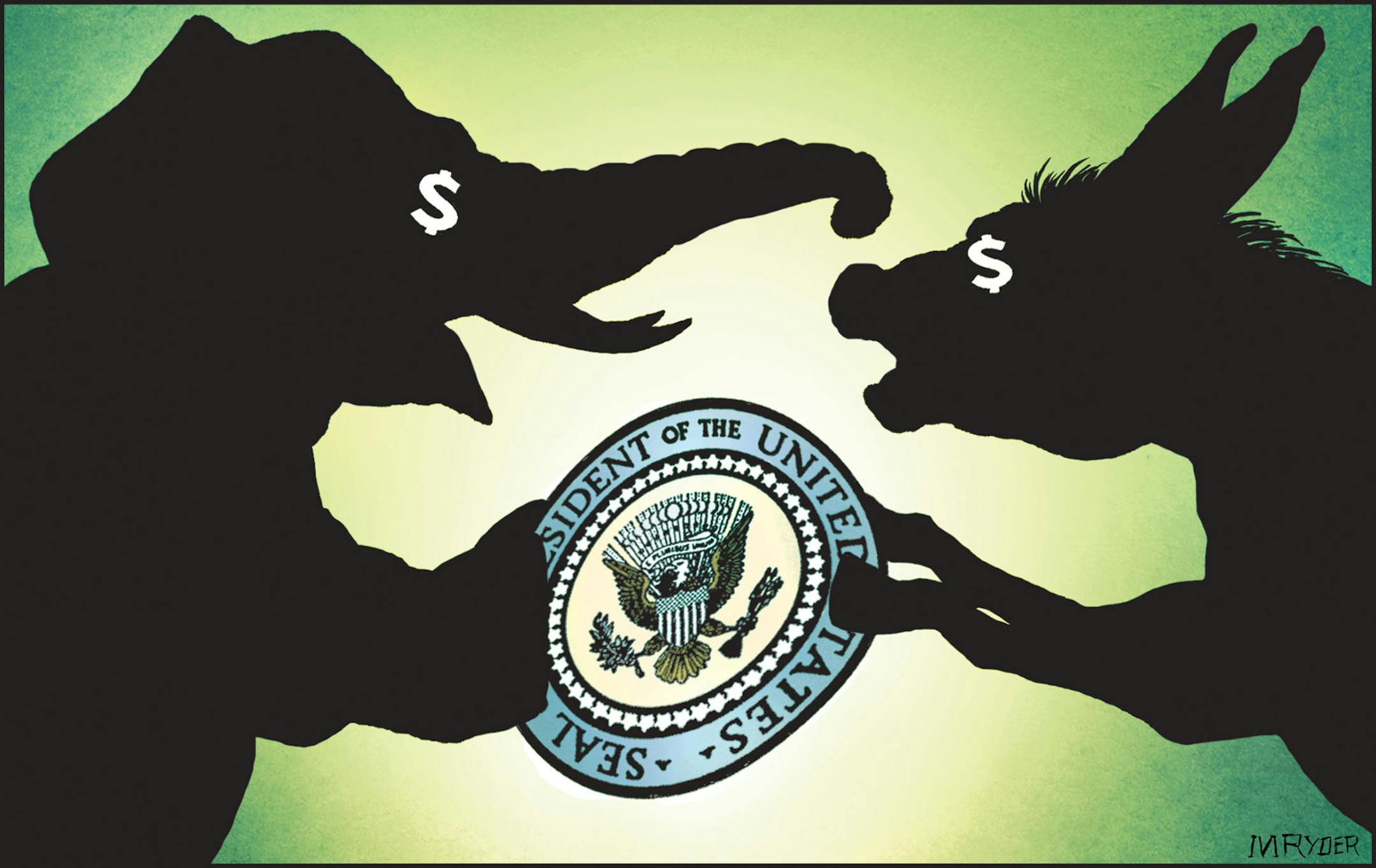
For most of us, Mark Twain's counsel "get your facts first, then you can distort them as you please" is just a funny line. For too many politicians, it's strategic advice. With Labor Day behind us and candidates for the Minnesota Legislature ramping up their campaigns, it's time for voters to look beyond the fact-parsing political rhetoric.
Fiscal policy is a good place to start. "The state budget we inherited faced a $6.2 billion deficit; now it has a $1 billion surplus in a single year," proclaimed Republican Speaker of the House Kurt Zellers earlier this year. Zellers isn't lying -- the state does have a temporary surplus -- but he dangerously distorts the fiscal challenges facing Minnesota.
The state's budget is built on deferred payments to schools and the use of future revenue to pay current bills. Even with these gimmicks, most objective economists agree that next year's Legislature won't have a surplus but another billion-dollar deficit.
Democrats have their own credibility gap when it comes to budget rhetoric. In July, House Minority Leader Paul Thissen marked the anniversary of last year's government shutdown by blaming the entire fiasco on the unwillingness of Republicans to compromise with Gov. Mark Dayton. In other words, the DFL's factual distortion is that Republicans alone are responsible for Minnesota's fiscal travesty.
Nonsense. Legislative Democrats mostly were passive observers during the 2011 session, offering few substantive solutions. Dayton was at the wheel, steering the state to the end-of-session train wreck. Even in the 11th hour of the 2011 session, he insisted on tax increases that reflected only his and the DFL's politics. Republicans weren't going there, and government shut down. The impasse was resolved with a bad Republican bill signed by a Democratic governor after the two parties spent six months talking past each other.
Want a better discussion of Minnesota's budget challenges and innovative recommendations? Take a look at sources like the Minnesota Budget Project or the report of the Budget Trends Study Commission.
Distorted facts abound on other campaign issues. In the Republicans' world, taxes keep rising to feed an insatiable government. The reality, according to the generally conservative Tax Foundation, is that Minnesotans are paying less in state and local taxes as a percentage of income than 20 years ago. According to the state's budget office, spending from the general fund increased only at about the rate of inflation in the past 10 years.
Democrats are equally misleading on tax policy. Few of them will acknowledge that Minnesotans already pay 50 percent more in individual income taxes than the national average, according to a 2011 report by the nonpartisan Minnesota Taxpayers Association. Tax fairness is a legitimate issue, but pushing Minnesota's tax rate even higher would be a major policy disaster.


