

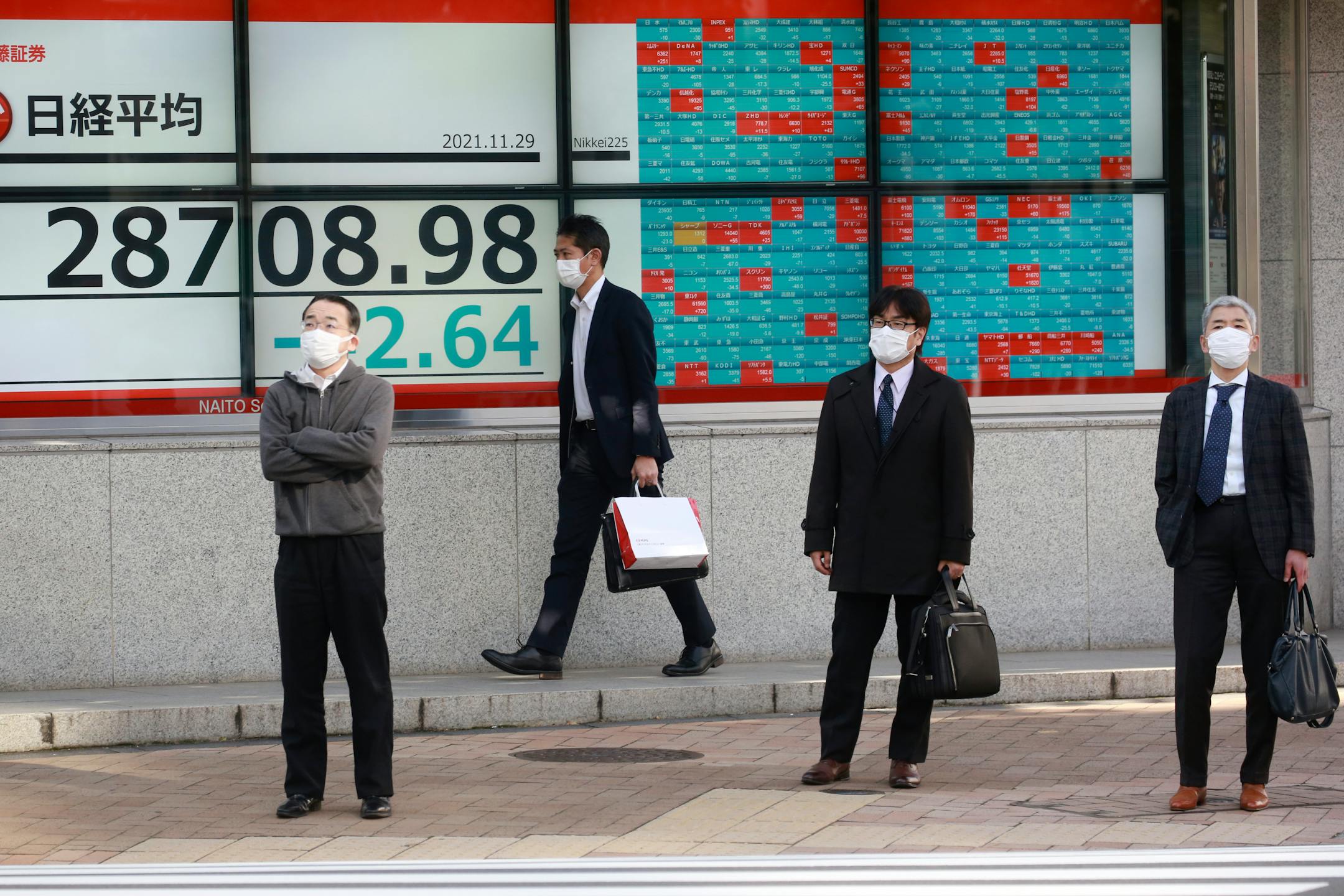
Omicron won't stop investors betting on a post-pandemic world but it delays the "all clear" — possibly dampening the worst of the winter inflation scare and avoiding reflex policy reactions.
Just as the Federal Reserve and major central banks start to acknowledge that rising inflation may no longer be transitory, this new COVID-19 variant "of concern" to the World Health Organization burst onto headlines.
It's been enough to send equity, energy, interest rate and currency markets gyrating into the final month of the year as it muddies the timing of market bets on the year ahead.
Investors are now keenly focused on whether the new omicron variant will require a reformulation of vaccines, which developers reckon could take at least three months.
If more stringent social and travel restrictions are required in the interim, then economic signals may be distorted well into 2022 — forcing monetary policymakers to hesitate on any decisionmaking while assessing whether it will weaken energy and service sector price aggravators or exaggerate supply chain and labor market bottlenecks propping goods prices.
And parsing which central bank blinks or not may be harder still.
Markets flailed again on Tuesday as Fed chair Jerome Powell seemingly trotted out a pre-omicron assessment of the Fed trajectory — preferring not to add the impact of the new variant to forecasts until accelerated tapering of its bond buying is discussed at the next policy meeting on Dec 14-15.
Will they see it differently by then? No one is quite sure.



