Does extra pay help poor families? Local programs have shown promise, but a new study casts doubt

St. Paul and Minneapolis officials are still evaluating how their guaranteed income programs helped low-income families after the programs ended.

The Minnesota Star Tribune
August 20, 2025 at 3:47PM
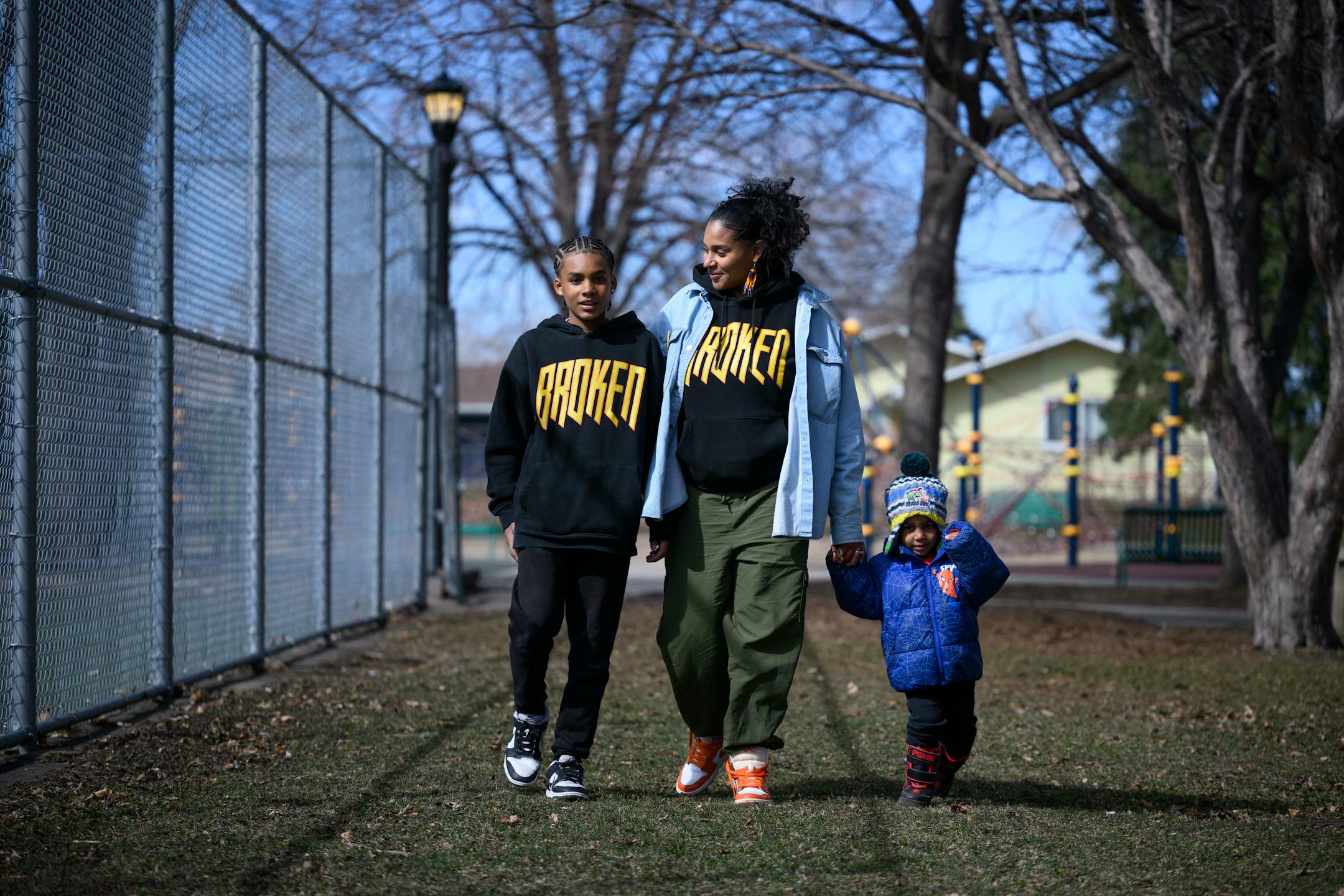
Mercedes Yarbrough of St. Paul walks home with her sons Maro, 11, and Meir, 2, in 2024. The family was among 150 families to get $500 a month through the city's guaranteed-income program. (AARON LAVINSKY/The Minnesota Star Tribune)

St. Paul gave out its last $500 payments this month as part of a guaranteed-income program, one of the first in the nation meant to see if an injection of cash could change the trajectory of families struggling to meet basic needs.

Did the program work? Research and feedback from families involved in the program, plus a similar pilot launched a year later in Minneapolis, indicate a number of benefits, officials said, including parents feeling less stress and a greater sense of financial stability.

But a national study released this summer is calling into question whether such monthly payments alone can boost a child’s well-being. Called Baby’s First Years, the study found that children whose mothers received monthly payments for four years scored no better on a series of child development measures — from language skills to behavioral problems — than kids whose families didn’t get a boost.

“It shows that money alone won’t lead to better outcomes for children,” Robert Doar, president of the conservative American Enterprise Institute, told the New York Times.

The findings have sparked a debate on the usefulness of such programs, even as local officials say the results of their studies won’t truly be known for years, if not longer.

“Guaranteed income programs aren’t meant to solve poverty but rather disrupt it,” Jennifer Lor, a spokeswoman for St. Paul Mayor Melvin Carter, who championed the city’s efforts, said in an email. “They are meant to interrupt cycles that keep families trapped in generational poverty.”

Minneapolis and St. Paul’s programs

Beginning in 2020 in St. Paul and 2021 in Minneapolis, the local programs temporarily gave no-strings-attached $500 monthly payments to hundreds of low-income families for two years.

Then in 2022, Carter announced a new project called CollegeBound that provided 333 low-income families with a combination of $500 in guaranteed-income payments each month for two years and $1,000 deposits for their child’s college savings account. The latest $500 deposits just ended, Lor said.

The city is working with the University of Michigan to study the impact of that aid, Lor said. But the earlier pilot showed promise, including:

  • The number of people employed increased from 49% at the beginning of the pilot to 63% six months after the program ended.
    • Recipients showed fewer symptoms of anxiety or depression and had favorable levels of well-being across the three subscales of general health, physical limits and physical functioning.

      While officials wouldn’t “opine” on the Baby’s First Years study, Lor said the larger monthly payments distributed in St. Paul’s pilot are expected to eventually improve children’s “long-term cognitive development and [set] children up for success.”

      In Minneapolis, the city piloted its guaranteed-income program from 2022 to 2024, using federal American Rescue Plan money. The 200 families who participated were encouraged to use the extra money “in a way that makes sense to them,” according to the program’s description.

      Results will be analyzed by the Federal Reserve Bank of Minneapolis for years to come. Erik Hansen, director of Minneapolis’ Community Planning and Economic Development Department, said that while the impact of the money is so far “inconclusive,” officials believe the payments may wind up serving as a starting point for households, tapping into a variety of city resources — from homebuying assistance to job training — to help improve their lives.

      “Does it have a long-term impact? If you’re thinking about stability of children, stability is consistent with a hierarchy of needs,” Hansen said. “Do they have safe, stable shelter? Are they getting their nutritional needs met? Do they have both emotional and physical safety in their lives?”

      Mark Brinda, who also works for the city’s Community Planning and Economic Development division, said surveys showed the payments did have an impact on food security and housing stability, and additional study of recipients will measure whether the stability that cash offered carries over in “some other way, shape and form.”

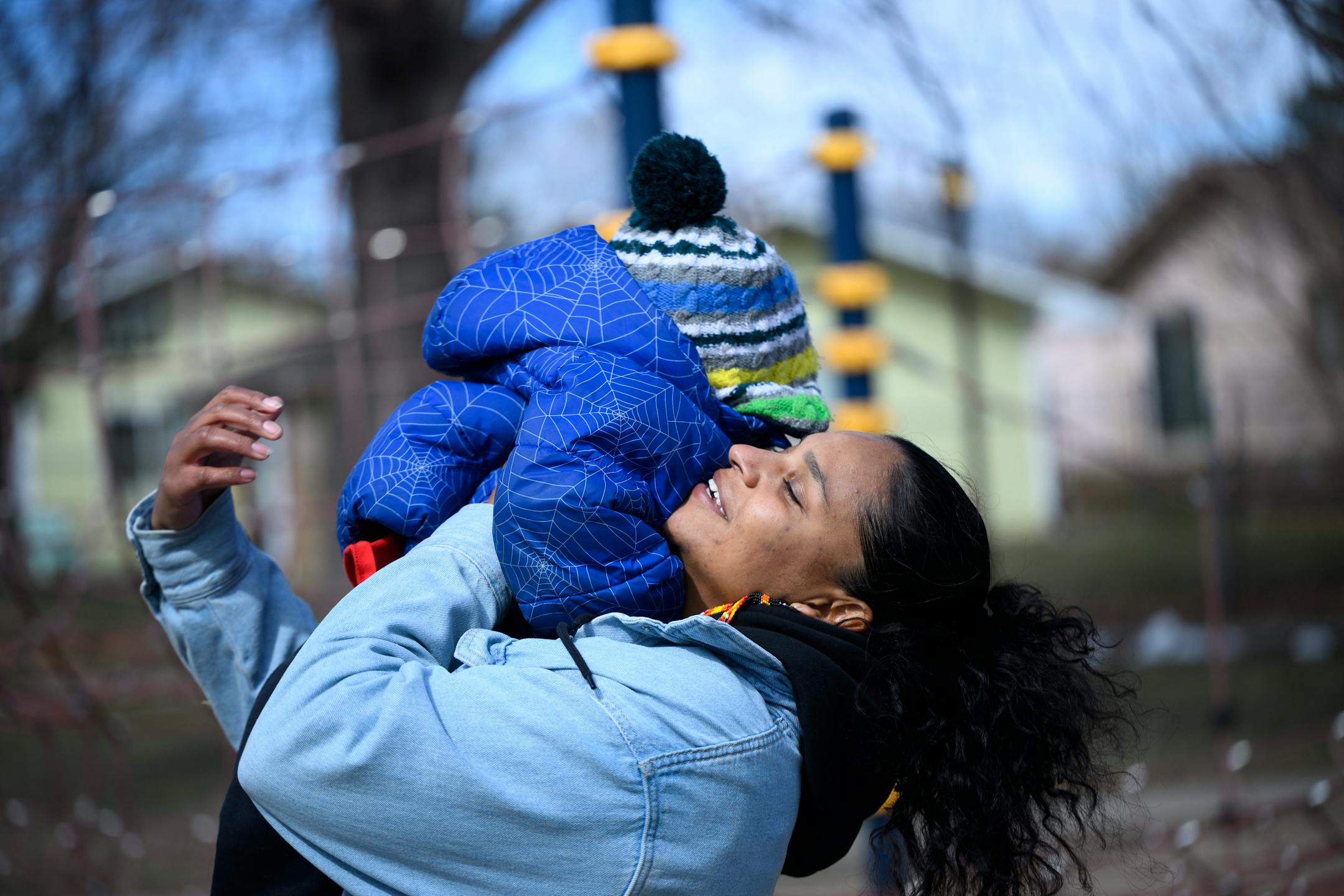
      Mercedes Yarbrough of St. Paul lifts up her son Meir, 2, in 2024. The family took part in St. Paul's guaranteed-income program, which gave out its last $500 payments this month. (AARON LAVINSKY/The Minnesota Star Tribune)

      ‘No evidence’ of difference in child development

      There have been more than 150 basic income experiments in the United States, according to Stanford University’s Basic Income Lab — with the overwhelming majority launched in the past five years.

      The latest one, Baby’s First Years, was conducted by the National Bureau of Economic Research, recruiting 1,000 low-income mothers of newborns in Minneapolis and St. Paul, New York, New Orleans and Omaha. More than 80% of the new moms were Black or Latino, and most were unmarried.

      Using about $22 million raised from donations and from the National Institutes of Health, parents were randomly selected to receive either $333 or $20 per month. Payments will continue for six years and — as with the St. Paul and Minneapolis programs —researchers acknowledge they will need to analyze results for years to come.

      The report examined “four primary child outcomes: language, executive function, social-emotional development and resting high-frequency brain activity.” It also looked at “three secondary outcomes: visual processing/spatial perception, pre-literacy skills, and diagnosis of developmental conditions.”

      The team of researchers “found no evidence of group differences” in the primary or secondary outcomes, according to the analysts’ working paper, though experts say the pandemic could have skewed the results and the monthly aid amounts could have been too small to make a meaningful difference.

      Lor and other local officials said the study doesn’t alter their ongoing analysis of the cities’ programs, which studied broader measures.

      “Overall, our guaranteed income pilots are a larger, longer-term, universal investment designed to build wealth and opportunity for every St. Paul child over their lifetime, which research shows improves long-term cognitive development and sets children up for success,” Lor said in an email.

      Alicia Kunin-Batson, the study’s principal investigator at the University of Minnesota, said that while the payments appeared to make no difference in child development, researchers need to study more factors, including sleep and nutrition, health care utilization and the child’s and parents’ height and weight. In-depth interviews with families will seek “to learn more about their financial decision-making and their views and experiences of the cash gifts,” Kunin-Batson said in an email.

      She cautioned against giving too much weight to any single study.

      “Whether we are talking about cash aid or other supplementation programs like nutrition on children’s outcomes, the effects of poverty reduction programs on children’s health may not be fully apparent until later in development or later in life,” she said.

      about the writer

      about the writer

      James Walsh

      Reporter

      James Walsh is a reporter covering social services, focusing on issues involving disability, accessibility and aging. He has had myriad assignments over nearly 35 years at the Star Tribune, including federal courts, St. Paul neighborhoods and St. Paul schools.

      See Moreicon