

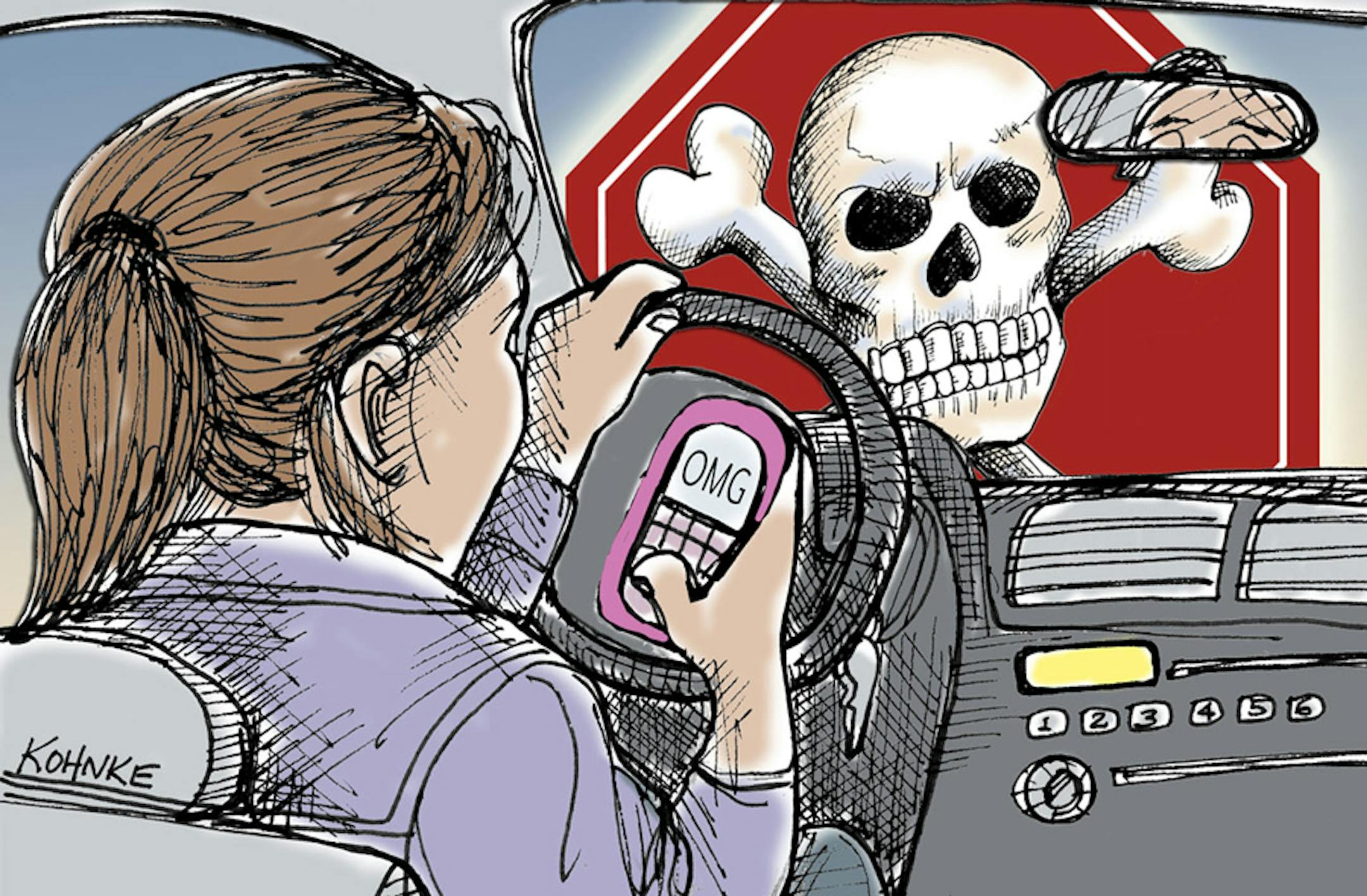
Sometimes it's difficult to determine whether the benefits of the electronic age are outweighed by the liabilities -- whether, by making things easier, we have made them worse.
A popular Virginia elementary school principal on the verge of retirement was walking near her home, obviously engrossed in the music coming from her earphones, and was killed by an SUV whose driver was neither drinking nor speeding, according to an initial investigation. The cause of this tragedy apparently was a disease that seems on the verge of pandemic dimensions in the world today -- a lack of awareness of one's surroundings brought on by electronic distraction.
This virus seems to affect us all, often in the most personal way. My kid brother, a brilliant lawyer, was on his way home after a late-afternoon gym session when his car was struck by a pickup at a high rate of speed. He died instantly, leaving his family and friends bereft and his profession worse off.
Who was at fault is still being determined. But mark this down as a cautionary tale. Both my brother and the driver of the other vehicle were talking on their phones when the accident occurred. My brother was belted in and all the airbags deployed. Nothing saved him.
It is difficult to drive down the street these days without seeing what seems like half the pedestrians in one's field of vision with heads down, either texting, talking or listening on some modern convenience, completely oblivious to what is going on around them. Most drivers today must be aware of not only the cars and trucks in their surroundings but the foot traffic as well. It is a new dimension that often requires a heightened defensiveness that can't help but break down more often than not.
Only recently I was forced to slam on my brakes and swerve to miss a young man who had begun crossing the street with his cellphone tightly held in one hand, head down, with his thumbs jumping over the keyboard. He was unaware that he had stepped off the curb while the light was against him. Had I been distracted by another vehicle or speeding at the time, I hate to think of the consequences.
What do we do about this? State after state has passed laws against driving while on a cellphone; some have even banned hands-free use, arguing that it is a distraction. Not enough have made texting illegal, although that seems preposterous given the clear danger.
The problem, of course, is that these laws are generally ignored and extraordinarily difficult to enforce, particularly if the driver was not speeding or otherwise driving recklessly enough to attract the attention of police. Besides, much of the urban traffic control today has been ceded to cameras and other electronic devices because of budget pressures. Police are too busy with other problems and the cameras only check speed and red-light obedience. In addition they are cheap ways of boosting revenue.


