

How a once-promising Minnesota tech company fizzled out, leaving workers ‘heartbroken’

The dismantling of Digital River was led by New York restructuring specialist Barry Kasoff, who also presided over 3M spinoff Imation’s last days in the Twin Cities.

The Minnesota Star Tribune
August 21, 2025 at 11:00AM
Digital River was a pioneering digital marketing firm, but its services were taken over by e-commerce competitors and it closed its doors in the past year. (Glen Stubbe/The Minnesota Star Tribune)

Digital River had a new owner, one employees thought might turn around the ailing Minnetonka e-commerce company after nearly a decade under a private equity firm.

As they logged on to a virtual meeting last summer to meet Barry Kasoff, their new leader, the rank-and-file were hopeful better days were ahead.

But it didn’t take long after Kasoff started speaking that July day for employees to realize the change they wanted wasn’t coming.

“There was hope that ... there’s going to be someone that is going to provide a little bit of a jolt and inspiration,” former employee Nick Beaudry said. “It was far from that. He barely looked at the camera.”

After the meeting, then-employee Jason Waye googled Kasoff and found a trail of distressed companies Kasoff had taken over that were now defunct.

“I told my coworkers it would be over in six months,” Waye said.

It took eight months.

A well-known Twin Cities business, Digital River was an e-commerce software pioneer that, at its height, employed more than a thousand people and did business worldwide. Though the company survived the dot-com bubble burst of the early 2000s, it ultimately wasn’t able to evolve quickly enough to match the breakneck pace of modern tech.
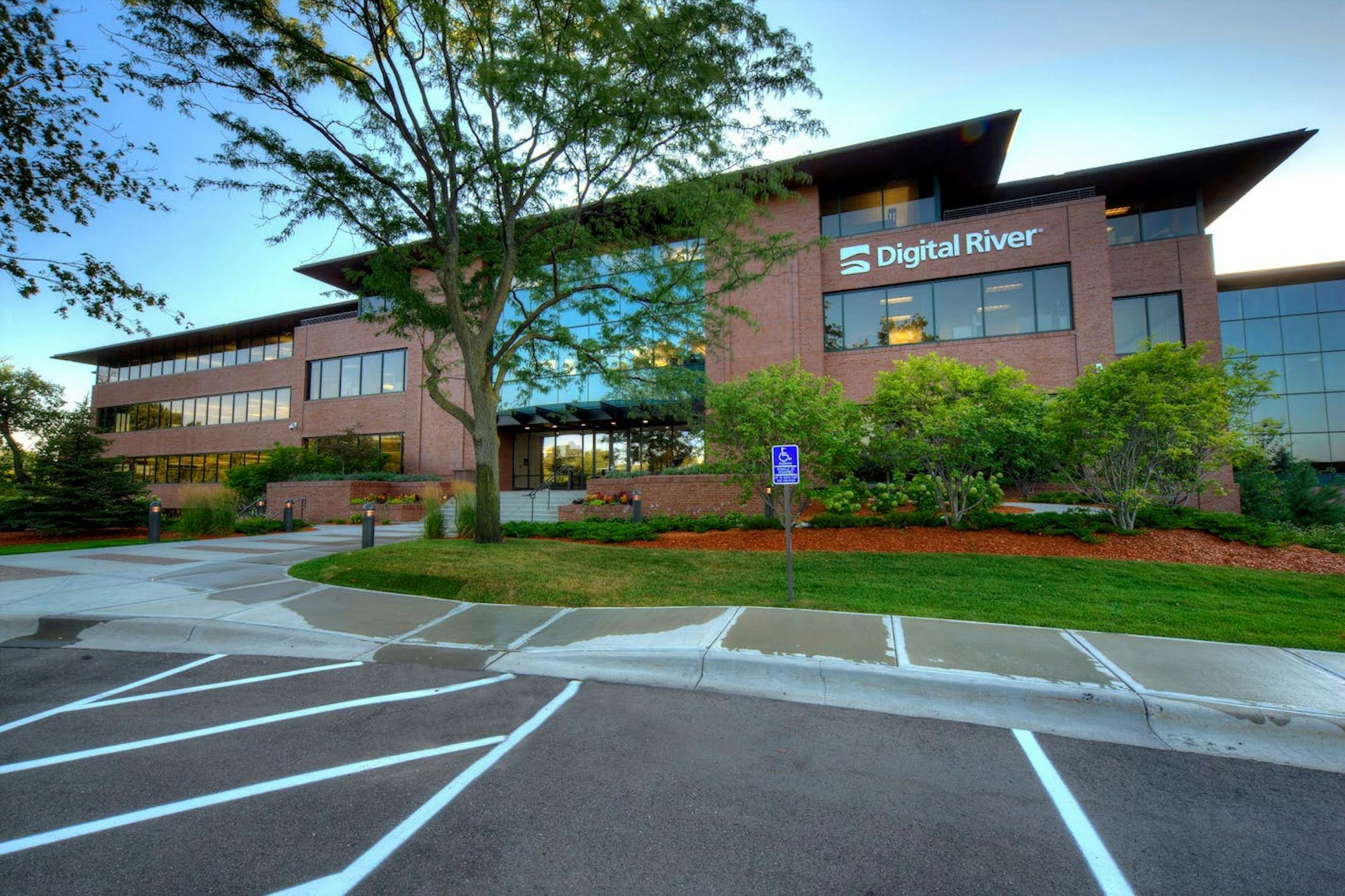
In the end, its product was no longer at the cutting edge, its biggest clients were gone and its workforce was a fraction of what it once was.

Tapping a restructuring veteran

Kasoff — through his New York-based consulting firm, Realization Services Inc. — is a veteran corporate restructuring consultant who specializes in taking on distressed companies and liquidating them if need be. Kasoff, 68, is often called into service by both debt and equity private capital investors in faltering companies.

A decade ago, he also was brought on to see what he could do with ailing Imation, another Twin Cities company whose data storage technology was eclipsed by new developments in the industry. That company later closed its Oakdale headquarters and left the state as a shell of what it once was.

As at Digital River, Kasoff’s time with 3M spin-off Imation is a story of how a company moves to close up shop.

Kasoff did not respond to requests for comment, including a detailed list of questions about his time at the two Twin Cities companies.

At Digital River, Kasoff served as both CEO and owner. In interviews with the Minnesota Star Tribune, former employees described how he presided over the company’s dismantling between July 2024 and March 2025.

Minnetonka-based Digital River is shuttering its headquarters and laying off 122 employees. (Evan Ramstad/The Minnesota Star Tribune)

An industry pioneer

Digital River launched in 1994 with a simple business model: A company would sell a product online and Digital River would process the payment, taking a cut before passing on the rest to the client.

Digital River went public in 1998 and reached a peak market capitalization of $2.25 billion in 2006. Its client roster included Microsoft, Google, Adobe and Nvidia.

But as competition grew — including from clients who built their own payment platforms — Digital River struggled.

Founder Joel Ronning stepped down as CEO in 2012 after multiple quarters of losses. In 2015, New York-based Siris Capital bought Digital River for about $840 million and took it private.

Digital River continued trying to grow under its new ownership, and notched some successes. But it also lost big clients, and morale fell as the company’s heyday faded from view.

The company was on its third CEO since Ronning’s departure by the time Kasoff arrived. Rounds of layoffs had already taken place.

Yet work continued, company emails obtained by the Star Tribune show.

Last spring and summer, employees were being invited to participate in a volunteer program, diversity training and a happy hour celebrating the Paris Olympics. In mid-July, they learned they would be paid bonuses originally scheduled for August.

Some were still working on new products. Ben Christiansen, a senior product marketing manager who joined Digital River in 2016, was part of a group building a dashboard for clients to access a range of market-level data.

“It seemed like we were building really innovative technology and services, and we were doing it the right way,” Christiansen said. “Whereas before we were building things that would satisfy a few very loud clients, we were now listening to the market.”

It wasn’t enough. Layoffs started within days of Kasoff’s arrival, and Christiansen lost his job without severance in the first round. After that, change happened fast.

Digital River changes

Business practices changed without clear communication, employees said.

Those who remained say the company soon changed the way it paid vendors. Before, there were multiple rounds of approvals, with the company’s treasury department having the final sign-off on payments, they said.

Under Kasoff, he had final say, they said.

“Our new owner instituted himself as the final round of approval,” Beaudry said. “And so everything stopped if he did not issue his approval on a payment going out.”

Beaudry, a logistics manager at Digital River for 19 years, said he was unable to get approval for vendor payments and couldn’t get a clear explanation why.

“The vendors that I was responsible for, we owed a lot money to them,” he said. “I had long-standing relationships with those partners and put my reputation on the line and I said, ‘Trust us, we have worked with you for a long time,’ thinking that Digital River would honor our obligations.”

At least four creditor lawsuits have been filed against Digital River, one of which was dismissed with prejudice.

Google sued in November, claiming Digital River had “refused to remit payments” for six months and owed the tech giant about $6 million.

Nevada-based Next Level Racing learned Aug. 30, 2024, that Digital River and affiliate DR globalTech Inc. planned to terminate its contract Nov. 30 of that year, according to a February complaint.

The company claims Digital River owes it about $900,000. Allegations in its lawsuit, which also names Realization Services, include breach of contract, fraud and unfair business practices.

Kasoff playbook similar at Imation

A decade ago, Kasoff was named Imation’s chief restructuring officer after activist investor the Clinton Group won a proxy war and gained control of the company’s governance.

Like Digital River, Imation at first was a market leader; its stock traded around $30 and it employed over 9,000 in the late 1990s. But data storage went digital, and Imation’s technology became obsolete. Its workforce numbered 124 in October 2015.

In May 2015, with Imation’s stock at $4.59, the company’s shareholders voted to hand control to the Clinton Group, a New York-based hedge fund and private equity operator. Clinton then named Kasoff to the Imation board. He briefly served as interim president before becoming chief restructuring officer in fall 2015. Realization Services got a consulting contract.

Kasoff served in the restructuring role for about nine months. The company paid him a $679,000 salary in 2015, while Realization Services took in about $6 million from 2015 through early 2017, according to filings with federal securities regulators.

Under Clinton, Imation’s stock fell further, trading at only 65 cents in February 2016, one continued sign of the company’s financial distress.

After Clinton took over, Imation CEO Mark Lucas told employees that Imation’s longstanding practice of paying severance would be honored if more layoffs ensued, according to a suit against the company by three former employees. Lucas was then forced out of Imation.

In September 2015, Kasoff announced layoffs, telling workers they wouldn’t get severance, “using words to the effect of, ‘You can’t get blood from a turnip,’” the suit claims. The company denied workers’ claims it had breached severance promises. The suit was settled, court records indicate.

A major supplier, CMC Magnetics Corp., sued Imation for failing to pay $23 million it was owed, alleging the company diverted cash to the Clinton Group.

In early 2016, Imation’s board had voted to transfer up to $35 million in “excess cash” to a Clinton Group fund in the Cayman Islands, federal securities documents show. Taiwan-based CMC alleged the transfer to the Clinton Group came at the expense of creditors like itself.

CMC also took at aim at Kasoff, who was also named as a defendant.

“Despite rapidly declining net assets, Imation has paid millions of dollars in outsized ‘consulting expenses’ to defendant Realization Services and to its attorneys,” CMC claimed in a 2016 suit against Imation, the Clinton Group, Realization Services and Kasoff.

“Kasoff’s track record,” the suit continued, “is, at best, mixed.” Imation and Kasoff denied CMC’s claims, and the parties settled.

Final goodbye to Digital River

Like Imation, Digital River operated as if it would exist forever, despite its financial problems — until it didn’t.

In December, Digital River employees attended a holiday party where executives mingled with the rank-and-file over food and drinks.

A month later, the company announced it was laying off its last 122 employees and shutting down.

In a Jan. 27 email to employees, Kasoff explained Digital River “became unable to tap into advanced funding of our revolving credit facility” at the beginning of the year.

“Despite our best efforts, we have been unable to identify a path forward that would allow Digital River to continue operating,” he wrote.

Digital River subsidiary Digital River Marketing Services filed for bankruptcy liquidation, and subsidiaries in Ireland, Germany and the United Kingdom initiated insolvency proceedings earlier this year. The parent company has not filed for bankruptcy.

Final paychecks went out in March. Former employees, some who had been with Digital River for decades, are looking for work.

“Some folks dedicated their whole working life to this company,” Christiansen said, “and then to just be laid off with no severance — it’s heartbreaking.”

about the writers

about the writers

Emma Nelson

Editor

Emma Nelson is a reporter and editor at the Minnesota Star Tribune.

See Moreicon

Mike Hughlett

Reporter

Mike Hughlett covers energy and other topics for the Minnesota Star Tribune, where he has worked since 2010. Before that he was a reporter at newspapers in Chicago, St. Paul, New Orleans and Duluth.

See Moreicon

More from Business

See More
card image
Hormel headquarters in Austin, MN. ] GLEN STUBBE * gstubbe@startribune.com Friday September 11, 2015 Despite woes throughout the food industry, partly due to consumers turning away some from processed foods, Hormel has managed to continue prospering -- even though a good part of its business -- Spam, chili -- is about as processed as you can get. But the company's turkey and pork offerings are riding a hot protein trend. And over the past two years, it's made some of the biggest acquisitions in