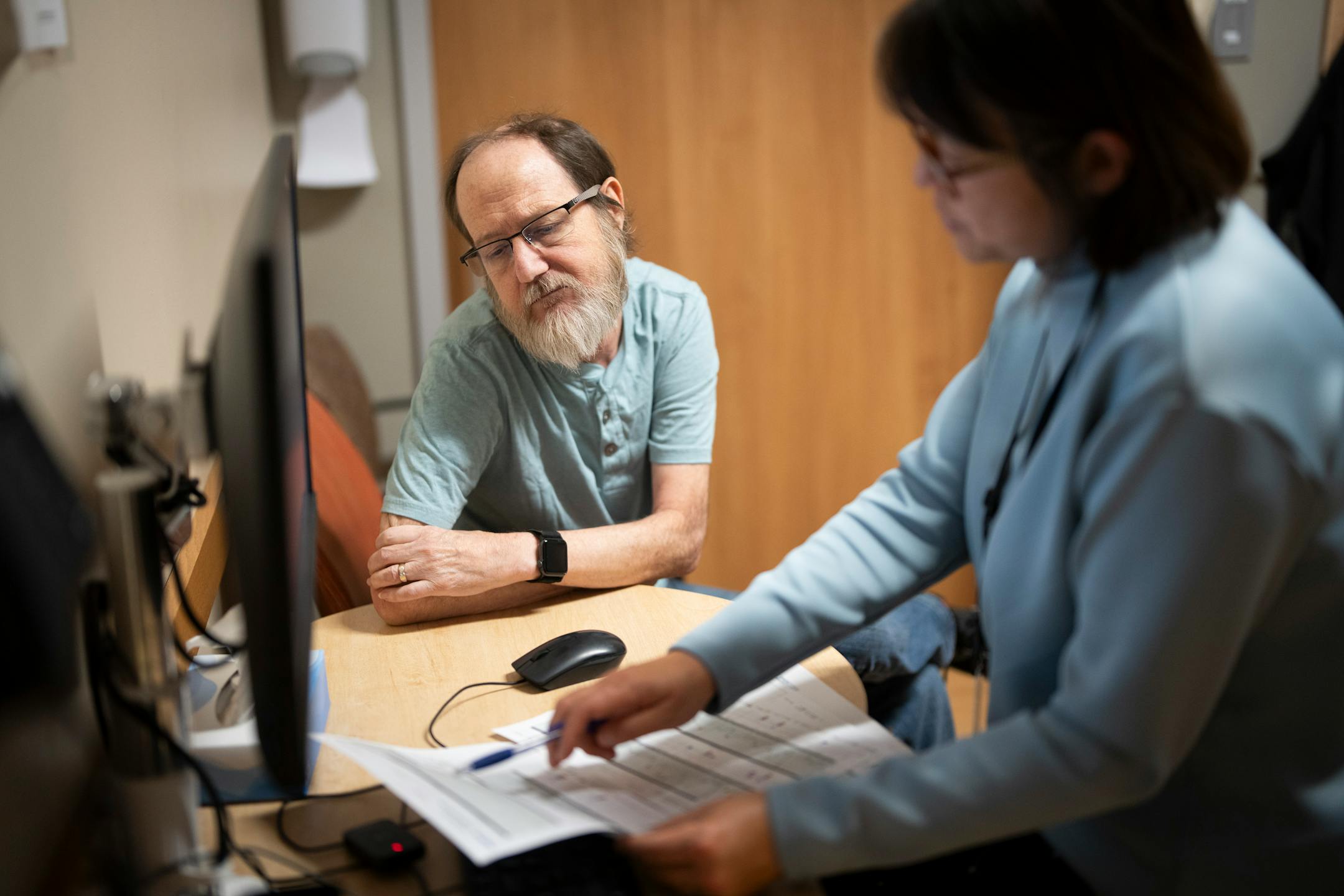
At the Hennepin Healthcare Center of Diabetes and Endocrinology in downtown Minneapolis, 66-year-old Mark Harris tries to recall his medication intake and sleep schedule from the past week.
Laura LaFave, an endocrinologist at the center, listens attentively while seated at a computer desk, looking at metrics of Harris' blood sugar levels extracted from the Bluetooth-connected continuous glucose monitor (CGM) he wears daily. Harris' glucose levels are low, which leads LaFave to pry deeper into how his insulin pump is functioning.
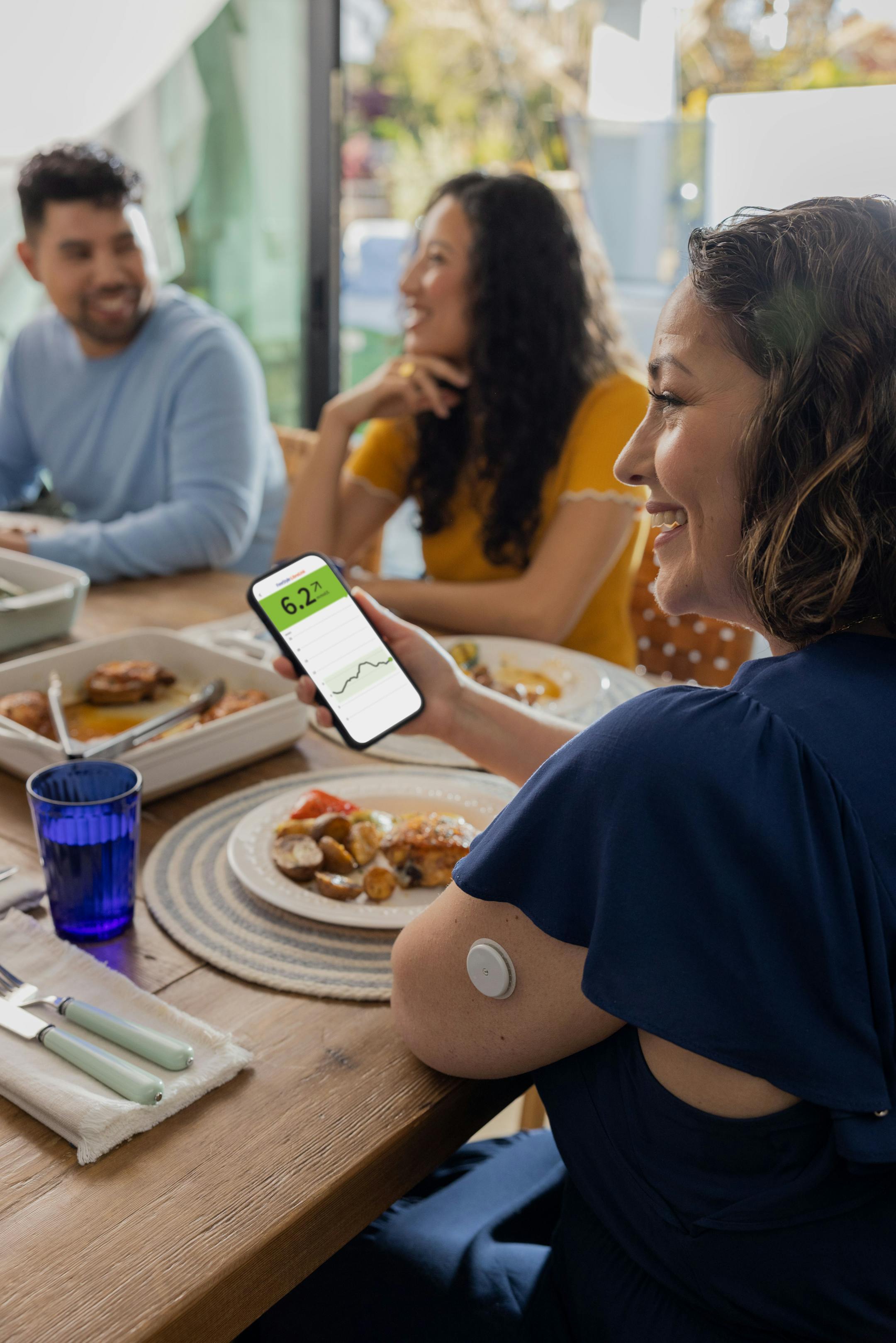
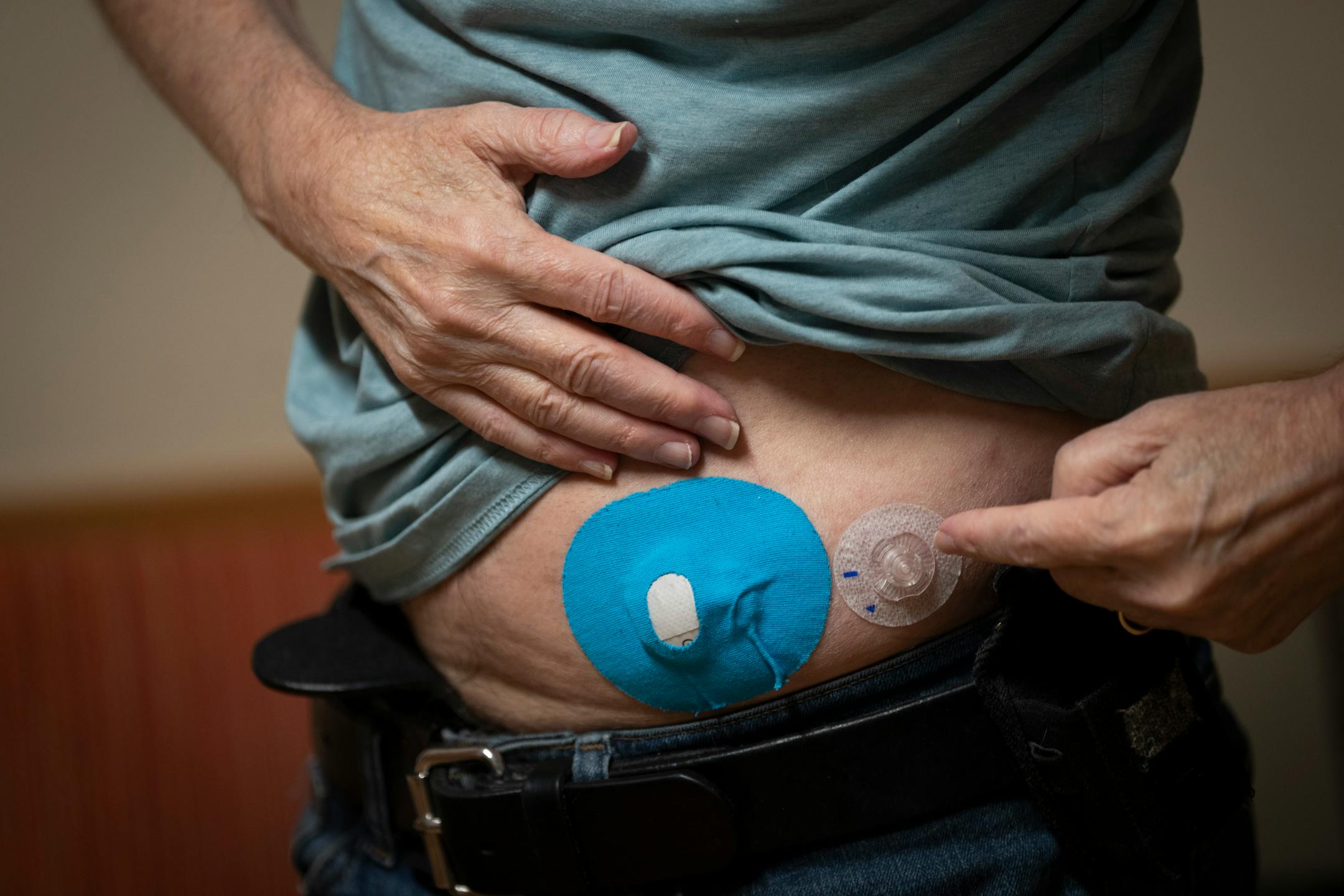
At the center, as many as 70% of patients with diabetes wear some sort of glucose monitoring, insulin-administering technology, LaFave said. It's vital the device works properly for Harris, a Type 1 diabetic, meaning his body produces little to no insulin. The combination of an insulin pump and CGM allows the pump to adjust insulin automatically injected into his abdomen through a slender plastic tube. The CGM tests his glucose levels through sensors patched to his skin.
For the roughly 500,000 Minnesotans diagnosed with diabetes, technology that automates the formerly manual finger-pricking and shot-giving has been an essential development and a relief for many who now can trust technology instead of just themselves to help manage a disease that was the seventh-leading cause of death in the U.S. in 2019, according to the American Diabetes Association.
Nationwide, more than 10 million Americans diagnosed with diabetes use insulin and benefit from CGM devices, per the association. That's out of 133 million currently living with diabetes or prediabetes in the U.S.
"The technology is new, and we are still learning how all the pieces fit together, but there's no question that we're starting to see treatments and technology that can transform the lives of people with diabetes," said Francisco Prieto, chair of the National Advocacy Committee within the American Diabetes Association.
A tech solution
For so long, the burden was on the patient to know their medication doses and glucose levels, said LaFave, who's worked with diabetics for 16 years. The finger prick remains a barrier, as some are reluctant to do it.
With technology, the ability to remotely download a patient's data from a CGM and conduct follow-up consultations has changed the delivery of care, LaFave said.