

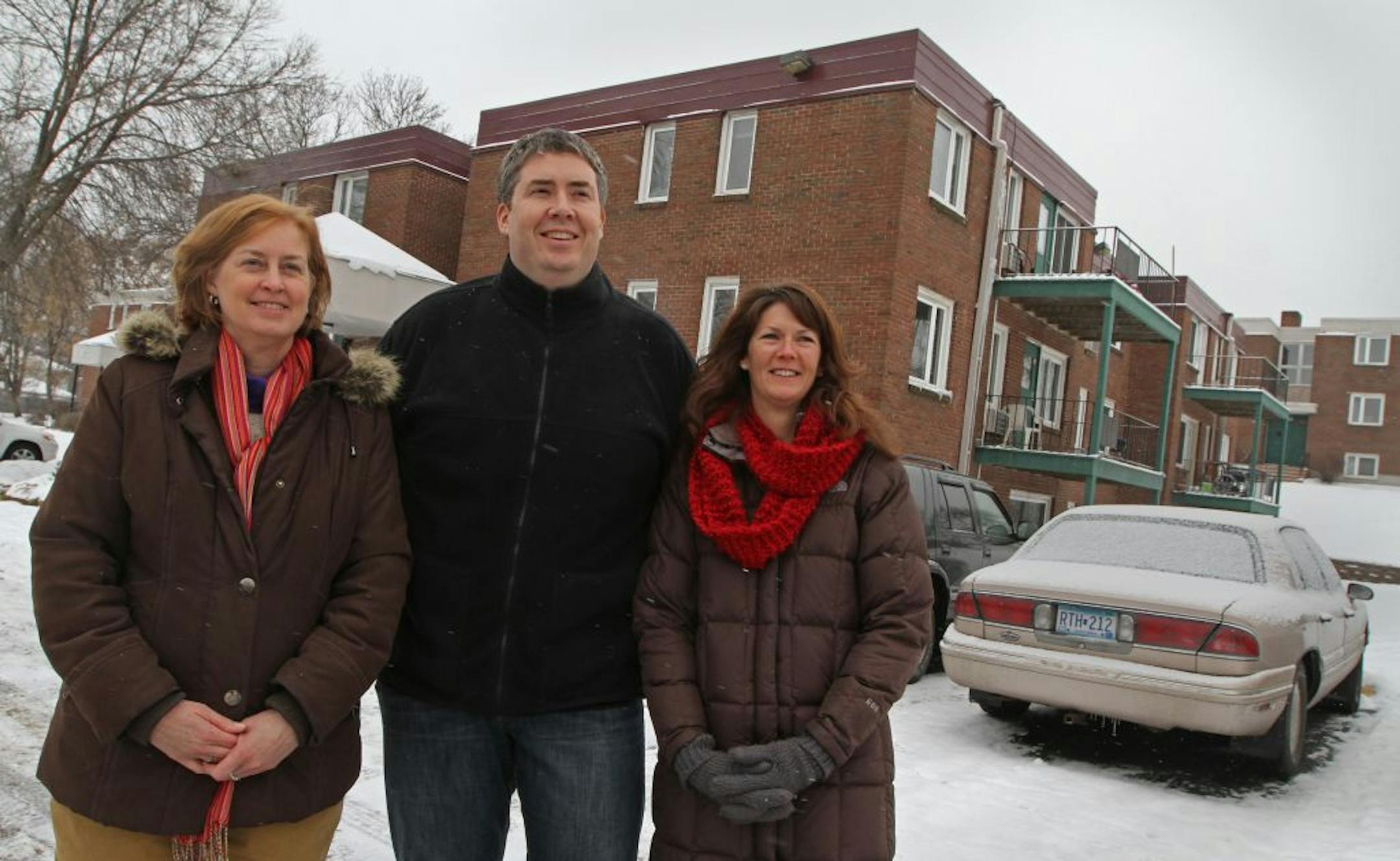
Lutheran Social Service of Minnesota is the state's largest provider of aid for refugee families, but the agency hasn't delved as deeply into owning and managing low-income housing over the years as have some other social service nonprofits.
That is set to change this year as LSS teams with veteran St. Paul apartment owners Rich Pakonen and Clint Blaiser in a $14.7 million effort to rehabilitate the Rolling Hills apartment complex on St. Paul's East Side, which in recent years has become a first stop for refugee families who have fled religious and ethnic persecution in Myanmar.
Under a deal expected close soon, LSS will become a development partner in Rolling Hills, with 51 percent ownership. With the help of project manager the Landon Group, LSS has succeeded in lining up the tax credits, grants and bank financing needed to carry out a rehab of the 1960s apartment complex.
Maureen Warren, vice president of special projects for LSS, said the nonprofit first became involved with Rolling Hills while working with the Karen people -- an ethnic group indigenous to southeastern Myanmar and western Thailand whose populations for many years were persecuted by Myanmar's totalitarian military regime.
The Karen are mainly Christian and were allied with opposition leader Aung San Suu Kyi, and so were seen as a threat by the Myanmar government. Many were forced to flee to refugee camps in Thailand as they were driven into extreme poverty by the physical destruction of their villages, the use of torture and forced labor.
Warren said the enclave of Myanmar refugees at the six-building, 108-unit Rolling Hills campus presented her group with a unique opportunity to concentrate its efforts in one place to help these refugees gain the footing they need to succeed in building new lives in the United States.
"We became aware of the property because it was serving some of the same people we serve," she said. "What appealed to us is that it's affordable, and it has efficiencies, one-, two- and three-bedroom units. Finding two- and three-bedroom affordable units is particularly a challenge."
Though already in pretty good shape for its age, the apartment complex still needed new windows and many other upgrades. Housing consultant Becky Landon and her firm had been working for three years to obtain a key piece of the financing puzzle for the project -- around $1 million in low-income housing tax credits allocated from the state via the city of St. Paul.



