
Anderson: The battle that never ends — for ducks and for people’s attention

Duck populations in Minnesota have plummeted. The Minnesota Duck Summit is aimed at stirring up solutions.

Columnist Icon
The Minnesota Star Tribune
February 6, 2026 at 8:07PM
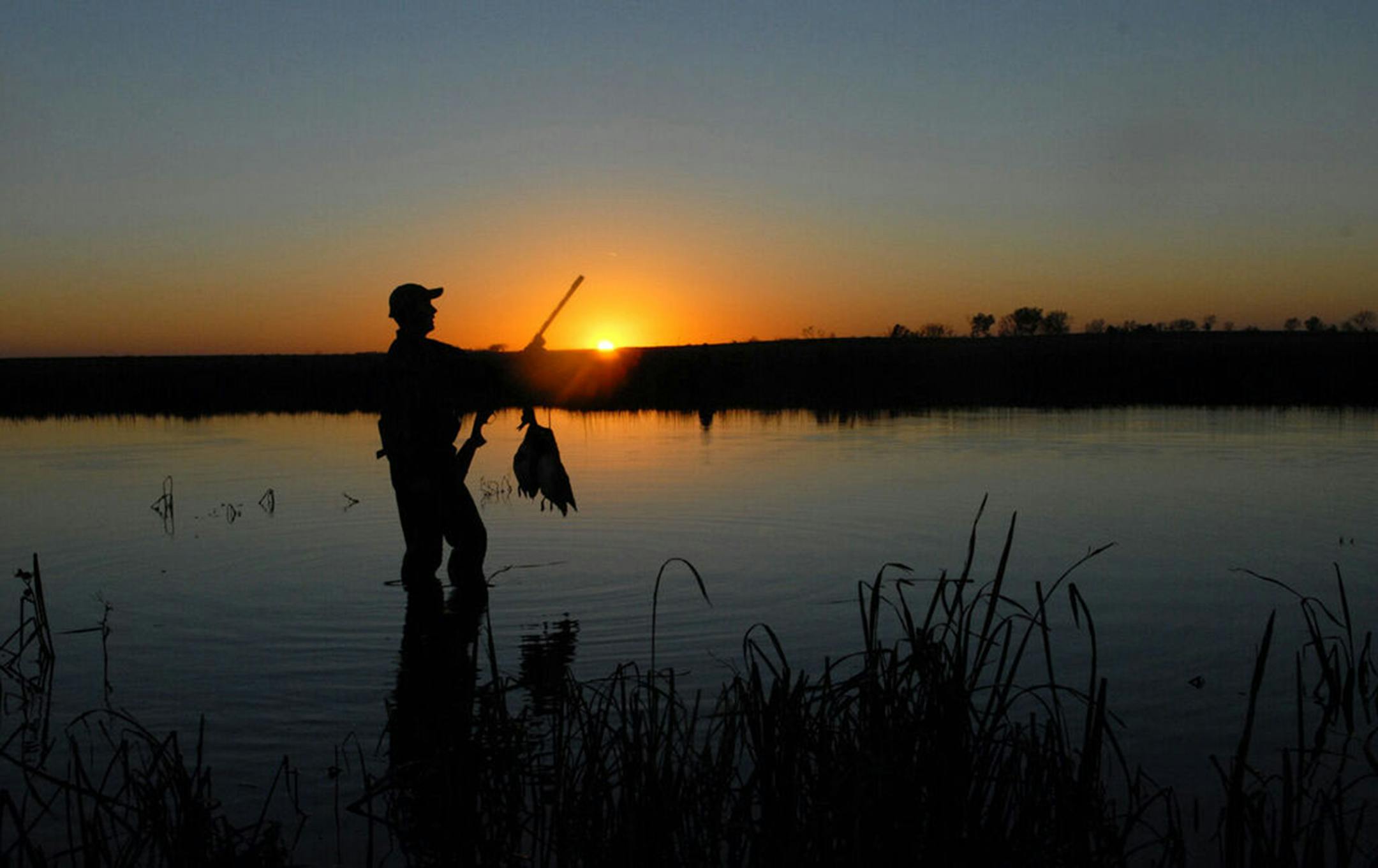
For generations, Minnesota fielded more duck hunters than any other state. Now about 55,000 waterfowlers hang on to the tradition, a decline of more than 80,000 from the state's peak. (Dennis Anderson)

In the 1850s, W.G. Gresham settled one of the earliest claims on Swan Lake, in southern Minnesota, a stone’s throw from the small burg of Nicollet.

Gresham, who later became a judge in St. Peter, Minn., had learned about waterfowl from Ishtakhaba, or Chief Sleepy Eyes, among other Native Americans. He shot brant and swans on Swan Lake, as well as ducks and geese.

When Minnesota entered the Union in 1858, Swan Lake was among a veritable feast of state lakes that hosted millions of migratory birds in spring and fall.

These included Heron Lake in southwest Minnesota, North Ten Mile Lake near Fergus Falls, Lake Christina near Ashby and scores of others. But Swan Lake was, and is, special, and for this reason, it and nearby Nicollet are fitting sites for the 2026 Minnesota Duck Summit, to be held March 27-28 in Nicollet.

The Duck Summit is a grassroots affair, and the temptation is to say it is organized by duck hunters for duck hunters.

Or by duck hunters for ducks.

But those days are long gone.

The Duck Summit will benefit ducks and duck hunters, to be sure. But more accurately, the event is a metaphorical bullhorn intended to wake people up, whether they hunt or not.

ADVERTISEMENT

Clean water is the rallying cry. Ducks need it so sago pondweed, wild celery, freshwater shrimp and other aquatic plants and critters can flourish. People need it so the lakes they swim in, the fish they eat and the water they drink aren’t contaminated, primarily by nitrates.

Careful readers will recall that in August I wrote that the Department of Natural Resources should hold a Duck Summit.

And for good reason. Minnesota waterfowler numbers have plummeted from a peak of more than 140,000 in the 1960s — and 122,000 as recently as 1998 — to about 55,000 diehards today.

And ducks? Once commonplace on state lakes and wetlands, Minnesota mallards and other dabbling ducks are now as scarce as hen’s teeth. Diving ducks have also gone missing. More than 500,000 bluebills, for example, were killed in the state in 1951, a tally that by 2011 fell to a mere 7,358.

Yet the DNR, which hosted a Fisheries Summit last year, and previously held a Pheasant Summit, didn’t think waterfowl warranted a similar convention, and declined the invitation to host a Duck Summit.

So the Fergus Falls Fish and Game Club, the Christina Ina Anka Lake Association and the Nicollet Conservation Club, along with various individuals, including me, organized it.

To their credit, DNR managers have since said they will attend and send biologists and others to present at the Duck Summit. Ditto the U.S. Fish and Wildlife Service, Ducks Unlimited, Pheasants Forever, the Board of Water and Soil Resources and the Lessard-Sams Outdoor Heritage Council.

Certainly the gathering in Nicollet won’t solve all problems affecting Minnesota ducks. For the indefinite future, some of the state’s 1,500 wildlife management areas and 1,300 federal Waterfowl Production Areas — all, in most cases, bought with hunters’ money — will continue to be treated as holding ponds for farmland runoff, a crying shame if there ever was one.

For generations, Minnesota duck hunters have borne witness to this embarrassment — their decoys set and their scatterguns locked and loaded — while seeing fewer and fewer ducks.

They’ve had enough.

They want more quality wetland and shallow lake habitat development and restoration in the state, and more research into why habitat the state does have doesn’t support ducks. They also want changes to the ways ducks are hunted in Minnesota.

More than that, they want Minnesota to reclaim its rightful reputation as a beacon of conservative waterfowl management nationally — not just another state trying to get its share, or more, of the Mississippi Flyway duck harvest.

Start with hen mallards.

With an average lifespan of only a year and a half, these ducks are being shot by waterfowlers who don’t understand how important they are to improving mallard populations.

Education, then, is a primary goal of Duck Summit organizers.

Don’t shoot hen mallards. Keep ’em flying.

Duck Summit organizers also want the state’s hen mallard limit reduced from two to one — a no-brainer — and the wood duck limit cut from three to two.

Regarding the latter, ask anyone who tends multiple wood duck houses — from wildlife photographer Bill Marchel in Brainerd, to wildlife artist Bob Hautman in Delano, to retired Star Tribune outdoors columnist Ron Schara and Duck Summit chairman Jim Cox near the Twin Cities — and they’ll tell you wood ducks aren’t returning to Minnesota in spring in the numbers they once did.

Also on the docket at the Duck Summit are the state’s early teal season, Youth Waterfowl Weekend, the early opener of the regular duck season, and over-water goose hunting during the September goose season.

Not only because hunting ducks so early in fall is an “abomination,” as the legendary waterfowl biologists Art Hawkins and Al Hochbaum described it. But because these hunts scatter and otherwise disturb ducks unnecessarily.

Many hunters believe the state should have only one “duck opener” and that it should be held on the Saturday nearest Oct. 1, as it traditionally was in Minnesota. Opening-day shooting time should be returned to 9 a.m. or noon, again to protect hen mallards; and over-water duck and goose hunting should end at 3 p.m. throughout the season to provide waterfowl in and passing through the state much-needed resting areas.

DNR managers might or might not agree with these ideas. Ditto their counterparts from other agencies and waterfowl groups.

They’ll have their say at the Duck Summit.

But so will Minnesota waterfowlers who believe these changes will improve Minnesota duck hunting by keeping more ducks in the state longer, while also increasing the chances more hen mallards will return north in spring.

The Nicollet Public School theatre, where the Duck Summit will be held, can hold 350 people, and duck hunters who attend will be polled on these ideas and others.

What do you think?

Use the 2026 Minnesota Duck Summit as your bullhorn. Register at the Fergus Falls Fish and Game Club website.

See you there.

about the writer

about the writer

Dennis Anderson

Columnist

Outdoors columnist Dennis Anderson joined the Star Tribune in 1993 after serving in the same position at the St. Paul Pioneer Press for 13 years. His column topics vary widely, and include canoeing, fishing, hunting, adventure travel and conservation of the environment.

See Moreicon

More from Sports

See More
card image
Renée Jones Schneider/The Minnesota Star Tribune

The Gophers improved to 2-1 since losing four key players to the 2026 Olympics in Italy.

card image