

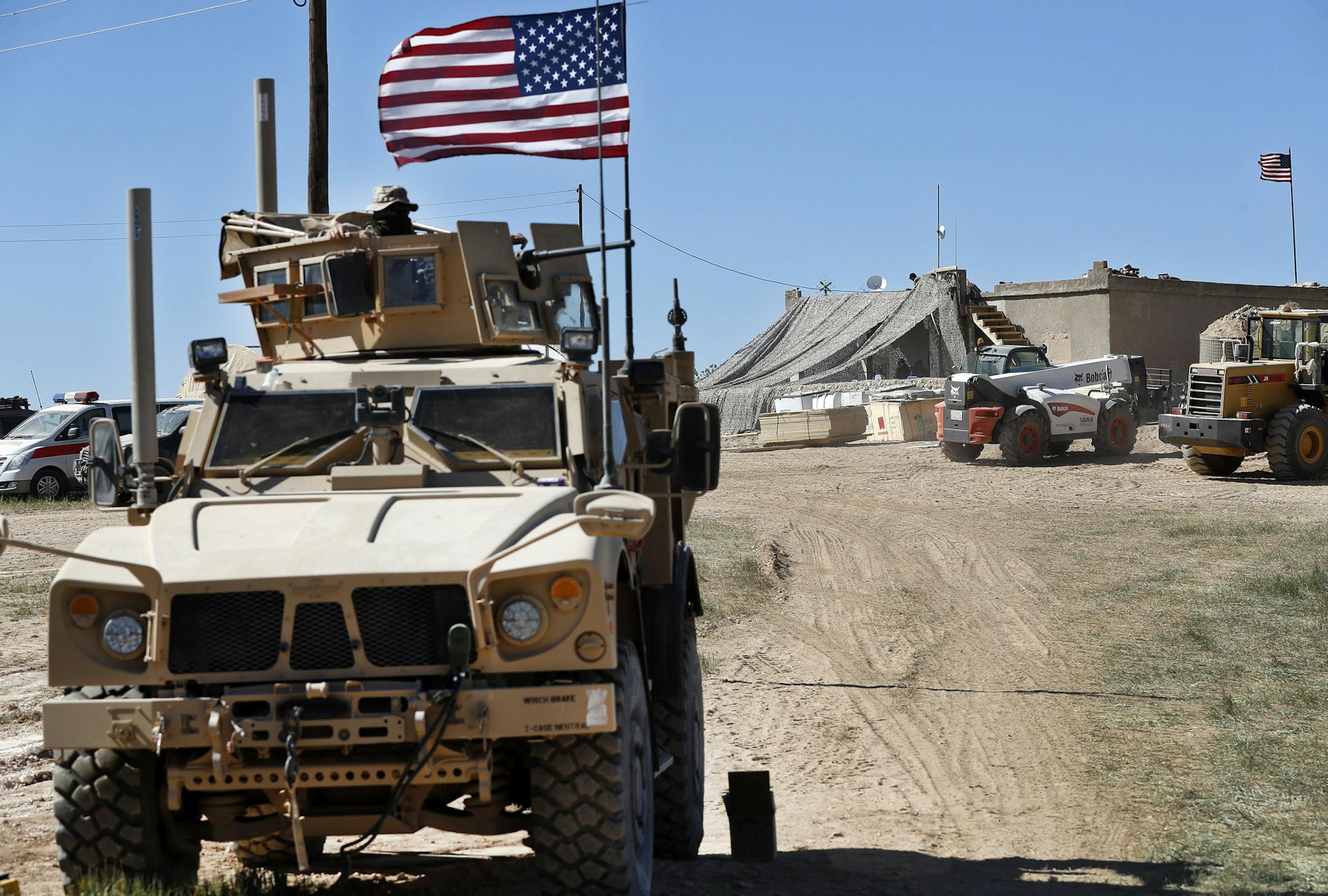
Under the presidency of Donald Trump, America's political parties have scrambled their traditional positions on war and peace.
The GOP has spent the bulk of the last 17 years arguing in favor of launching and then continuing overseas wars. But now some Republicans in Washington - and most Republicans in the country at large - back Trump's plan to withdraw most U.S. troops from far-flung battlefields.
Democrats, meanwhile, have argued for many of those same years that U.S. troops need to come home. While that is still Democrats' ultimate objective, many of them are responding to Trump's withdrawal plans with a call that sounds incongruous for them: not so fast, they say, let's keep the troops abroad at least a little while longer.
To be sure, there are plenty of members of both parties who are deviating from the new script. And the battle lines are still taking shape.
For instance, the Democratic presidential contenders, who are looking to appeal to the party's liberals, are, oddly enough, siding with Trump on the need to end U.S. involvement in the wars, though they would never put it that way.
And while most Republican voters seem to be taking Trump's cues on the need for withdrawals, he is facing fierce resistance from the GOP foreign policy establishment.
Out of this maelstrom of changing views, however, a bipartisan consensus is forming in the middle bands of the political spectrum, at least in the Capitol, around resistance to Trump's isolationism.
A Jan. 31 procedural vote in the Senate on a Republican-written resolution that would caution against a "precipitous" U.S. withdrawal from Syria and Afghanistan may be a bellwether of the new congressional consensus.


