
Is printing checks still a profitable business? We checked with Deluxe

CEO Barry McCarthy expects the company to pass a key milestone on its way to being known as a digital payments company.

The Minnesota Star Tribune
July 22, 2025 at 3:39PM
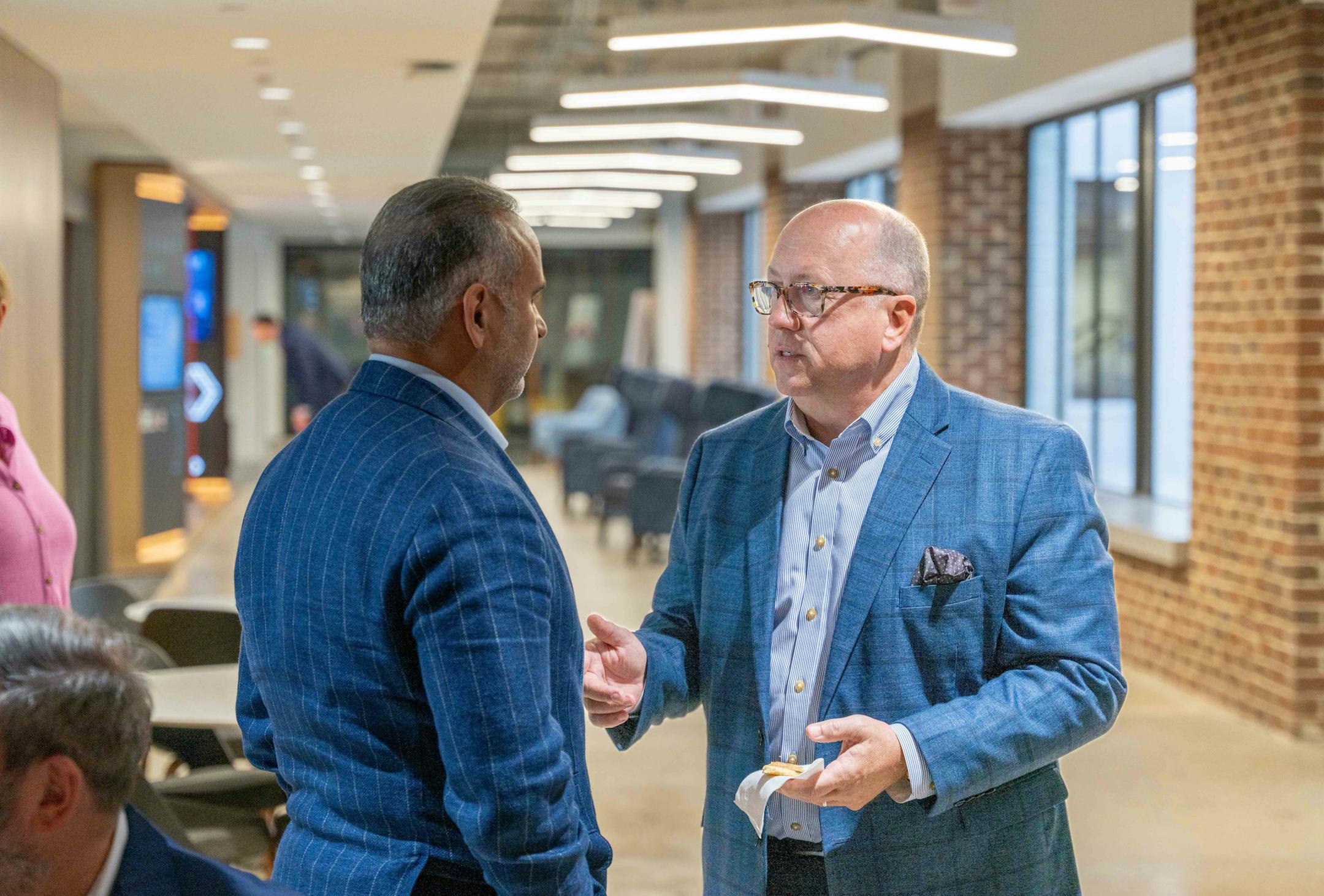
Deluxe CEO Barry McCarthy speaks with a Deluxe board member at a recent meeting at the company’s Minneapolis headquarters. (Provided by Deluxe Corp.)

Printing checks was the identity of Deluxe for most of its 110-year history. But as the preferences of consumers and sellers have evolved toward electronic payments, the well-known check company is working toward a new future.

Checks have been considered an alternative payment method for years now, but Deluxe today uses the legacy brand for revenue to fuel its growth as a 21st century fintech player.

Since starting as CEO seven years ago, Barry McCarthy has systematically reshaped the company. He exited many of the smaller lines of business that previous leadership teams had entered via 50 or so acquisitions.

The company has moved toward processing electronic payments and generating a huge cache of data that can be mined by clients for marketing insights.

In the process, McCarthy has added management talent and brought down Deluxe’s leverage ratio so the company has more options to return cash to investors or make a tuck-in acquisition to fill portfolio gaps, he said.

McCarthy also moved the headquarters of Deluxe to downtown Minneapolis from Shoreview in 2021. Deluxe has 268 employees who are required to work on-site three days a week, but are increasingly in more often. Deluxe also opened a new fintech innovation center in Atlanta, which has become a hot spot for digital payment companies.

Processing payments remains the DNA of Deluxe. But revenue from print, including printing checks, business forms and business accessories, declined 4% to $291 million in the most recent quarter, making up only 54% of its topline, down from 57% one year ago.

McCarthy spoke with the Minnesota Star Tribune about the transformation in an interview edited for length and clarity.

Q: What’s the status of Deluxe’s transformation today?

A: We set out to change the mix of the company, to use the legacy of the print payment business to become a digital payments and data company. We’re certainly not done, but the progress is really clear. We have exited and sold a bunch of businesses that don’t fit that strategy. We fundamentally rebuilt the entire operating infrastructure. We’ve moved everything to the cloud, so Deluxe at its 110th anniversary is a fundamentally different company than it was even five years ago.

Q: When will digital payments and data exceed Deluxe’s print businesses?

A: We are really proud of the progress, where we’ve got the payments and data businesses almost the same size as both of our print businesses (checks and business forms) combined. So I think in the next year or so, those lines will cross. And as much as we love the print business — It’s a cash machine. It’s got a great legacy — our future’s clearly on payments and data.

Q: How has the Deluxe name recognition fueled the transformation?

A: We’ve been using the legacy relationships from the print business to grow the payments and data business.

A check is a payment type. We talk about ourselves sometimes as the original payments company. And then we’re using the legacy and experience now to transition from physical or analog payments to digital payments, and using the data along the way to grow a data business as well.

Q: You’ve also invested in the print side and recently completed a multiyear effort to modernize your equipment to print on demand. Why?

A: The check business is going away slowly, and so we’re gonna be in the business a long time and make money along the way, deliver for customers, and then hopefully convert some of those customers to our digital offerings.

Q: Along the way you’ve sold some small-business services that no longer fit Deluxe. Where is the portfolio today?

A: We feel really proud of the products and the mix we have today. We think that is largely complete. I think we have just lapped our last divestiture.

Q: How is Deluxe using generative AI to continue the transformation of the company?

A: There are handfuls of examples, but I’ll give you two that I think explain the power of the technology and also, at the same time, explain the scale of Deluxe.

In our data business, we have built what we believe is the largest data lake of small-business and consumer marketing data in the country. We aggregate data from over 100 different sources, including our own data, and we use that data to help businesses find their next customer. But there are over a trillion different individual data points that we have to scan and manage to identify an individual target. So we have applied generative AI tools that get smarter with every search and query.

The second great use case is in our B-to-B business. We’re receiving billions of payments every month, billions of them. You’ve got to be able to match the payment you’ve received with who paid it and who’s supposed to get the money. Even if a very, very small percentage can’t be reconciled properly, [those exceptions are] a massive cost problem.

Somebody has to go and manage all of those exceptions. We are applying AI. Now, of the cases that need exception management, I think two-thirds of them are done without human intervention, which is a fantastic cost improvement.

about the writer

about the writer

Patrick Kennedy

Reporter

Business reporter Patrick Kennedy covers executive compensation and public companies. He has reported on the Minnesota business community for more than 25 years.

See Moreicon

More from Business

See More
card image
Provided by Exact Sciences

The late Dr. David Ahlquist co-invented ColoGuard, which is helping drive Abbott Laboratories’ acquisition of Exact Sciences. After an ALS diagnosis in 2019, Ahlquist wasn’t done inventing.

card image
card image