
Delayed consumer gratification

Layaway is making a comeback on heels of a sputtering economy.

October 9, 2012 at 12:38AM
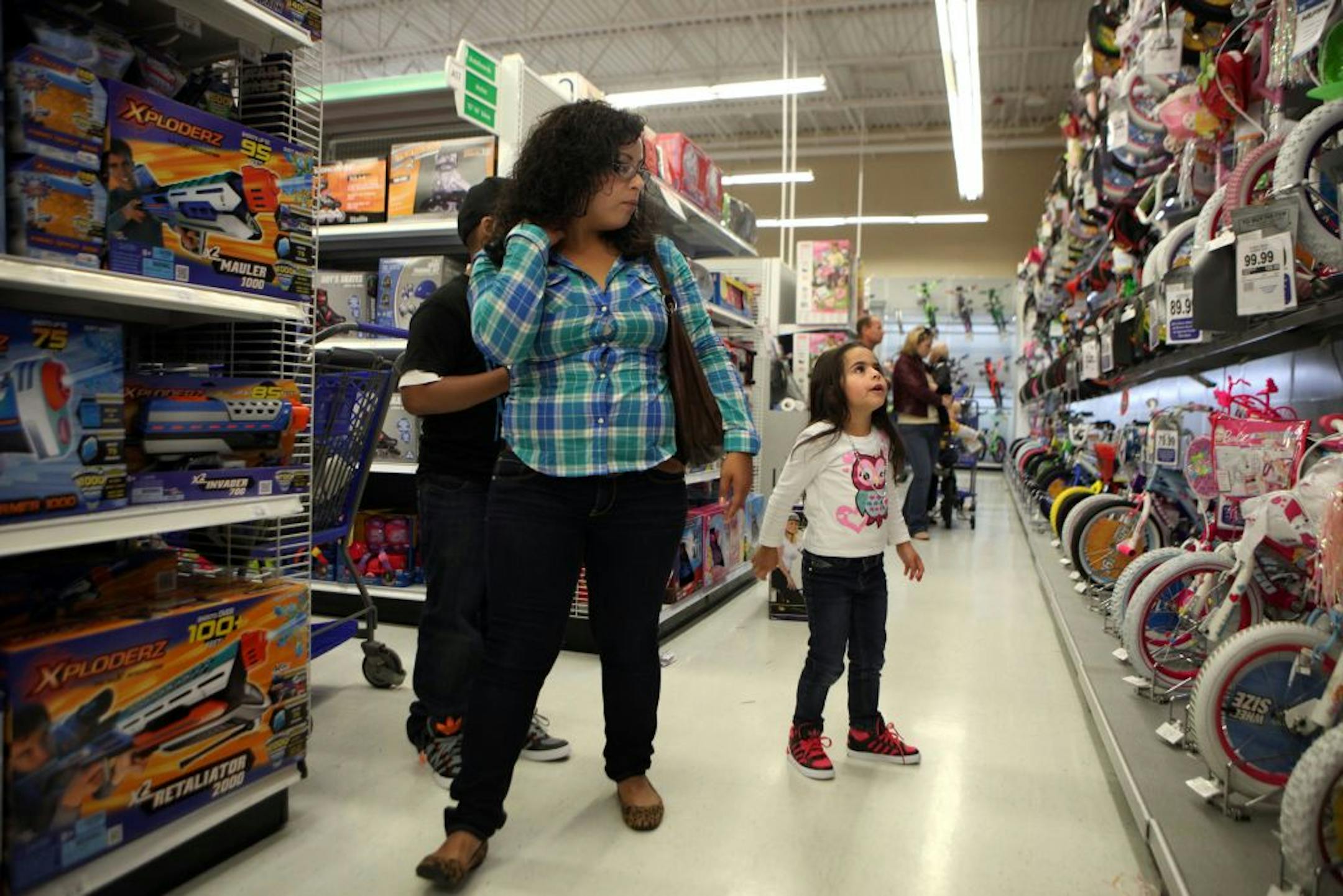
Some of the retailing biggies have already started holiday layaway programs, which may be good news for Chicagoan Anna Alnaser's two children, Jeremiah Rodriguez, 11, and Hinniah Alnaser, 4.
Some of the retailing biggies have already started holiday layaway programs, which may be good news for Chicagoan Anna Alnaser’s two children, Jeremiah Rodriguez, 11, and Hinniah Alnaser, 4. (Chicago Tribune/The Minnesota Star Tribune)

ST. LOUIS, Mo. - The resurgence of layaway in recent years -- with holiday layaway programs already up and running this year -- is a curious phenomenon for a culture that values immediate gratification.

Unlike paying with credit cards where you get your hands on an item now and pay later, with layaway you make interest-free payments on a product that you only get once it's paid off.

On the surface, layaway also doesn't always make the best financial sense. After all, it would probably be better to save the money yourself -- accumulate interest even -- and not have to deal with upfront or cancellation fees of layaway programs.

But Haim Mano, a marketing professor at the University of Missouri-St. Louis, notes that people don't always behave rationally.

"You could save the money and put it in the bank," he said. "However, the psychology here is different. People want to make a commitment and feel that the product is yours."

Self-control measure?

He added that layaway can be a form of self-imposed self-control for consumers who might otherwise be tempted to spend that money in other ways.

It's not so different, he said, from how some people will put their alarm clock farther away from their beds because they know if it's too close, they will just hit the snooze button and go back to sleep.

Besides, people often overspend beyond their means when they pay on credit cards, he said. That's a risk with layaway, too, but at least people don't put themselves at risk of high interest payments or of going into debt.

Layaway, which dates back to the days of the Great Depression, was a popular tool in the 1960s and 1970s when credit was hard to come by. But it began to disappear in the days of easy credit.

That has all changed in the last few years since the Great Recession with many retailers bringing back or expanding their holiday layaway programs. And this year, many of the big guys have been sweetening the deal for consumers.

First, Wal-Mart started its holiday layaway program a month earlier in mid-September to give consumers more time to pay for their purchases and the retailer also expanded the list of eligible items. Then Toys R Us announced it was waiving its upfront $5 service fee on layaway orders made by Oct. 31.

That prompted Wal-Mart to lower its service fee from $15 to $5, which you can get back in the form of a gift card after your final payment.

Then Kmart said it, too, would waive its service fees -- $5 for an eight-week contract and $10 for a 12-week program -- through Nov. 15. Sears is doing the same for orders placed through Oct. 29 and from Nov. 2 to Dec. 3.

This is all good news for consumers, making layaway an even better deal for consumers, said Richard Feinberg, professor of retail management of Purdue University.

"For the consumer, it's a terrific thing," he said. "They are more able to afford some of the things they want instead of going into debt on a credit card or not being able to buy them."

For low-income consumers who continue to struggle in this economy, there may be no better option, Feinberg added.

"If our economic system was booming and everyone was doing well, I'm sure retailers would rather not do layaway. It's a pain for them -- it takes time and money."

about the writer

about the writer

Kavita Kumar

Community Engagement Director

Kavita Kumar is the community engagement director for the Opinion section of the Star Tribune. She was previously a reporter on the business desk.

See Moreicon

More from Business

See More
card image
Spencer Platt

The U.S. stock market roared back on Friday, as technology stocks recovered much of their losses from earlier in the week and bitcoin halted its plunge, at least for now.

Attendees of Frostbike made their way through the convention Saturday at the Quality Bike Products campus in Minneapolis. ] (AARON LAVINSKY/STAR TRIBUNE) aaron.lavinsky@startribune.com Frostbike 2016 was held at the Quality Bike Products Campus on Saturday, Feb. 27, 2016 in Bloomington, Minn.
card image
