

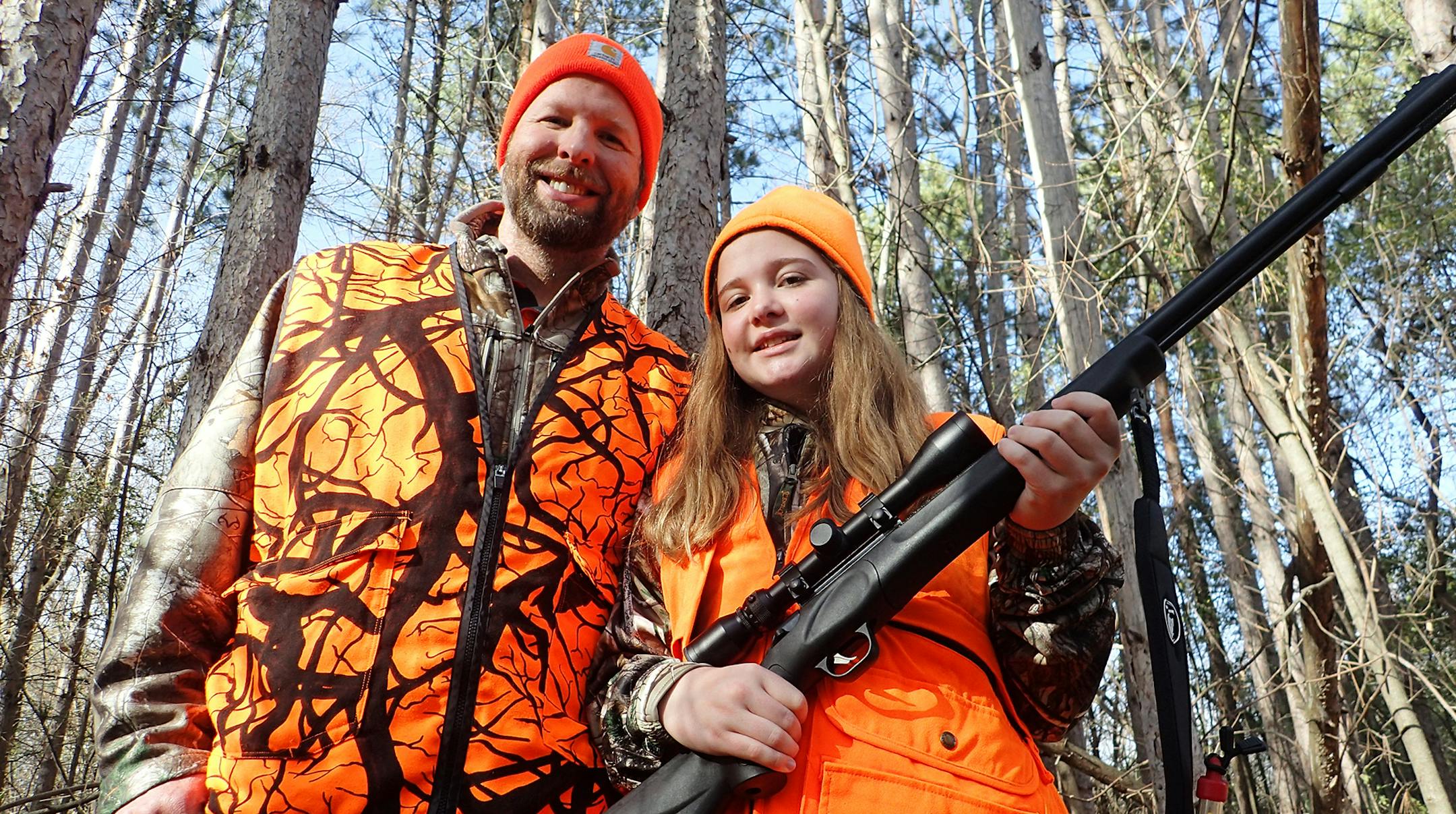
Hundreds of thousands of hunters across Minnesota will experience a true November deer opener Saturday when the state kicks off its firearms season in freezing temperatures.
If opening day of the nine-day firearms season also brings rain, as most forecasts predict, that could diminish the state’s annual whitetail harvest on the two biggest days of the year for deer management.
“It’s going to be colder weather and that usually bodes well for getting the deer moving,” said Paul Burr, acting big game program coordinator for the Department of Natural Resources. “But folks kind of draw the line when it’s cold and rainy. I am hoping the rain pushes away.”
Burr said a resurgence in whitetail populations following back-to-back mild winters bodes well for hunting success this year. Heading into the firearms season, archers and youth hunters have killed around 25,500 deer – up more than 10% from this time a year ago.
Participation in deer hunting is consistent with last year, according to DNR license sales, but Burr said hunters are seeing more deer. He said observers have reported good fawning rates this year, with lots of twins seen afield with their mothers. In the north this spring, there were very few reports of natural winter mortality, Burr said.
“The conditions have been huge for survival of adults and fawns,” he said.
Even in northeastern Minnesota, where deer are most scarce, the DNR has measured a 14% increase in whitetail registrations this year.
Minnesota ranks around 10th nationally in the hunting of whitetail deer. According to the DNR’s management plan for the species, 200,000 kills would make for an ideal annual harvest. If results fall short of the goal, the agency could tighten bag limits in some areas to increase herd size and improve the balance for the following season.


![Attendees of Frostbike made their way through the convention Saturday at the Quality Bike Products campus in Minneapolis. ] (AARON LAVINSKY/STAR TRIBUNE) aaron.lavinsky@startribune.com Frostbike 2016 was held at the Quality Bike Products Campus on Saturday, Feb. 27, 2016 in Bloomington, Minn.](https://arc.stimg.co/startribunemedia/NH2BSHB74ND2V6GF2G2HI5X4MM.jpg?&w=252&ar=3:2&fit=crop)