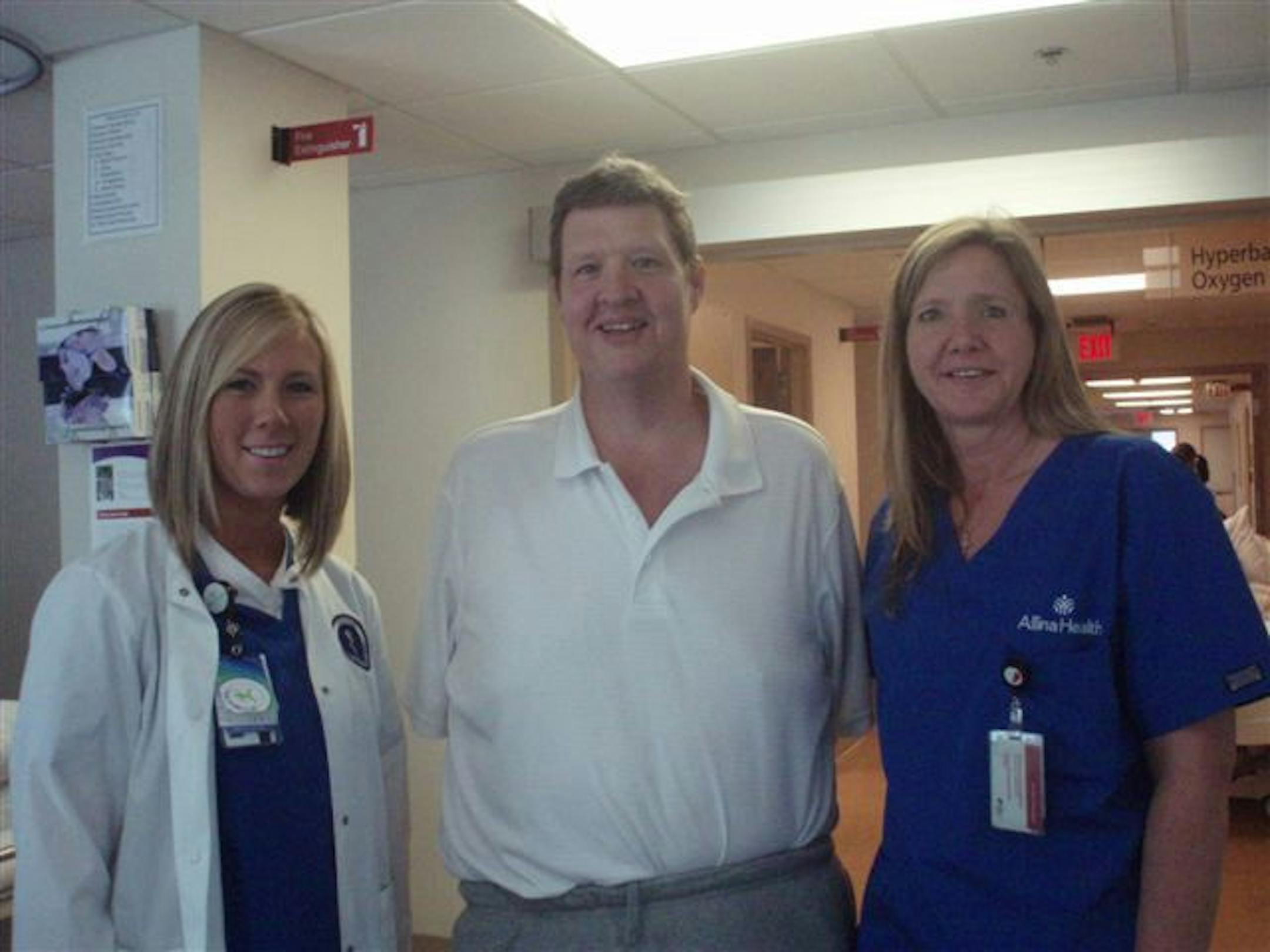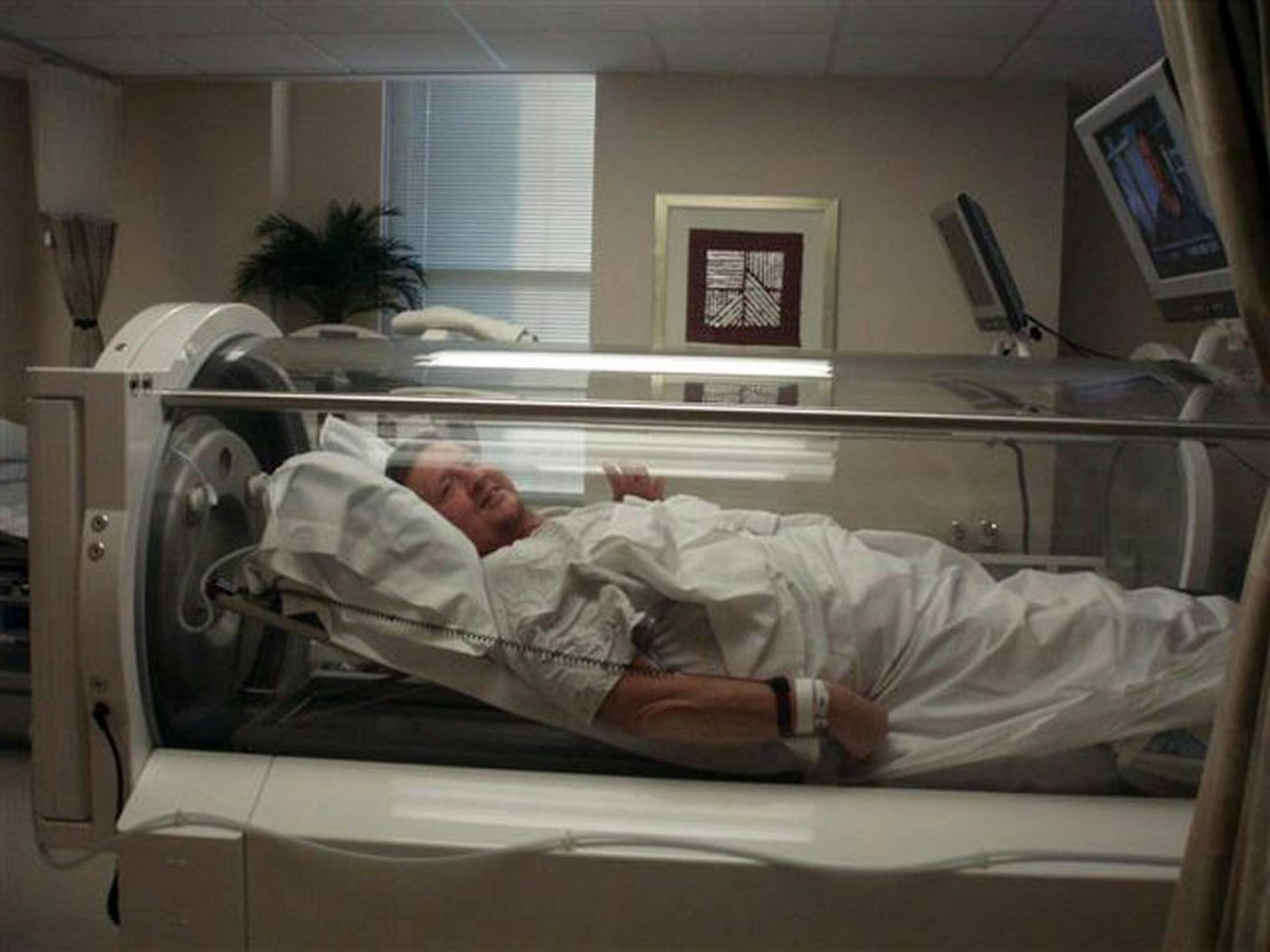
Mike Miller's journey into the little-known world of hyperbaric oxygen therapy started with a 10-pound wheel falling on the little toe of his left foot.
The injury ended a Caribbean vacation and caused a wound so gruesome that it threatened to take the foot. But Miller's expensive and months-long series of two-hour sessions in a clear plastic tube had him returning to work around Thanksgiving with two healthy feet and an appreciation for a therapy most identify with divers suffering from "the bends."
"Deep down inside, many figured I was going to get another infection in that foot and it would end up coming off, so it was amazing that everything went as well as it did," said the 51-year-old Williston, N.D., man.
Though a small part of the treatment universe, hyperbaric oxygen therapy is on the rise. The Hennepin County Medical Center reports that the number of civilian hyperbaric facilities in the United States has grown from about 25 in the 1980s to nearly 1,000 today. HCMC opened a new hyperbaric chamber in May, and last year gave more than 3,000 treatments for emergencies and illnesses ranging from carbon monoxide poisoning to life-threatening soft tissue infections.
"This has been around for 50 years. But for a long time, the main role had been for carbon monoxide poisoning and the bends," said Dr. Peter Alden, director of the hyperbaric program at Minneapolis' Abbott Northwestern Hospital. "This [wound care] is a newer trend, with growth in the last eight to 10 years."
The therapy is expensive -- about $10,000 for a full course of treatment at Abbott Northwestern. Medicare and insurance will pay for it, but in limited cases primarily related to wound care and damage from radiation treatment.
The therapy involves pumping pure oxygen into a pressurized room -- usually a clear tube -- to help a patient's lungs and body absorb more oxygen. That stimulates the release of substances called growth factors and stem cells, which promote healing and tissue growth.
Procedure has drawbacks