

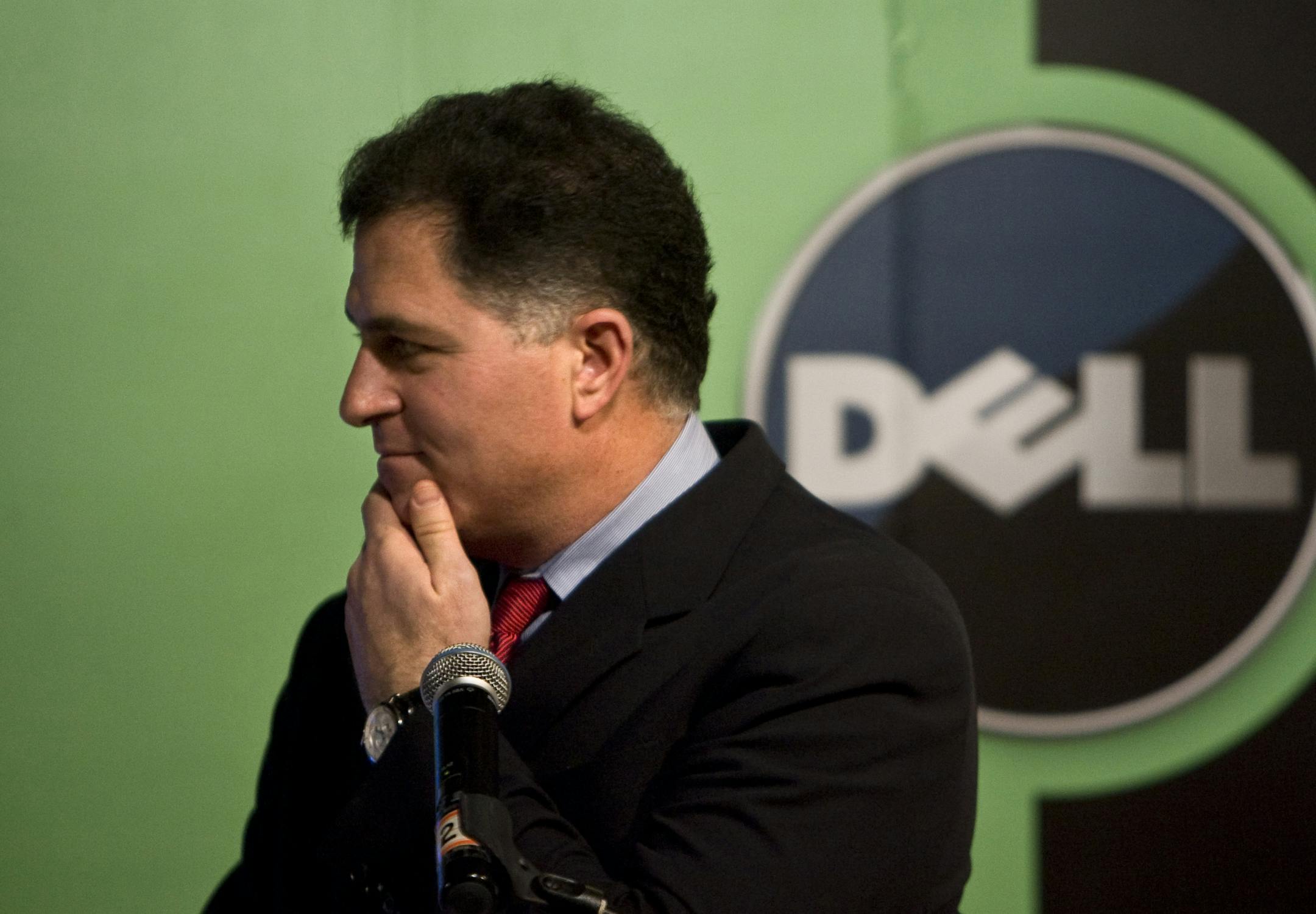
For Dell Inc., a $24.4 billion deal to take itself private is a bold move out of Wall Street's spotlight as it tries to remake itself in a world where personal computers are no longer the big business in technology.
Yet the buyout — which was announced Tuesday and would be the biggest by far since the days of the recession — is a huge gamble. It will saddle Dell with $15 billion of new debt, and it does nothing to divert the forces reshaping the technology industry and undercutting the company's business.
Fifteen years ago, Dell made enormous profits from selling customized PCs directly to customers. Six years ago, it was the world's leading maker of personal computers. Today, it is in third place, behind Hewlett-Packard and Lenovo, and falling.
Dell's share of an already contracting market for PCs slipped to 10.7 percent last year, from 16.6 percent six years earlier.
No-name rivals from Taiwan and China grind earnings to razor-thin margins. Android smartphones and iPads, not Windows laptops and desktops, are the bestselling and most moneymaking devices.
And while a shift to cloud computing has increased demand for data centers — an opportunity for Dell to sell servers — big customers like Google and Facebook build their own equipment cheaply. The rise of cloud services has also prompted many companies to forgo buying additional machines, instead relying on rented time and applications running on faraway computer networks.
Dell's share of the market for servers slipped about 1 percentage point, to 22.2 percent of 9.5 million servers sold in 2011. The greater problem in this segment is the pressure on profit margins. Shaw Wu, an analyst with Sterne Agee, estimates operating margins on servers, once about 15 percent, are now "in the high single digits, compared with the mid-single digits for PCs."
It is likely that servers will soon have PC-like margins, he said.



