

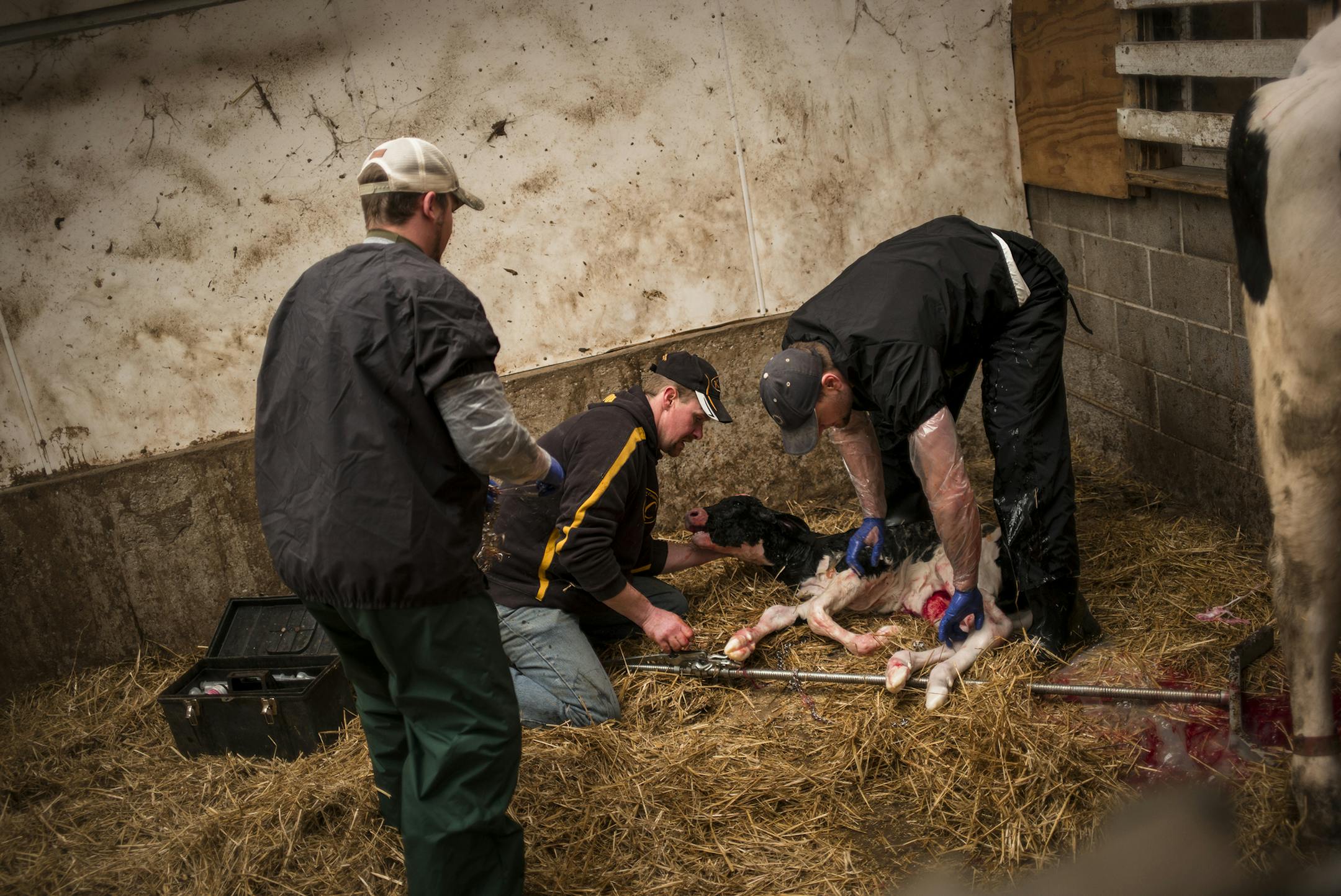
SHEBOYGAN, Wis. – Seven generations of Gartmans have birthed calves in this barn, a white-roofed, red-sided structure within a short walk of the land the first Gartmans are buried on.
But the bull that Luke Gartman, 36, pulled into the world on a recent Tuesday morning was a special one. This calf — steaming and soggy and apparently unbreathing, before Luke begins to poke his face with straw — could be one of the very last calves ever born on the Gartmans' farm.
The family has two weeks to find a new dairy processing company to buy their milk and sell it into the market. The contract with their existing buyer was just canceled, the latest casualty of an increasingly acrimonious trade war with Canada over the price of ultrafiltered milk, an ingredient used in cheese.
"We could be in a situation where we have to sell the cows," said Gartman's brother Matt. "If we're to that point of May 1 and have no solutions — well, we would no longer be a dairy farm."
The dispute — which has played out in surprisingly barbed remarks across the normally friendly northern border — illustrates the enormous complexity of fulfilling President Trump's promise to renegotiate the North American Free Trade Agreement, the free trade pact with Canada and Mexico.
While NAFTA is often portrayed as a single trade agreement to be negotiated, it has specific provisions affecting thousands of products in hundreds of industries. The trade pact contains terms governing dozens of different dairy products alone.
Reworking many of these, experts say, will involve not just complex technical discussions but a fight between powerful political interests on both sides of the border. And in almost every case, on the line will be the livelihoods of the people who grow or make the products, each with a compelling case for why their side should prevail.
This particular dispute has already affected 75 family farms, caused more than a $150 million in losses, and prompted a bipartisan alliance of lawmakers to demand that Trump deliver on his tough talk about protecting U.S. industries from unfair trade practices.



