As curling evolves, Team USA constant remains John Shuster

But even Shuster, trying to qualify for his sixth Olympics, now has a coach to study game theory and has easy access to analytics.

The Minnesota Star Tribune
November 15, 2025 at 4:20AM
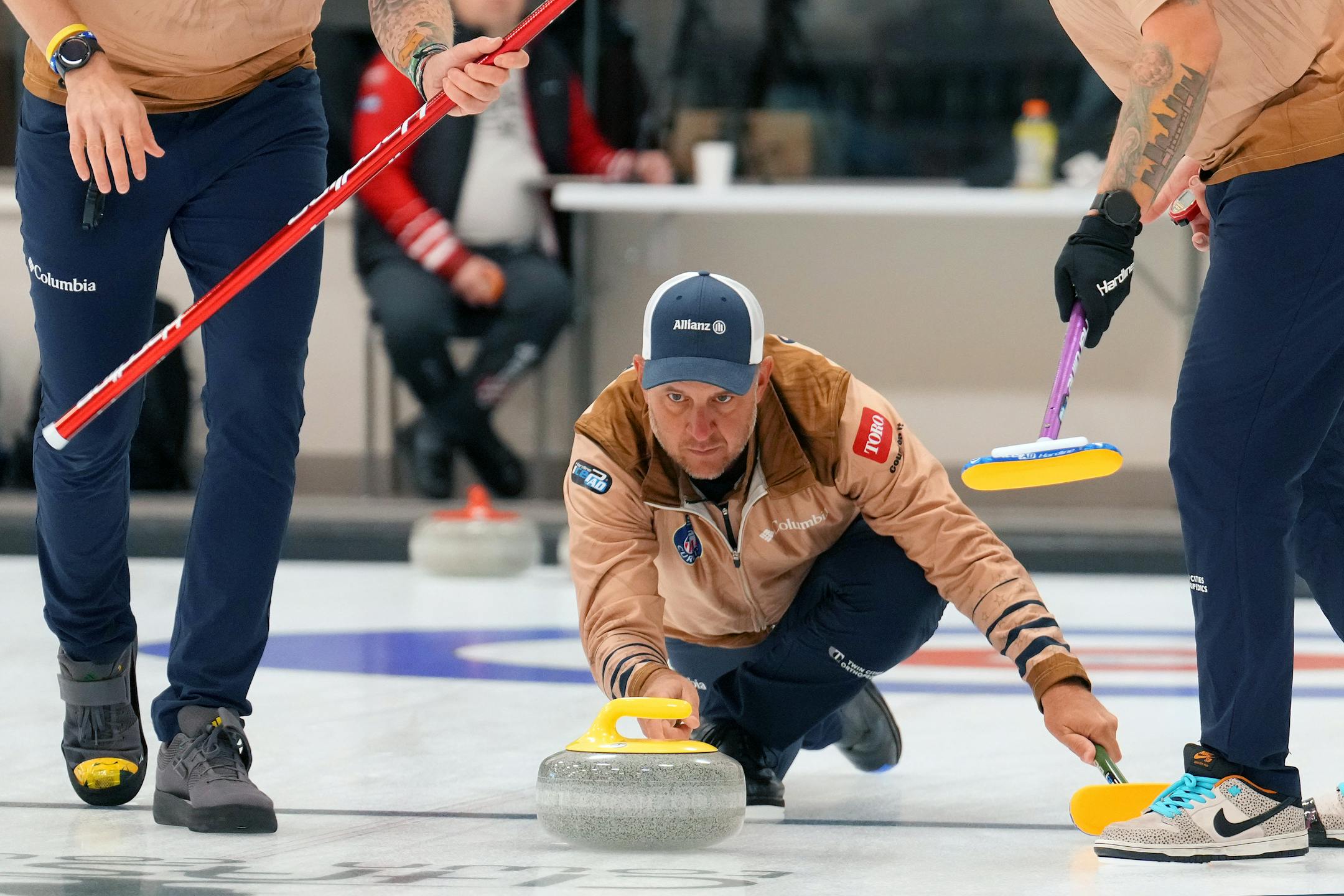
John Shuster competes in the Pan Continental Championship Playdown at the Chaska Curling Center on Aug. 8. (Anthony Souffle/The Minnesota Star Tribune)

SIOUX FALLS – By the time John Shuster and his merry band of curlers faced Caden Hebert’s team in pool play on Thursday, they had already blitzed through the schedule to qualify for the finals of the U.S. Olympic and Paralympic Team Trials.

Team Hebert, the junior national champions out of the Eau Claire Curling Club, decided to play like the savvy veterans of Team Shuster.

Shuster counted two in the ninth end only to see the kids tie the match at 7-7 with one in the 10th. But Shuster prevailed 8-7 in extra ends.

“They’re obviously our junior national champs, and none of these guys were alive when I played my first Olympic trials,” Shuster said with a chuckle. “But I mean they played an absolutely incredible game, like start to finish. I mean, I had to make two really, really, really good ones in nine to get two to even have a chance to force them in the 10th.”

Shuster’s first Olympics was 2006 in Turin, Italy. Now, he’s trying to return to Italy for the 2026 Winter Games, which will be held in February around Milan and Cortina d’Ampezzo. The men’s and women’s winners of the team trials will head to an Olympic qualifying event Dec. 6-18 in Kelowna, British Columbia, to compete for one of two remaining spots in the Olympic field.

This week’s trials have been a battle royale of top teams. There’s Shuster’s squad out of Duluth Curling Club being chased by teams skippered by Korey Dropkin (also out of Duluth) and Danny Casper, based at Chaska Curling Club.

Someone was going to feel the sting of not advancing out of pool play, and it was Team Dropkin that was 2-4 in pool play. It’s Team Shuster vs. Team Casper in a best-of-three series that began Friday. Shuster lost 7-6 in Game 1 and faces elimination Saturday.

“It’s all these teams,” said Shuster, 43, who won Olympic gold in 2018 and a bronze medal in 2006. “Casper and those guys are still extremely young. I look at, my best years probably were my 30s and, there’s nobody on Casper’s team in their 30s yet. And those Hebert kids.

ADVERTISEMENT

“So it’s, uh, yeah, the end is near.”

The talent level is stronger and deeper since Shuster’s first Olympics. But that is just one advancement since Shuster’s reign began in 2006.

Analytics are driving decision-making. There are numbers that prove that it’s better to keep blanking ends in order to keep the hammer, which is the last shot. It’s useful when you want to maintain control in games or put pressure on the other team.

During women’s pool play, a coach for Team Strouse spent a match against Team Johnson entering every type of shot taken, what the intentions were and what the outcome was to be used as training tools.

And then there was Theran Michaelis watching Team Shuster play. Shuster hired Michaelis as a coach two years ago, but in reality he’s around to help with game theory. It’s something that Scotland, Canada and some other countries have done.

“Our coach now has never played competitive curling in his life,” Shuster said, “but he was playing fantasy curling on Curling Zone, and he was the best at predicting winners. He would look at past games. We were like, ‘I wonder what that guy could do if he was with us?’

“He deep-dived into a lot of different things that have given us just a lot of confidence in the style that we’re playing, the calls we’re making.”

"Sweeping is such a huge part of the game that I don’t think people always realized, especially with the fabrics that we’re using now,” said Danny Casper. (Anthony Souffle/The Minnesota Star Tribune)

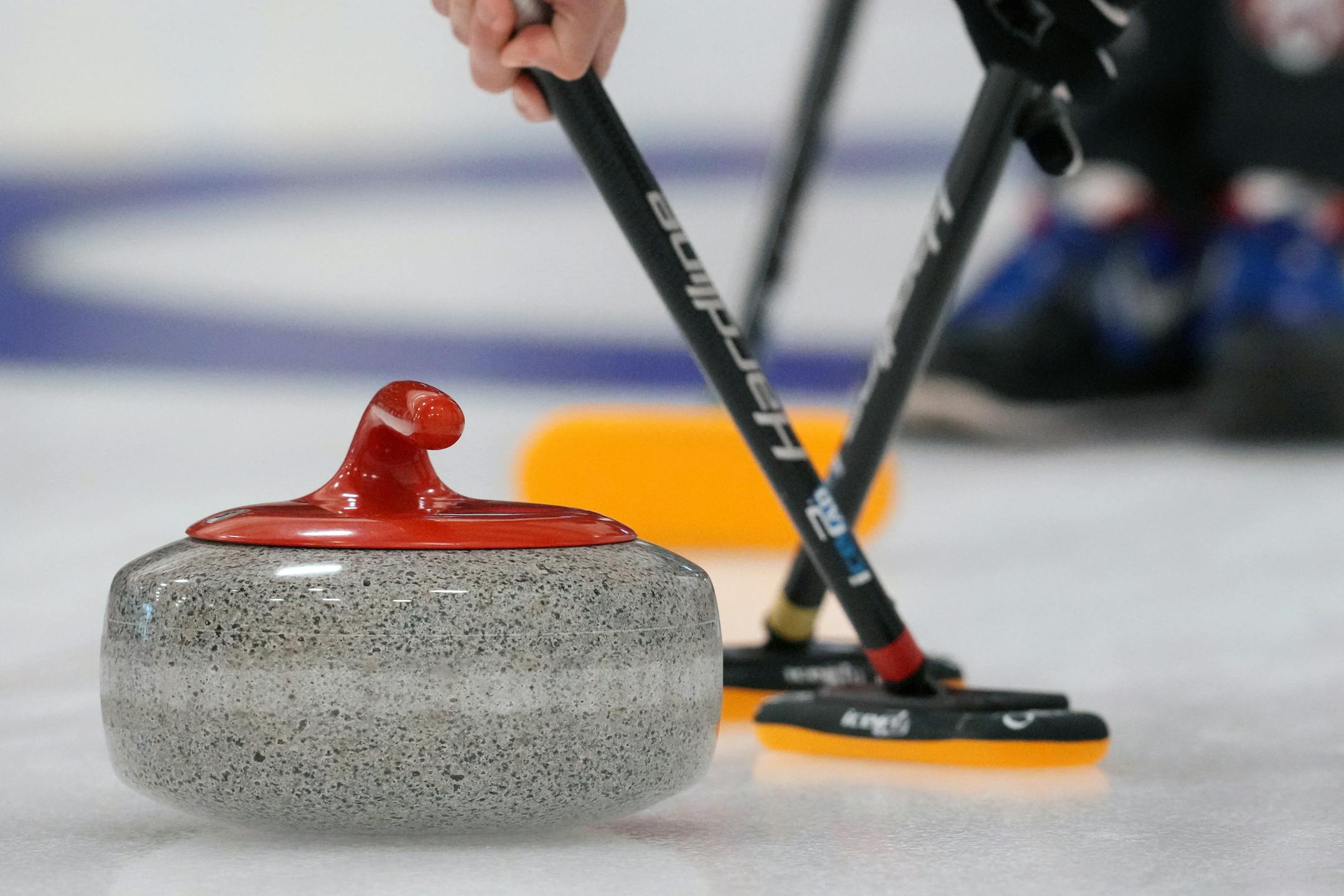
Players are getting bigger, particularly sweepers. Teams are finding that when larger humans put their weight down on the broom, there’s more effect on the rock.

Chris Plys, part of Team Shuster, has called teammate Colin Hufman the best sweeper in the world. Matt Hamilton is no shrimp, either. Jack Wendtland of Team Hebert looks like he should be blitzing quarterbacks.

“You know, sweeping is such a huge part of the game that I don’t think people always realized, especially with the fabrics that we’re using now,” Casper said. “So if you can get these two big, strong guys, which we have, that makes a huge difference, right?”

Team Peterson, which is skippered by Tabitha Peterson and includes her sister Tara, lost just once in pool play to sail into the women’s finals against Team Cousins. Tabitha Peterson, who grew up in Burnsville, is shooting for her third Olympics, Tara her second. They weren’t the only Minnesota sisters on the sheet at the Denny Sanford Premier Center this week.

On Team Johnson are sisters Allory Johnson, 17, and Gianna, 16. They are from Forest Lake and play out of the Four Seasons Curling Club in Blaine with a third team member, Morgan Zacher, 19, of Rogers.

Not much was expected from the junior teams here, but Team Johnson upended Team Cousins 7-6 in 11 ends on Thursday to force a Friday morning playoff between Teams Cousins and Strouse, which Cousins won. Team Peterson beat Cousins 8-4 on Friday afternoon in the first game of the final series.

Team Johnson left the trials with a win and experience gained from watching the Petersons and other top teams perform.

“We’re trying to really learn,” Allory Johnson said. “Like, the team that’s winning. How are they winning? How are they doing this? How are they doing that? So then for future experiences, if we get there one day, that we know what to do.”

Minnesota is the capital of curling in the U.S., with USA Curling moving its headquarters to the state in 2021. Both Dropkin and Casper moved from out east to grow their games. And local players like those on Team Johnson suggest that more are coming.

Tyler George, who won gold with Shuster in 2018 and will be a commentator in Italy, has noticed more nationwide growth over the past 10-15 years.

“You see clubs in Alabama, Texas, the Carolinas, California, places where we never saw curling before,” George said. “But it’s really evolved past, even looking [back to] the 60s and 70s, ashtrays built into the benches on the ice.

“It’s just a younger, more athletic game, and the best part is that we accomplished something that allowed us to have a platform to show people why we love the sport as much as we do.”

Amid the evolution, one man has continued to be the standard-bearer for Team USA.

That man, Shuster, is going for a mind-boggling sixth Olympics.

about the writer

about the writer

La Velle E. Neal III

Columnist

La Velle E. Neal III is a sports columnist for the Minnesota Star Tribune who previously covered the Twins for more than 20 years.

See Moreicon

More from Olympics

See More
card image
Carlos Gonzalez/The Minnesota Star Tribune

Jessie Diggins, Lindsey Vonn, two curling teams and more than a dozen hockey players with Minnesota ties have earned spots at the Milan-Cortina Games, which begin in February.

card image
card image