

A study released this week by medical technology firm Covidien could lead to wider use of its tools that cut through blockages in leg arteries.
The results showed that atherectomy, the practice of trimming away the plaque that causes peripheral artery disease (PAD), is just as effective at restoring blood flow as traditional angioplasty and stents. The company says this is a major step forward in treating PAD because, unlike stents, atherectomy "leaves no metal behind."
A stent is a tiny metal wire mesh tube that props open an artery and is left there permanently. But in leg arteries, the active flexing can cause a stent to break. Being able to clear the blockage just as well without stents reduces possible complications and gives greater flexibility to doctors later, said Brian Verrier, vice president and general manager of peripheral vascular for Covidien.
"This particular product plays very strongly into where we see the market going," he said. "The potential is huge."
Atherectomy is only used in about 15 to 20 percent of PAD cases, but Dr. Lawrence Garcia, a principal investigator in the study, said he expects that to change with these results.
"I think it has the potential to increase business for Covidien," Garcia, chief of interventional cardiology and vascular interventions at St. Elizabeth's Medical Center in Boston, said Thursday. He said he has no financial stake in the company.
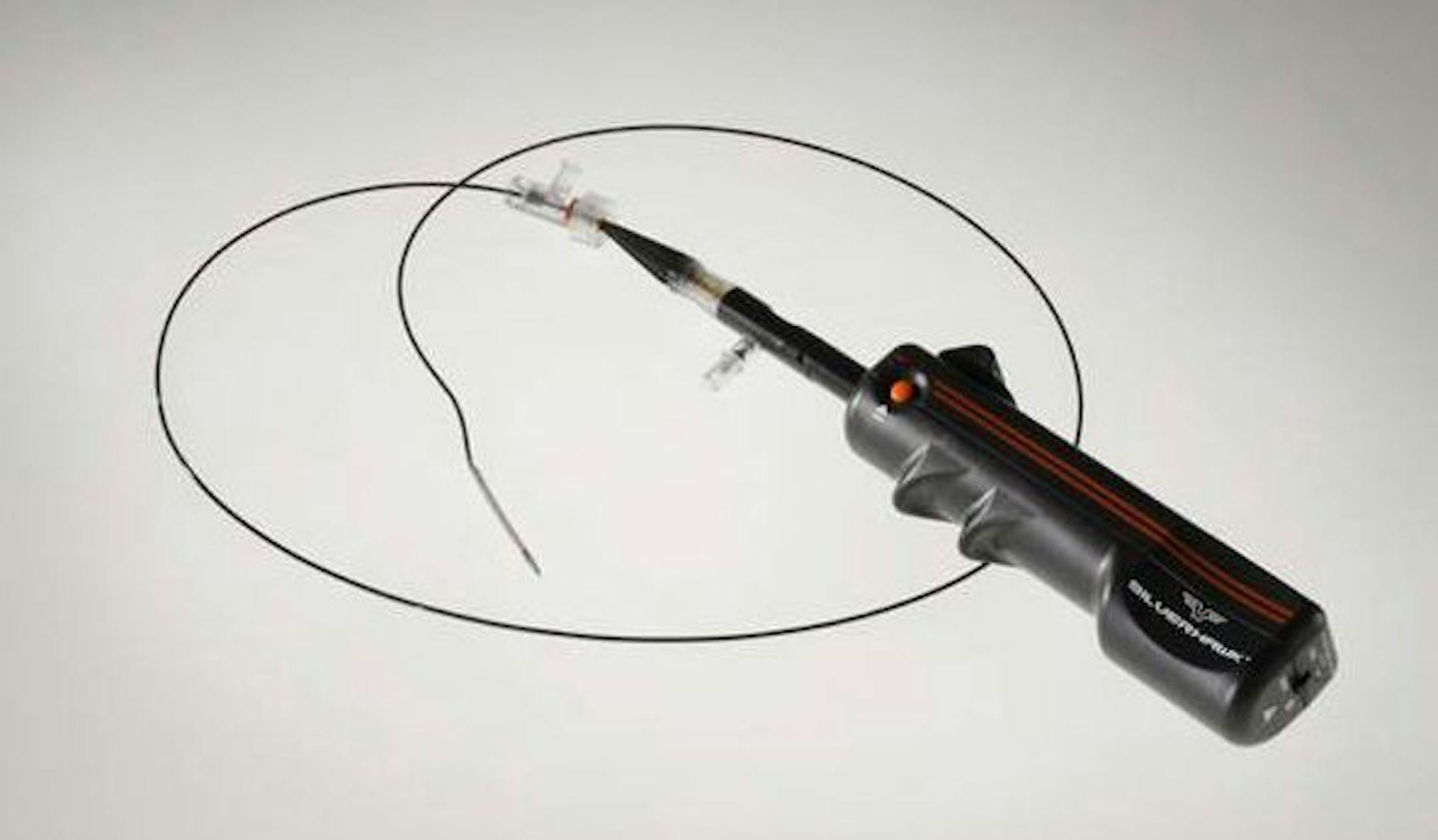
The study is the largest to look at the effectiveness of atherectomy, Covidien said, and enrolled 800 patients at 47 centers in the U.S. and Europe. Doctors found that Covidien's SilverHawk and TurboHawk devices, which are snaked down through a small incision near the groin and basically shave away and remove the plaque, performed as well after 12 months as angioplasty and stenting.
The devices had been developed at EV3 Inc., a Plymouth med-tech company that Covidien acquired in 2010.



