

Minneapolis-St. Paul doesn't need Amazon. Other places do. As a Seattle transplant, I can assure you we've got something precious here: an amazing metro area thriving and growing at a homegrown pace that the region itself has set and can handle. Amazon would change that.
I moved to Seattle from the Bay Area of California, fleeing the onslaught of tech-company-induced "progress." I have been one step ahead of such progress all of my life.
I grew up in West Los Angeles, moved to Santa Cruz, then Oakland, then Seattle. I loved each place while I lived there, only to watch each explode with the introduction of outside money. Everywhere I have lived, I've watched both longtime residents and recent arrivals get pushed out of neighborhoods as property prices soared. Inevitably, they are pushed out of the housing market altogether and, like me, move to a new city in search of new opportunity.
If you want your children to move away from the Twin Cities, by all means invite Amazon in to displace them.
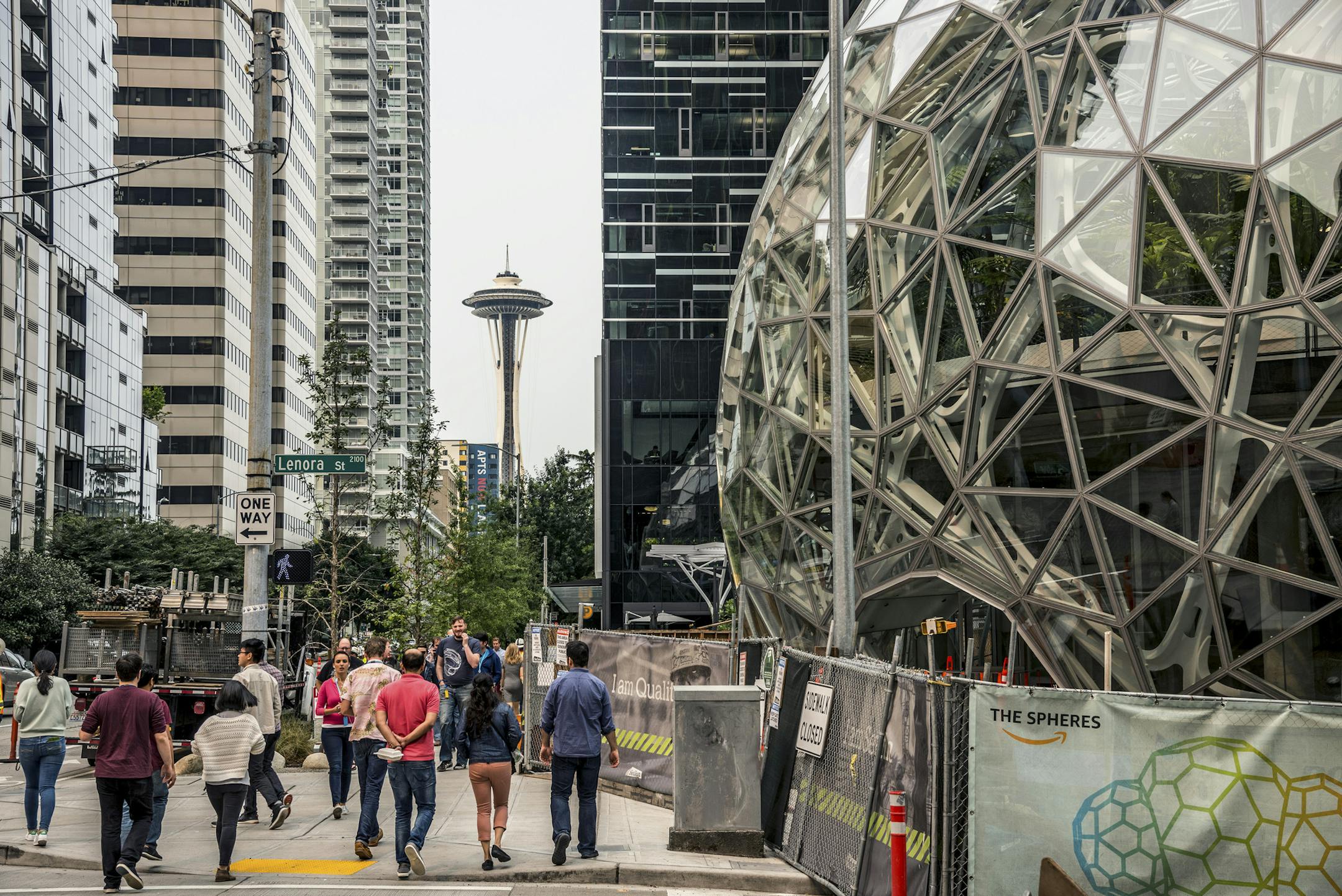
The Central District in Seattle, where I lived between 2006 and 2012, was a wonderfully diverse neighborhood with a rich history when I arrived. But it had the grave misfortune of being a mile and a half from where the new Amazon campus was built in South Lake Union.
I watched large family homes, many of them beautiful Craftsman-era structures, get torn down and replaced with six- or eight-unit townhouse complexes. These developments are generally built quickly and constructed of low-end materials, made to look slick and modern. They are accessible by subterranean, one-car garages, and the occupants rarely use their front doors. Every three-level condo, advertised as three-bedroom units to young tech workers, has a bedroom on each level. What family will inhabit a three-bedroom home with a bedroom on each level?
I've watched these types of developments replace half of the homes on single blocks in a five-year period. The Central District will never be a neighborhood again. Kids won't grow up there. Neighbors won't stay long enough to know each other. It is forever fated to be industry housing for itinerant tech workers.
The people who arrive with such an extravagant injection of money may really like things about their new place, but the surplus of money that moves through such an engorged system inevitably corrupts the qualities it is drawn to. I watched Capitol Hill — an old neighborhood east of downtown Seattle — transform from an intricately organic ecosystem of coffee shops, restaurants, venues, music stores, thrift stores, etc., into a slick mock-up of the same.


