

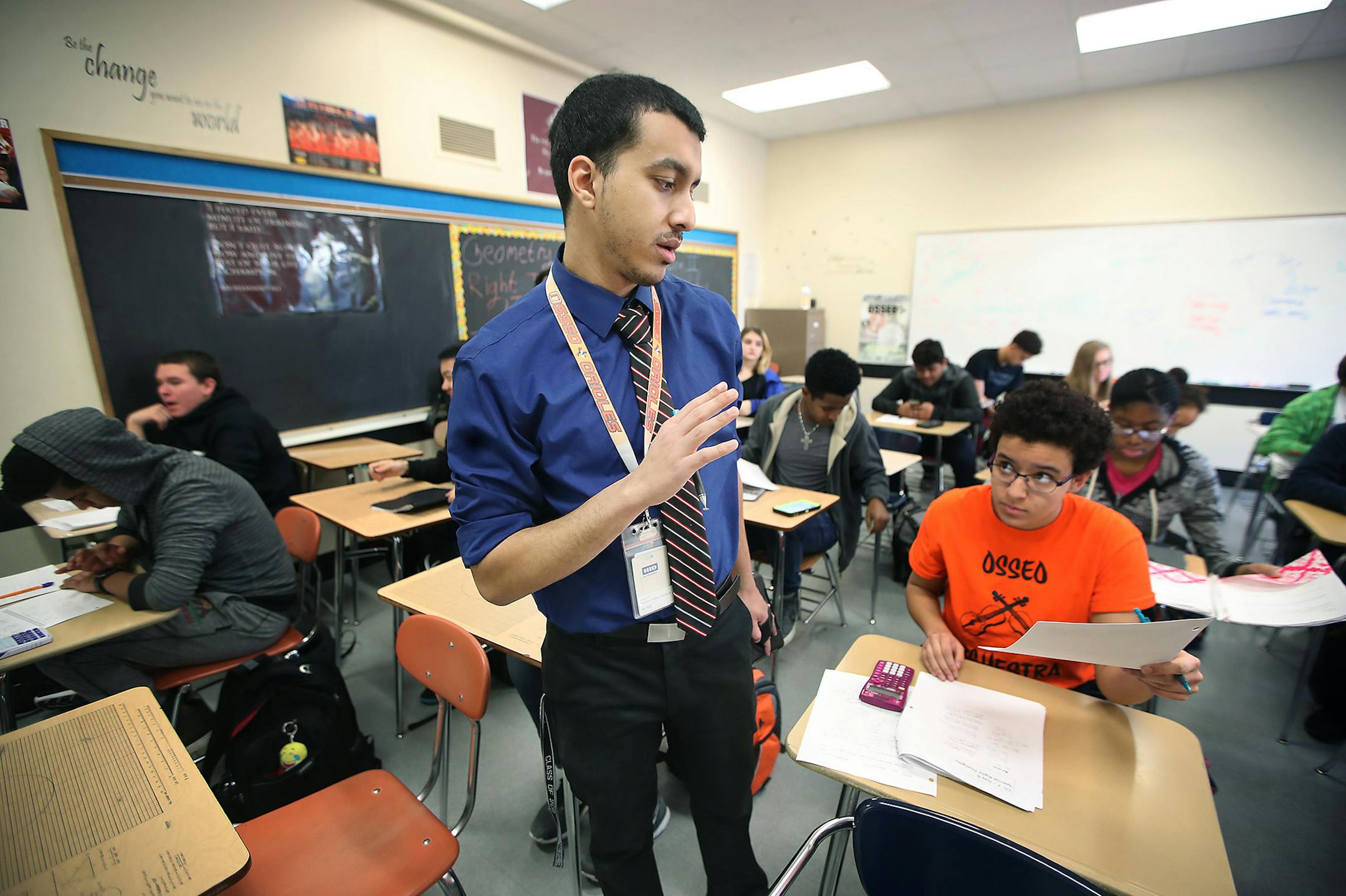
On Feb. 3, the Star Tribune reported on the results of the Minnesota Department of Education's 2017 Teacher Supply and Demand Report ("More Minnesota teachers leaving jobs, new state report shows"). The main findings of the article are that Minnesota teachers are increasingly leaving the profession. The report, however, does not bear out this conclusion, and neither the news article nor the report provides analysis as to what policymakers might do to improve the state of the teaching profession in Minnesota.
The news article said the report found a "46 percent increase in the number of teachers leaving the profession since 2008." This statistic is a misleading representation of the report's findings, leaving the impression of a crisis in teacher loss in Minnesota.
First-year retention rates of teachers in Minnesota schools have actually improved, according to the report, with 17.4 percent of first-year teachers leaving in the 2010-11 school year, compared with 14.1 percent leaving in 2015-16. A 14 percent attrition rate from teaching is not a number to be proud of, and one that we should try to understand, since this much revolving-door action in any profession is costly and results in instability in the workplace.
If we put the first-year teachers into the overall population of teachers in Minnesota, the report shows that the total number of teachers in Minnesota has increased steadily, suggesting that hiring and retention rates have improved overall. Then, look at why teachers in general are leaving their positions. Within the total population of 6,546 teachers who left their positions in 2014-15 (the most recent cohort in the report), some decisions to leave are out of our policy control — 22 percent leave due to retirement. Some leave due to personnel decisions — 12 percent are not offered re-employment for reasons other than staff reduction.
But 25 percent leave for personal reasons. We do not get much insight on these personal reasons from the report itself. National data on teacher attrition suggest that teachers' main personal reasons for leaving the profession are lack of administrative support, lack of participation in decisionmaking, and noncompetitive salaries. This suggests that a large portion of teachers who leave might be enticed to stay if they felt more supported in reaching their professional goals, had more voice in local decisionmaking and were compensated at professionally competitive levels. Nationally, according to data from the Learning Policy Institute (also cited in the Star Tribune report), Minnesota's starting salary for teachers is $1,636 below the national average of $36,141.
We must also be careful not to interpret the data reported as "leaving their position" as meaning leaving teaching altogether. More than 1,000 of the teachers who left in 2014-15 actually changed teaching jobs in Minnesota — moving to a different school district or charter school. This churn of teachers across districts is not a recruitment or supply problem. When one-sixth of your labor force is moving within the system, then we need to look locally at the school districts to see why there is so much movement within and across district lines.
I read through each of the individual survey comments in this report and was overwhelmed with the urgency that our rural schools are reporting that they cannot keep teachers locally when salaries are more competitive in their neighboring district. Charter schools lose teachers to school districts that offer better insurance coverage (or any coverage at all). Our urban core teachers gain valuable experience working with a culturally and linguistically diverse student body, then get recruited away to suburban schools that have more financial supports for salaries and facilities.
The Star Tribune article suggested that "Minnesota legislators are looking at ways they can tackle teacher licensure and vacancies" and that bills are starting to come forward for consideration. Before we put all of our legislative efforts into licensure issues and recruitment schemes — a small, but important part of this larger systemic issue — let's take a few lessons from where teaching is a less volatile profession.


