

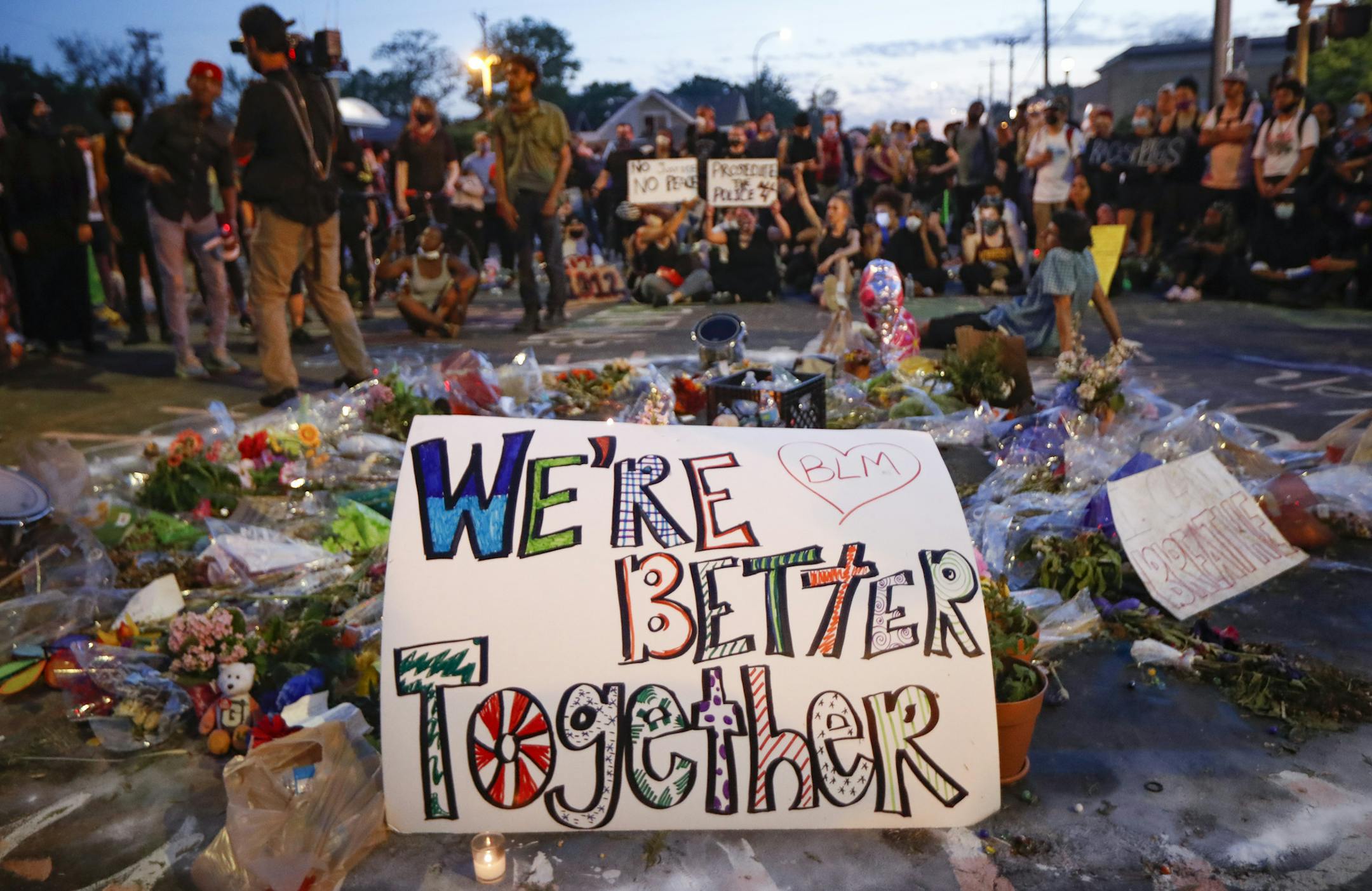
As residents of the area comprising a five-block radius around the intersection of E. 38th Street and Chicago Avenue (George Floyd Square), we feel compelled to respond to "Memorial by day, gun haven by night," (front page, Nov. 12). Our lived experience over the last five-plus months runs counter to the tenor of this article and its depiction of life in our community.
The article's characterization of our neighborhood fails to contextualize the events described in light of the unprecedented times in which we are living. It neglects to acknowledge how many people in the neighborhood have come together to build safety through community.
The article does not explore the many factors that have contributed to the rise in violent crime in cities like Minneapolis across the country, most notably the intersecting crises of a global pandemic and the deep economic insecurity that many in our community are facing. In addition, the onset of warm weather last spring and the lifting of stay-at-home orders (Minnesota's came on May 18) both coincided with the increase in crime. When media outlets reference violence "after the death of George Floyd," they are not recognizing the interconnectedness of all these factors, and are suggesting a false equivalency between the incident and the violence.
This kind of reporting relies on the false premise that correlation implies causation.
Second, the article fails to distinguish between what occurred in the "immediate aftermath of Floyd's death" and the current climate. The juxtaposition of various events — including a July 9 investigation at the center of the article, with undated quotes from select residents — gives the impression that we are currently undergoing a crime "plague."
The uprising of last spring and subsequent few weeks aside, our experience as residents and people who have shared space at George Floyd Square contradicts the assertion that gang members use the barricades "to vet who enters the area," as well as the suggestion that the space that has been "effectively taken over by gang members." The article also includes the contradictory assertions that police treat the area as a "no-go" zone" where they are reluctant to respond, and yet are "continuing to do a good job."
As a result of these fallacies and contradictions, the article perpetuates the false narrative that the site of George Floyd's death and the surrounding barricades are the catalyst to brutal, unabated crime.
On the contrary, we have not experienced said crime as a "plague" in our community. We invite a read of a counternarrative presented by the Sept. 16 article "A changed-up National Night Out takes on new meaning in Minneapolis." It describes a neighborhood block party held at night just blocks from 38th and Chicago.


