
Could your smartwatch help detect the next COVID-19 outbreak? Scientists think so

Scientists say wearable devices might help spot cases and contain outbreaks.

November 4, 2020 at 11:33PM
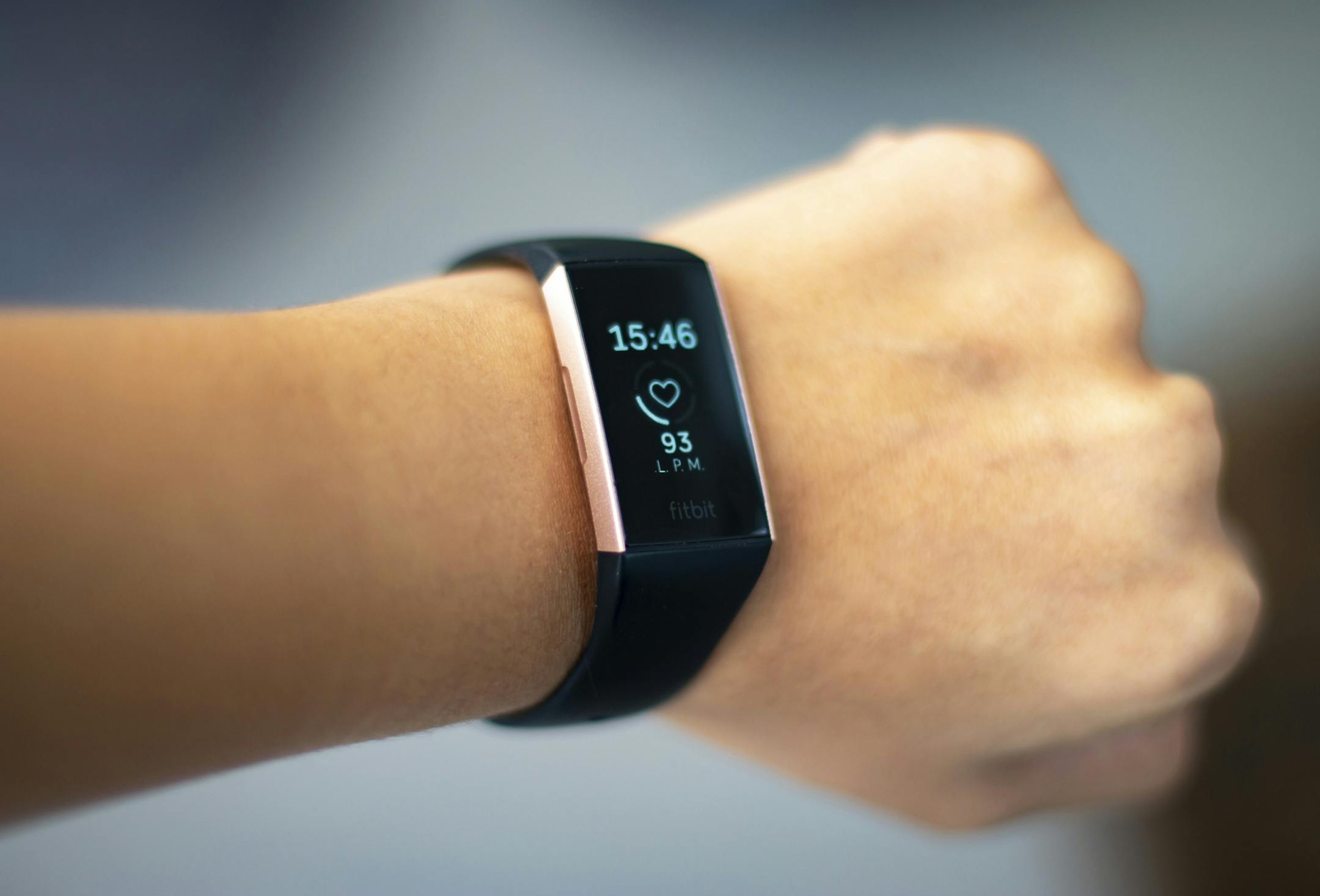
Scientists at Scripps Research found that wearable device data coupled with self-reported symptoms helps predict whether someone has COVID-19. (Dreamstime/TNS) ORG XMIT: 1816435
Scientists at Scripps Research found that wearable device data coupled with self-reported symptoms helps predict whether someone has COVID-19. (Dreamstime/TNS) ORG XMIT: 1816435 (The Minnesota Star Tribune)

A new study by scientists at Scripps Research describes a tool that could help public health officials spot and contain COVID-19 outbreaks.

You might already be wearing it.

One in five Americans owns a wearable device, such as a Fitbit or Apple Watch. These gadgets monitor your heart rate, how many steps you take and your sleep patterns — measurements that often change when you are sick.

Scripps scientists found that combining wearable-device data with symptoms predicted whether a person had COVID-19 better than either input on its own.

That makes these popular devices a way to potentially track the scope and spread of the pandemic, says Dr. Eric Topol, director and founder of the Scripps Research Translational Institute and executive vice president of Scripps Research.

"Everyone talks about 'test, test, test.' That isn't working," said Topol, one of the study's authors. "We need other ways to track the toll of the virus and who might be affected."

The study findings, published in the journal Nature Medicine, are part of the ongoing DETECT study (Digital Engagement & Tracking for Early Control & Treatment). Roughly 30,000 people across the U.S. enrolled between March 25 and June 7, sharing data from their wearable devices and reporting symptoms when they felt sick.

About 3,800 participants reported symptoms that ranged from a stomachache to a cough to difficulty breathing and a loss of taste and smell. Of those who felt sick, 333 were tested for COVID-19; 54 tested positive and 279 tested negative.

The researchers then tried to predict who would test positive or negative with a statistical model based on self-reported symptoms; it performed about as well as a model based on wearable device data (heart rate, step count and sleep length). But combining the two predicted COVID-19 test results best.

"I see this approach as being more useful on a population level, in terms of seeing more activity in a population over time," said Dr. Chip Schooley, a UC-San Diego infectious-disease specialist, who was not involved in the study.

Topol agrees, noting that researchers could regularly monitor wearable device data and self-reported symptoms to spot COVID-19 outbreaks and tip off public health officials, who could then ramp up community testing and other measures to curtail the virus's spread.

Thus far, the United States has struggled to slow the pandemic. More than 9 million Americans have been infected with the coronavirus and 229,000 have died. The U.S. is now reporting more than one new COVID-19 case a second.

about the writer

about the writer

Jonathan Wosen, San Diego Union-Tribune

More from Business

See More
card image
Provided by Exact Sciences

The late Dr. David Ahlquist co-invented ColoGuard, which is helping drive Abbott Laboratories’ acquisition of Exact Sciences. After an ALS diagnosis in 2019, Ahlquist wasn’t done inventing.

card image
card image
