

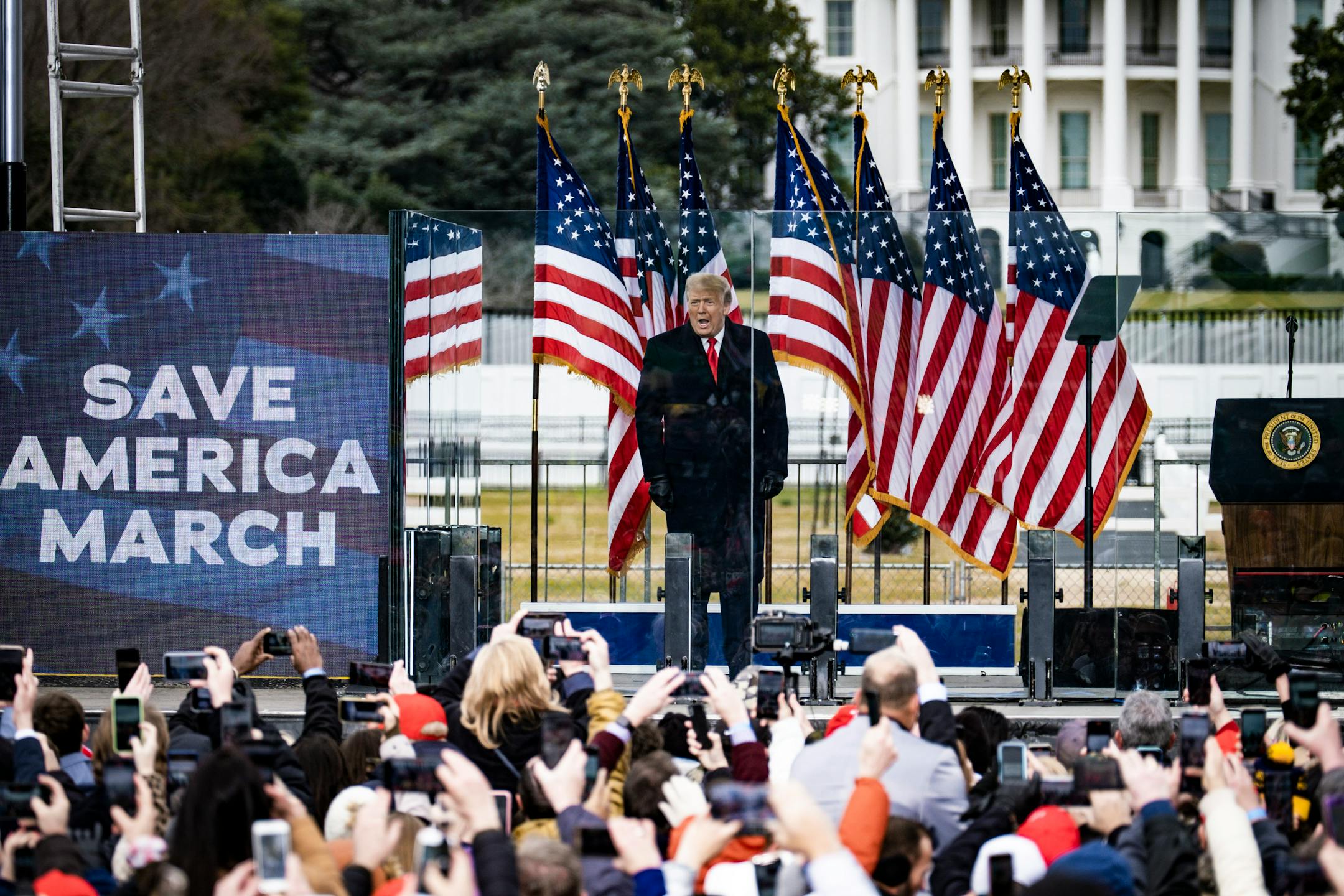
Rep. Bennie Thompson, the Democratic chair of the House Select Committee investigating the Jan. 6 Capitol attack, has made it clear that the panel is focused intently on former President Donald Trump's three-plus hours of scandalous silence as the insurrection raged.
Commentators have suggested that as odious as Trump's silence may have been, it does little to ground a criminal case because criminal law punishes people for action rather than inaction.
But that principle has important exceptions that apply precisely to Jan. 6 and Trump. Beyond that, as more evidence is revealed, it's increasingly obvious that the former president did act — by encouraging the disruption of the election certification. All in all, a criminal referral to the Department of Justice is a real possibility (whether Attorney General Merrick Garland pursues it is another matter).
Here's how the action-inaction distinction operates: Criminal liability generally requires the combination of intent and action, which is why omitting to act typically doesn't land you in jail. But when a defendant has a legal duty to act and does not, the principle gives ground.
Say a lifeguard neglects their duty to save a floundering swimmer or a father refuses to support his family. In those situations, the omission is the action required to ground a criminal charge. (It still must coincide with a culpable intent, or mental state; more on that below.)
Not surprisingly, there is no express case law on whether the Constitution's "take care" clause — which instructs the president to "take Care that the Laws be faithfully executed" — gives rise to a legal duty to do more than just stand by as the Constitution is trampled and members of Congress and a peaceful transfer of power are endangered. But it is hard to see how it could be otherwise.
Inaction is also no protection from criminal liability when its opposite is necessary to prevent damage caused by previous conduct, even innocent conduct. A driver who hits a pedestrian, even if the driver is not at fault, can't just leave the scene. Or, if you happen to have poison sitting around the kitchen that looks like sugar, you can't keep quiet as your friend dips into it, thinking he's sweetening his tea. In such instances, omission is again tantamount to action; and if done with the requisite mental state, can be a crime.
In Trump's case, even if he anticipated merely a peaceful rally at the Capitol on Jan. 6, his role in setting a deadly insurgency in motion arguably means he could not legally decline to intervene as if he were just an accidental bystander.


