

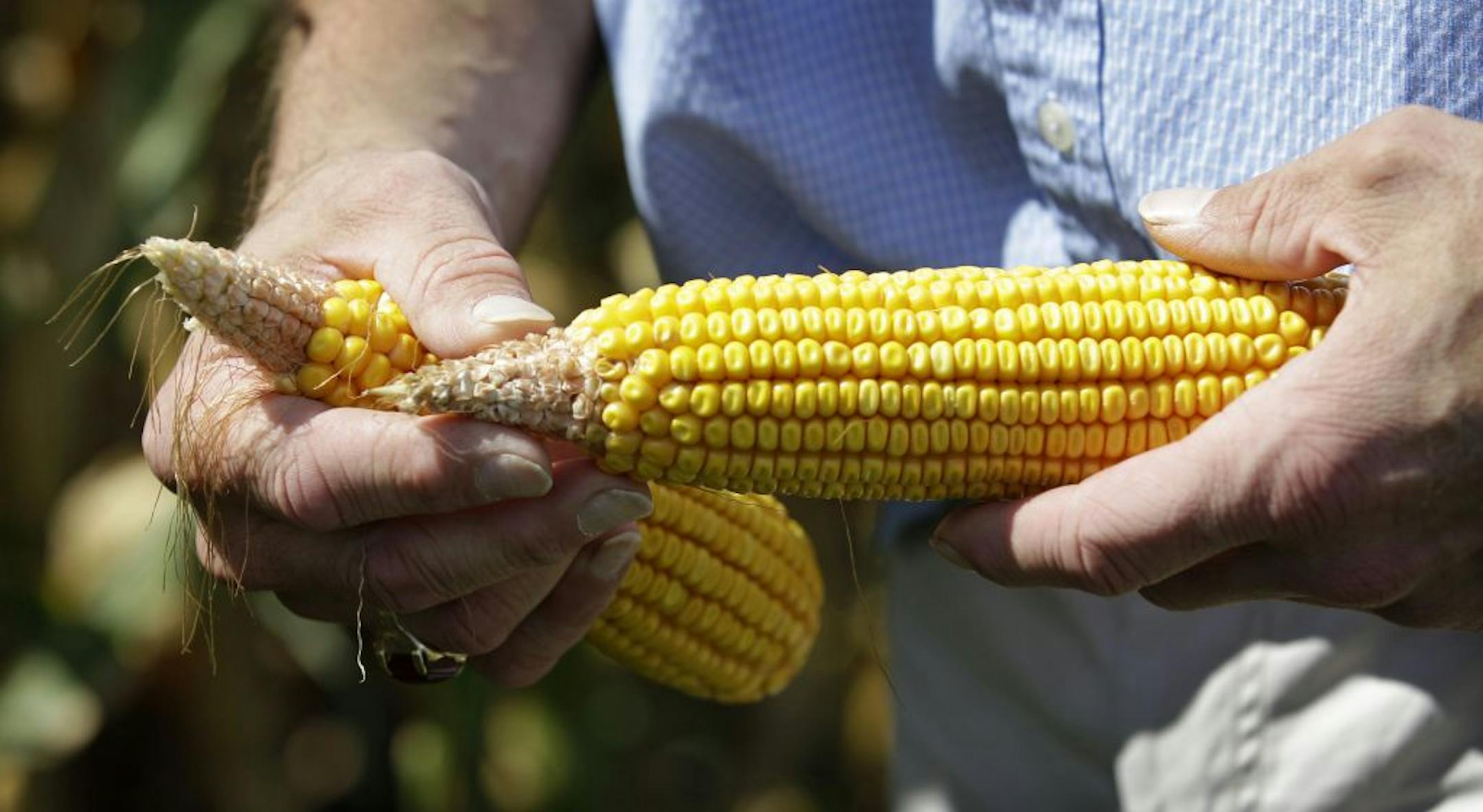
Joe Waldman is saying goodbye to corn after yet another hot and dry summer convinced the Kansas farmer that rainfall won't be there when he needs it anymore.
"I finally just said 'uncle,' " said Waldman, 52, surveying his stunted crop about 100 miles north of Dodge City. Instead, he will expand sorghum, which requires less rain, let some fields remain fallow and restrict corn to irrigated fields.
While U.S. farmers planted the most corn this year since 1937, growers in Kansas sowed the fewest acres in three years, instead turning to less thirsty crops such as wheat, sorghum and even triticale, a wheat/rye mix popular in Poland. Meanwhile, corn acreage in Manitoba, about 700 miles north of Kansas, has nearly doubled over the past decade as Canadian farmers react to weather changes and higher prices.
Shifts such as these reflect a view among food producers that this summer's drought in the United States -- the worst in half a century -- isn't a random disaster. It's a glimpse of a future altered by climate change that will affect worldwide production.
"These changes are happening faster than plants can adapt, so we will see substantial impacts on global growing patterns," said Axel Schmidt, a former senior scientist for the International Center for Tropical Agriculture now with Catholic Relief Services.
While there still is debate about how human activity is altering the climate, agriculture is already adapting to shifting weather patterns.
Agribusiness giant Cargill Inc. is investing in northern U.S. facilities, anticipating increased grain production in that part of the country, said Greg Page, CEO of the Minnetonka-based company.
"The number of rail cars, the number of silos, the amount of loading capacity" all change, Page said in an interview. "You can see capital go to where there is the ability to produce more tons per acre."



