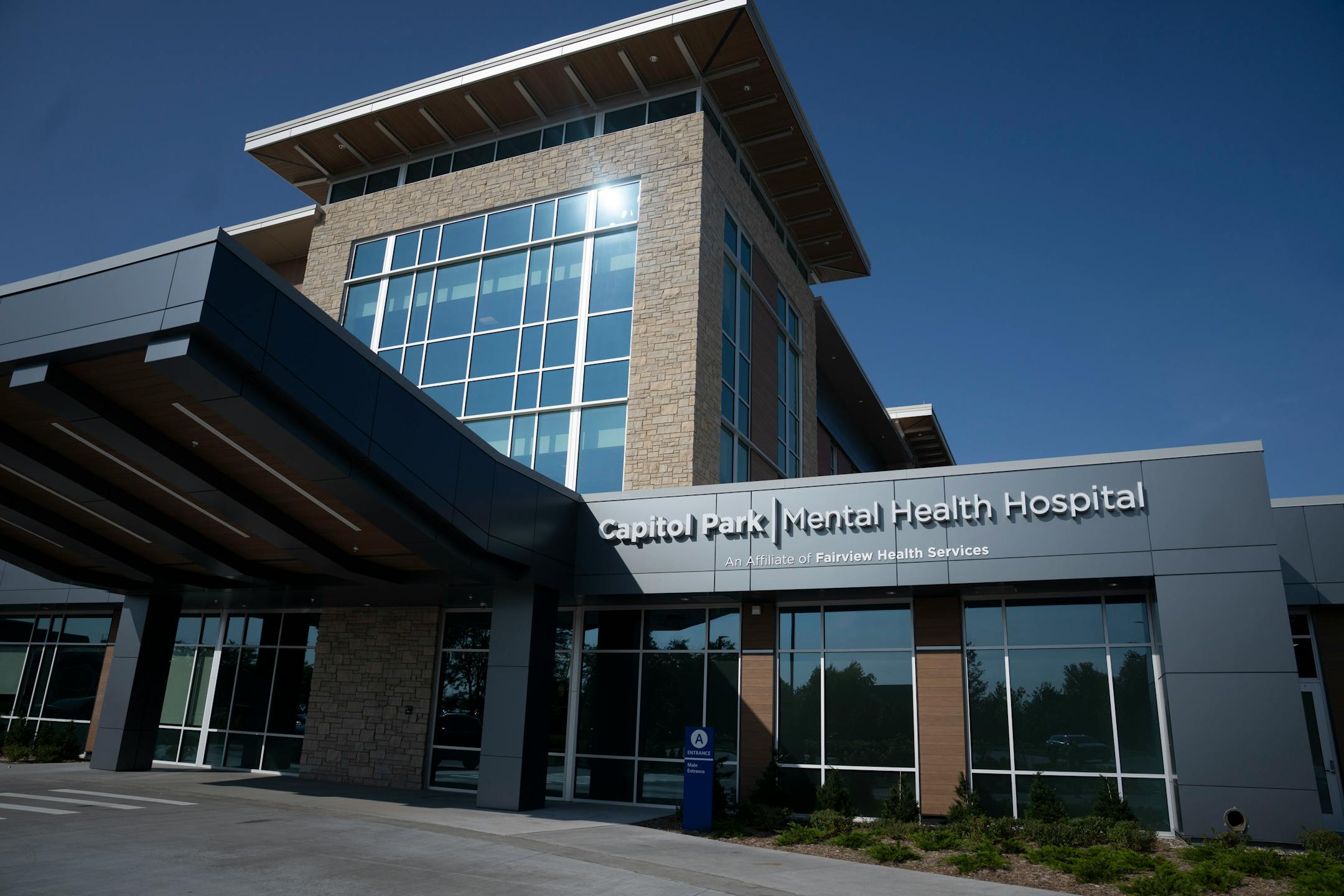
The $80 million Capitol Park Mental Health Hospital will open later this month with some lofty goals: Improving psychiatric care in Minnesota, reducing pressure on emergency rooms and adding much-needed treatment options for patients who are elderly or have co-occurring addictions.
If it can do all that, the hospital — operated by the Tennessee for-profit Acadia Healthcare and Minnesota nonprofit Fairview Health Services — might achieve an unspoken goal of proving a long list of doubters wrong.
“We’ll give it a shot,” said a skeptical Sue Abderholden, executive director of NAMI Minnesota. The advocacy group for people affected by mental illness didn’t support the hospital proposal in 2022.
“Hopefully it will help. We do need more beds. There’s no question about that,” she said.
Capitol Park is opening amid a rising need, as hospitals in Cambridge, Litchfield, Staples and Fergus Falls, Minn., have closed inpatient psychiatric units. Minnesota also is revisiting the adequacy of its mental health system following the shootings at Annunciation Catholic Church and School in Minneapolis. With up to 144 beds, the stand-alone psychiatric hospital will somewhat offset Fairview’s closures of St. Joseph’s Hospital in St. Paul and a psychiatric unit at Fairview Southdale Hospital in Edina.
Yet few hospital projects in Minnesota’s history have created as much handwringing. The state Department of Health in 2022 greenlighted its construction but raised “significant concerns” that Capitol Park would primarily treat low-acuity patients while saddling other hospitals with more complex and costly cases.
The hospital will open in phases while it hires staff and undergoes federally required inspections and accreditation. Eventually, it will have six 24-bed units, specializing in geriatrics, mood disorders, thought disorders and co-occurring mental health and substance abuse disorders.
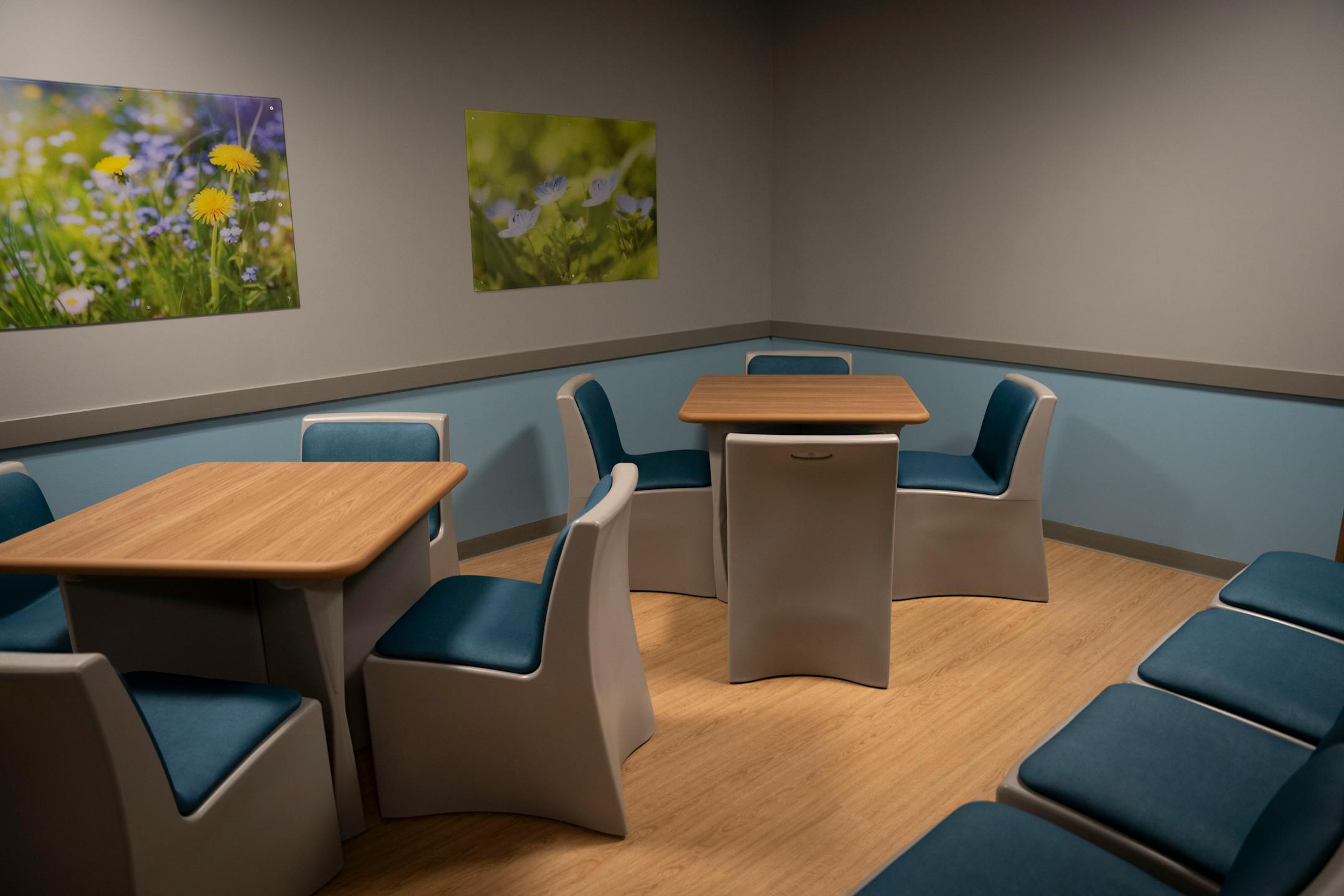
The new five-story building sits two blocks north of the State Capitol, on the site of the former Bethesda Hospital. The modern design features natural light and wide spaces meant to promote healing and comfort, as well as an indoor gymnasium and an outdoor recreation area tucked inside a tall, concrete enclosure. Treatment spaces are set up to encourage the participation of patients’ family members, when possible.