

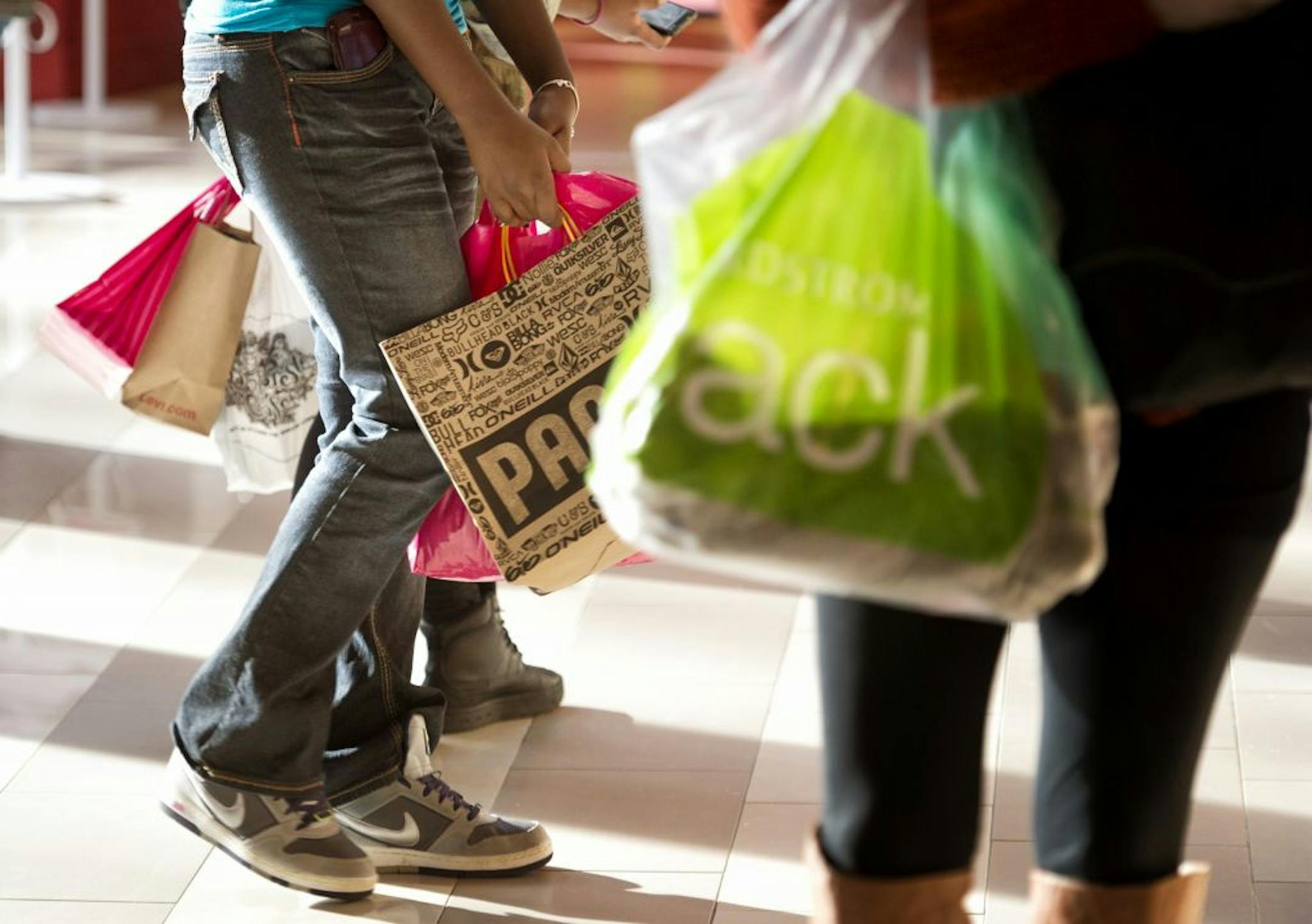
American consumers are gaining confidence on a steady stream of brightening economic news, but American corporations don't seem to be following along.
The housing market has strengthened and household spending in the United States grew faster than expected in September, signaling that consumers grew bolder in the lull between back-to-school spending and the crucial holiday shopping season. Consumer confidence is up.
Yet bellwether American companies like Maplewood-based 3M Co. and Peoria, Ill.-based Caterpillar have cut profit forecasts. The stock market is falling for the fifth straight week. On Thursday, the Dow Jones industrial average hit its lowest point in nearly five months.
The reason for the gap in perceptions is the struggling global economy, which is front of mind for many executives but less visible to the average consumer. The fact is that America's largest companies are less dependent on the U.S. market every year.
This is not a new phenomenon, but the recession and uneven recovery have laid it bare. U.S. corporations raked in profits while the American economy slid into recession, partly on the strength of global sales. Now, when the U.S. economy seems to be reviving, a stagnant Europe and weakened China have slowed profit growth.
"They have pretty much stopped being American companies and are global companies now," said Richard Longworth, a fellow at the Chicago Council on Global Affairs. "They probably don't count on the American market. They're glad to have the sales that they have here, but that's really not where their focus is."
Companies and consumers also have different outlooks because they pay attention to different things.
For example, business leaders have for months been focused on the potential economic consequences of the fiscal cliff -- a series of automatic tax increases and spending cuts that could trigger another recession if not addressed by Congress and the White House before the end of the year.



