

The Consumer Financial Protection Bureau (CFPB) just celebrated its first birthday, and consumers have much to celebrate.
Finally there's a sharp-toothed government watchdog for consumers, on the lookout for the types of shenanigans that contributed to the financial crisis. Its rulemaking and enforcement power kicked in on Thursday, one year after it was created as part of the Wall Street reform law.
The mission of the bureau is to educate consumers, regulate financial institutions such as banks and study consumer financial markets.
Harvard law professor and bankruptcy expert Elizabeth Warren acted as the chief architect for the new bureau. She broke the mold of a traditional regulator. She recorded video messages to the public on YouTube, asked for feedback on prototypes for new mortgage disclosure forms and used the roughly 13,000 comments received to make changes. She even made her calendar available for all to see who she spent her days meeting with -- bankers and consumers alike -- at www.consumerfinance.gov.
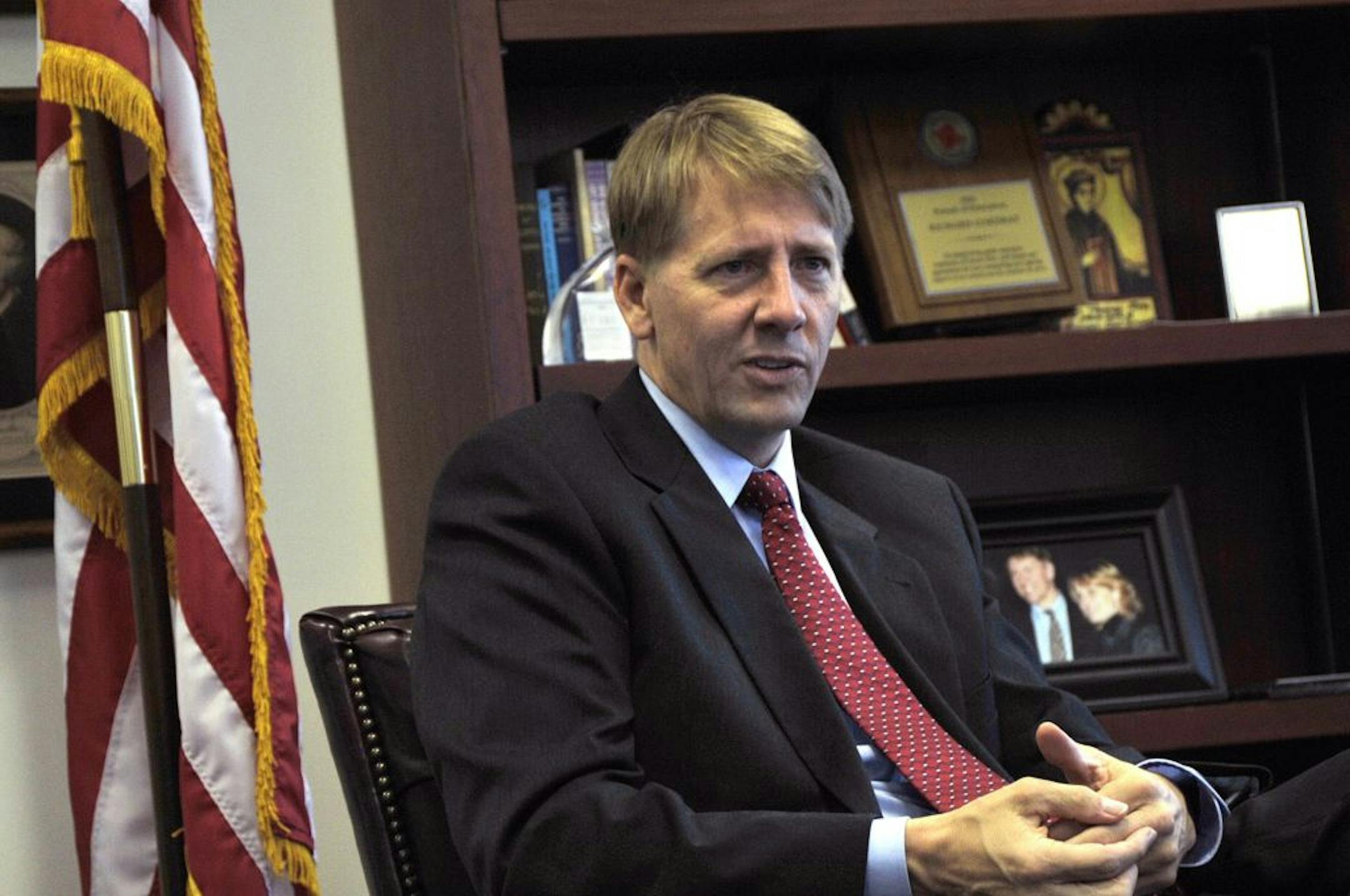
But she rubbed some Republicans and bankers the wrong way, and was passed over for the permanent gig last week despite being supremely qualified for the job. Former Ohio Attorney General Richard Cordray, currently working at the bureau under Warren, received President Obama's nod. He still needs to be confirmed by Congress.
Now that the bureau has received its wrist-slapping ruler, what should its priorities be?
For the groups that will be regulated by the new agency, a smooth transition from the current system is on their minds. Beyond that, Mark Schiffman, spokesman for ACA International, a debt collectors association in Edina, is looking forward to working with the bureau to modernize the Fair Debt Collection Practices Act, "so that debt collectors can communicate with consumers using technologies now available, which were never imagined in 1978 when the FDCPA was adopted."
The heads of both banking associations in Minnesota requested the same thing -- less focus on banks and more on what Minnesota Bankers Association President Joe Witt calls "the unregulated non-banks." Witt explains: "The typical Minnesota bank is heavily regulated. Most of the subprime loans that led to the crisis were originated by non-banks like finance companies and mortgage brokers. Rather than re-regulating the banks, we hope the new CFPB focuses on regulating the unregulated."


