

Opinion editor's note: Star Tribune Opinion publishes a mix of national and local commentaries online and in print each day. To contribute, click here.
•••
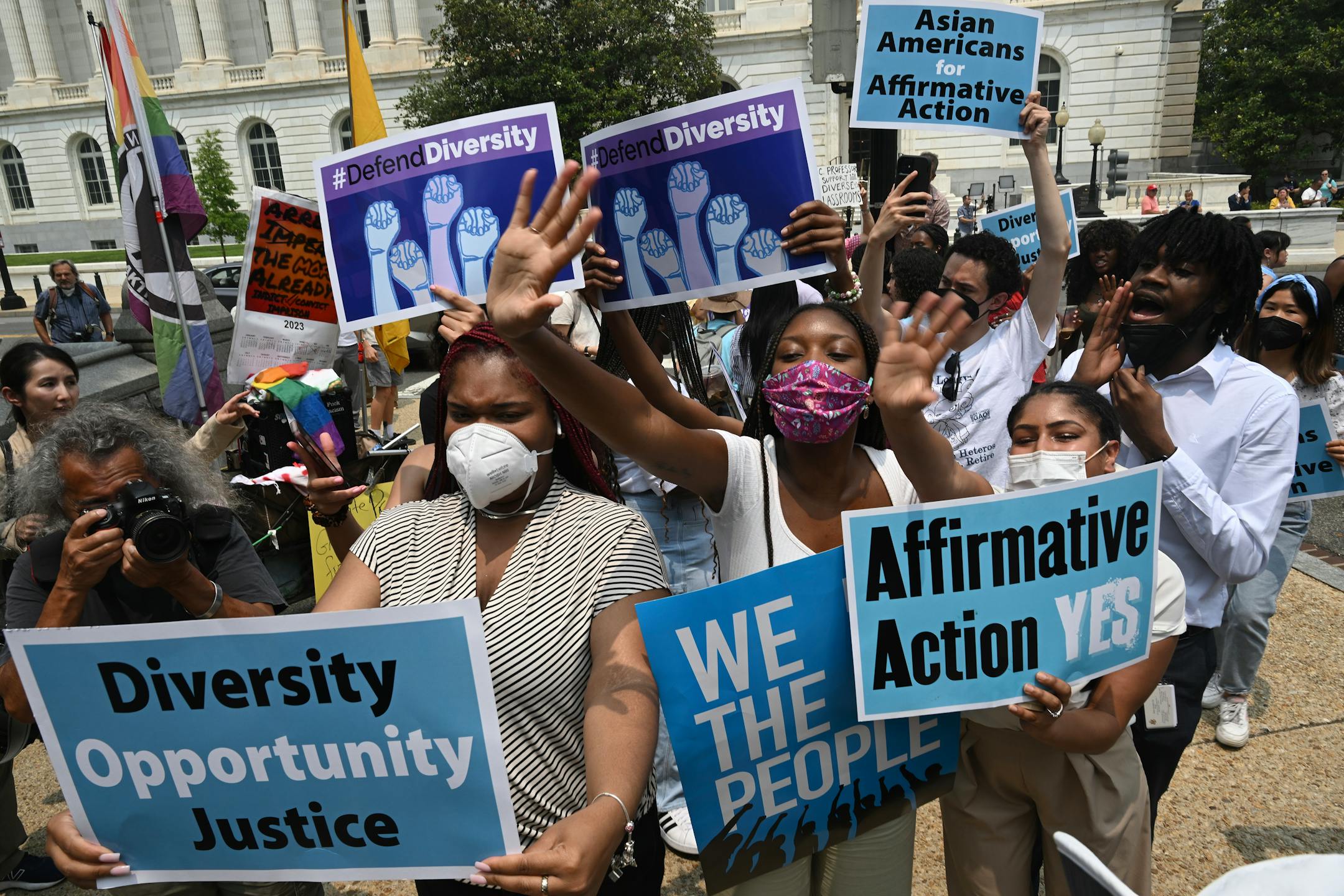
Affirmative action died Thursday at the hands of the Supreme Court's conservative constitutional revolution. In a 6-3 decision, written by Chief Justice John Roberts, the court overturned nearly 50 years of precedent and held that it's unconstitutional for universities to take account of racial diversity in their admissions.
The opinion eviscerated the diversity arguments that have become central to many universities' self-conception over the last few decades. Roberts wrote that the goals of diversity were too diffuse and nonspecific to be measured; that since admissions are zero-sum, giving help to students of some races necessarily hurts those of others; and that there was no end in sight to programs that the Supreme Court warned 20 years ago needed an eventual sunset.
More fundamentally, Roberts articulated a theory of equal protection that conservatives have been advocating almost since affirmative action began: that it is effectively always wrong to treat people differently based on race, no matter why. It doesn't matter whether the objective is to help rectify past injustice or foster more social mobility. Under this so-called "colorblind" theory of the Constitution, the 14th Amendment, drafted and ratified to protect formerly enslaved African Americans, can be used to block descendants of those freed people from attaining social equality.
The origin of the precedent that the Roberts court overturned was a solo opinion by Justice Lewis Powell in the 1978 case, Regents of University of California v. Bakke. In it, Powell basically rejected affirmative action in university admissions as a mechanism to right past wrongs. But Powell embraced the view, advanced by Harvard University in a friend-of-the-court brief, that it was appropriate to take account of race as part of the overall effort to create a diverse student body. Harvard argued that such diversity would enhance the educational experience of all students — and by implication, that admitting to Harvard a broad cross-section of students would create a more diverse elite.
The Bakke precedent was subsequently reaffirmed and embraced by a majority of the court two separate times: once in 2003, when Justice Sandra Day O'Connor adopted a version of it, and again in 2013, when Justice Anthony Kennedy wrote the majority opinion allowing it as part of a "holistic" admissions process.
Roberts in theory likes to follow precedent. So he made sure to point out that, in her 2003 opinion, O'Connor had written that affirmative action should be over in 25 years — 20 of which have now elapsed.


