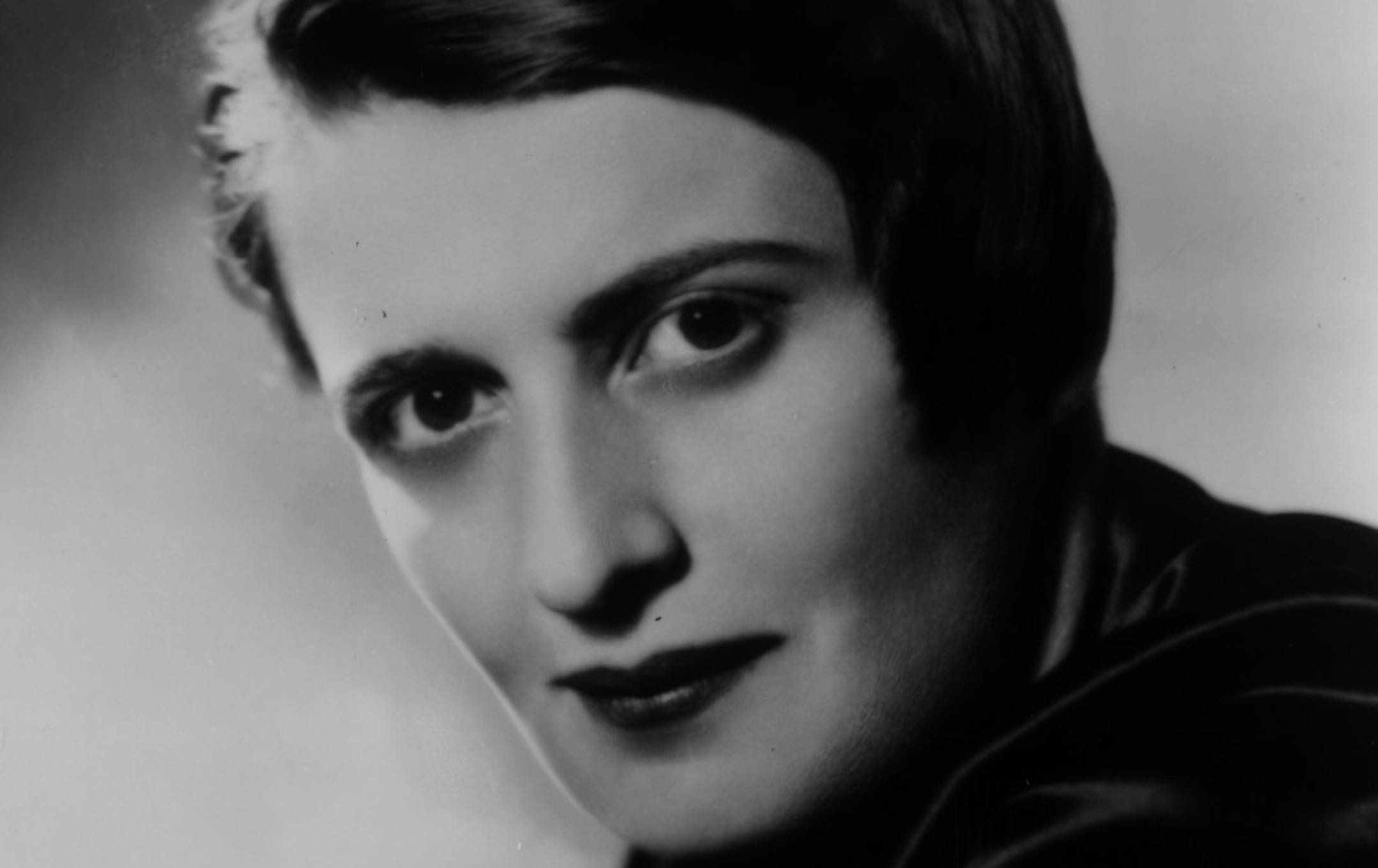
Whittaker Chambers and Ayn Rand are two of the most important American conservative icons. Both abhorred collectivism and spoke on behalf of individual freedom. Chambers' autobiography, "Witness," is one of the defining conservative documents of the 20th century. Rand's most influential novel, "Atlas Shrugged," continues to inspire and orient conservative and libertarian thought.
Here's what history has largely forgotten: Chambers utterly despised Rand's novel. Their differences were fundamental, and they involved both substance and sensibility. Those differences have continuing importance, because they tell us a great deal about divisions within contemporary conservatism. (Yes, there are analogous divisions on the liberal side, but that's a tale for another day.)
Chambers' devastating essay on "Atlas Shrugged," published in the National Review, begins by acknowledging common ground: "A great many of us dislike much that Miss Rand dislikes, quite as heartily as she does." For Chambers, the problem is that Rand "deals wholly in the blackest blacks and the whitest whites," depicting a world in which "everything, everybody, is either all good or all bad, without any of those intermediate shades which, in life, complicate reality and perplex the eye that seeks to probe it truly."
Notice Chambers' use of the verb "perplex." Whatever Rand was, she wasn't perplexed. Whatever she thought of reality, she didn't believe it to be complicated.
In Chambers' account, Rand created a fairy tale, "the old one known as: The War between the Children of Light and the Children of Darkness." Rand's Children of Darkness are caricatures of identifiable figures on the left, especially familiar to "those who think little about people as people, but tend to think a great deal in labels and effigies." Because "Atlas Shrugged" doesn't deal with people as people, Chambers believed that it "can be called a novel only by devaluing the term."
Chambers goes so far as to link Rand with Karl Marx. Both, he says, are motivated by a kind of materialism, in which people's happiness lies not with God or with anything spiritual, and much less with an appreciation of human limitations, but only with the use of their "own workaday hands and ingenious brain."
Chambers connects Rand's arrogance with her contempt, even rage, against those who reject her message. Thus Chambers' final indictment: "From almost any page of Atlas Shrugged, a voice can be heard, from painful necessity, commanding, To a gas chamber — go!' "
These are strong words, to say the least. If they are taken literally, they aren't exactly fair. Rand certainly objected to them. William F. Buckley Jr., the founder and then-editor of the National Review, reported that after Chambers' review was published, "her resentment was so comprehensive that she regularly inquired of all hosts or toastmasters whether she was being invited to a function at which I was also scheduled to appear, because if that was the case, either she would not come; or if so, only after I had left; or before I arrived."