

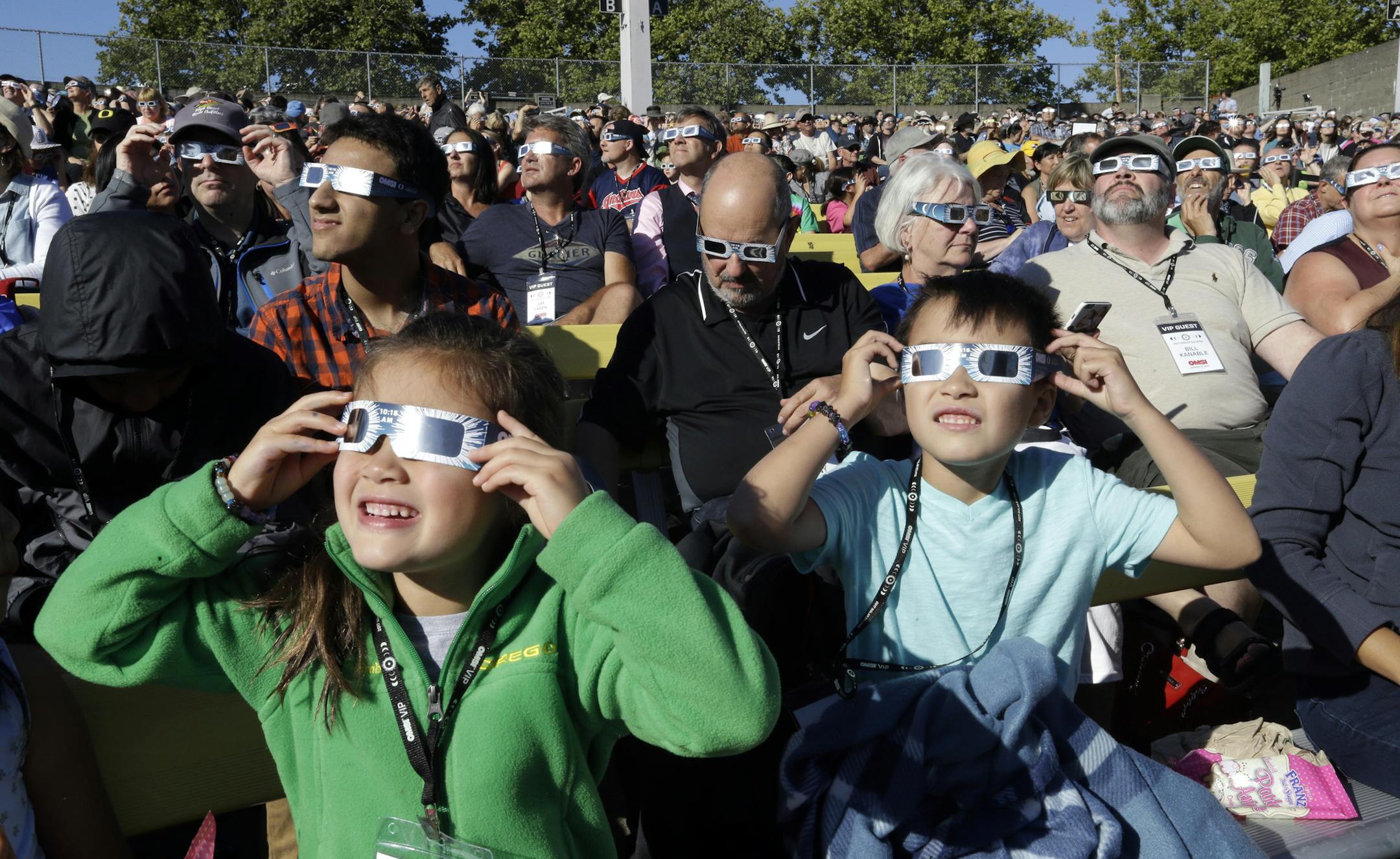
What hath connectivity wrought? Two eclipses, 47 years apart, tell a small piece of the story and raise questions about spontaneous gatherings in the 21st century.
In the early 1960s, I read an astronomy book that showed a total solar eclipse would pass a few hours from my home on March 7, 1970. I vowed then I would travel to see it; sure enough, seven or eight years hence, a group of us drove south from Petersburg, Va., to Tarboro, N.C., and watched the darkened moon blot out the sun. There was little traffic, and our carload was virtually alone in a field that stretched for miles.
At 99 percent total, the eclipse was pretty interesting. A bluish veil descended over earth, birds made night sounds and the few passing cars had their lights on. But the moment the eclipse reached 100 percent totality was incomparably different from the view a split second earlier — surreal beyond imagination.
Shadow bands — wavy lines like ripples on a pond — stretched for miles across the landscape. The corona surrounding the blackened moon was a ring of pure white brilliance resembling burning magnesium. Only one other time — the birth of my son — have I witnessed anything so miraculous and remote from my life's other experiences. (For the best description I've ever read of the experience, read Bob Berman's "A Total Solar Eclipse Feels Really, Really Weird" at Wired.)
So, a few years back, when I first heard about the total eclipse that will cross America on Monday, I made a similar vow to witness the event. We chose Madras, Ore., because it's the least likely spot to experience clouds. Aware the event was gathering attention, we made hotel reservations a year in advance.
The closest accommodations not yet reserved were 43 miles away, in the town of Bend. No problem, we thought; we'd simply rise early and drive north on the generally empty roads of Oregon's high desert. We asked the tourism bureau in Madras for information about restaurants, restrooms and such, and they kindly proffered information by surface mail and e-mail.
In late spring 2017, the warnings began.
Web articles and e-mails from Madras advised caution. The drive from Bend, normally 45 minutes, would likely take eight to ten hours. Local authorities suggested driving to Madras the day before and sleeping in cars. Missives warned drivers pulling off the sides of roads not to keep their engines (and air conditioners) running, as running vehicles risk igniting potentially lethal grass fires.


