

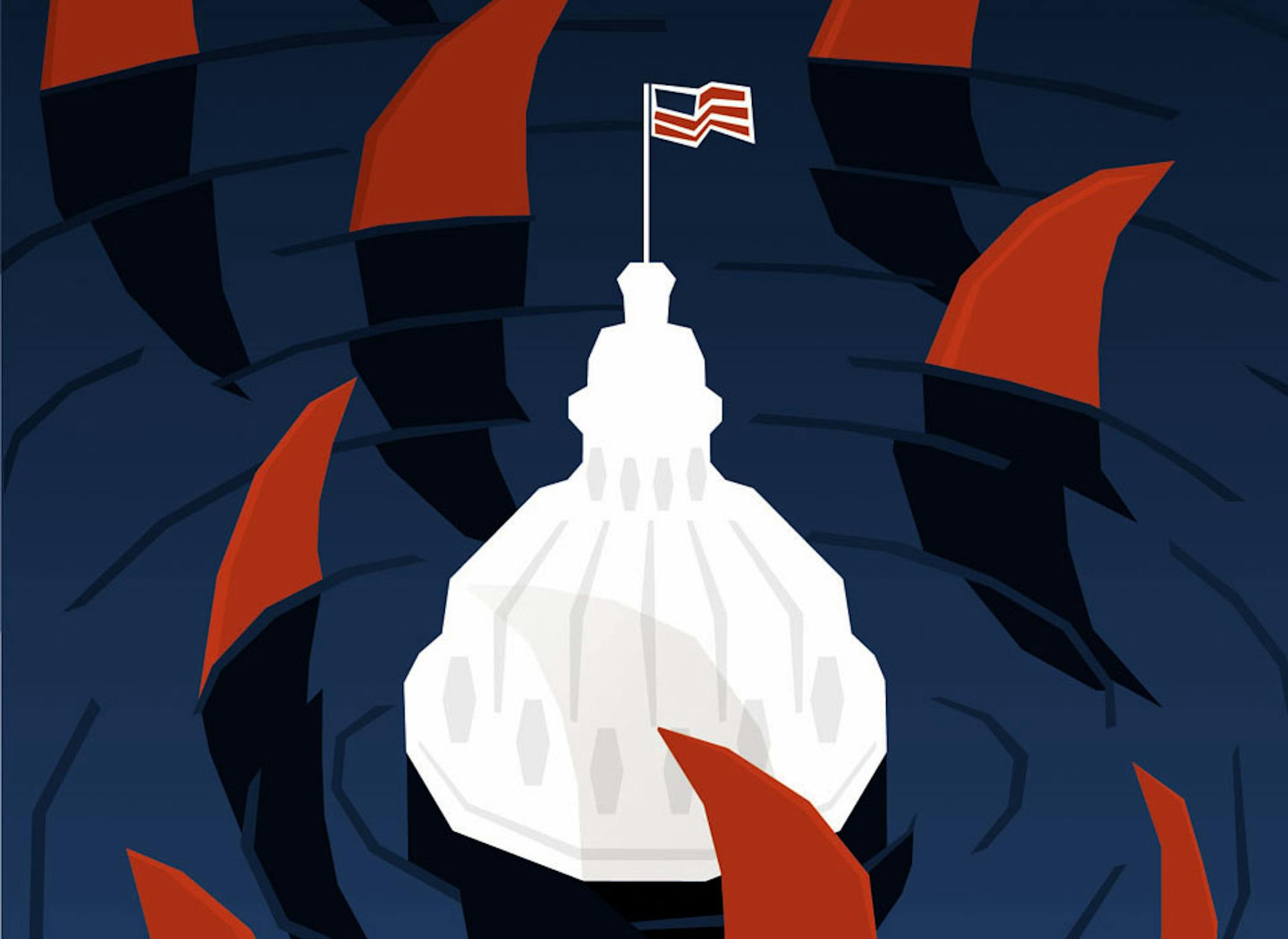
For the first time in a good while, we are about to be asked to stop some of what we're doing, pay attention and take measure of various allegations of wrongdoing in high Washington places. You know — Benghazi "talking points," the IRS' special attention to Tea Party groups, the Obama administration's snooping around reporters.
More often than not, television isolates us. But there are historical moments when TV — in combination with another oft-derided institution, Congress — brings the nation together, in a divided way.
The first step must be taken by Congress, specifically the House of Representatives. This is not necessarily a welcome state of affairs, since that institution, designed to be our most representative, is also generally the most despised, no matter which party controls it. But it will be up to the House to decide whether and how to use its power to investigate and interrogate.
There goes that little word — "gate" — again. Ever since Watergate, it seems to creep into our vocabulary whenever things go awry, governmentally speaking. And speaking of Watergate, it was 40 years ago this summer when the country finally paused to take time and take measure of various allegations. Hmmm …
It was the summer after a president had cruised to re-election, wasn't it? And the hearings focused on skullduggery prior to that re-election, didn't they? Hmmm ….
But let's not limit our recollections to Presidents Nixon and Obama. Since World War II, Congress has managed to convince the media and the country to stop and pay attention on six central occasions.
The first was the Hiss-Chambers spy case of 1948.
Early in the Cold War, the communist spy problem was a real one, but it had been generally ignored. By 1948, it was high time for the country to pay attention. Thanks to a confessed former communist, his very arrogant (and very guilty) accomplice in a sensitive government post, and an ambitious freshman congressman from California, that's exactly what happened.


