
Congress makes historic turn to focus on kids over older adults

November 5, 2021 at 11:42PM
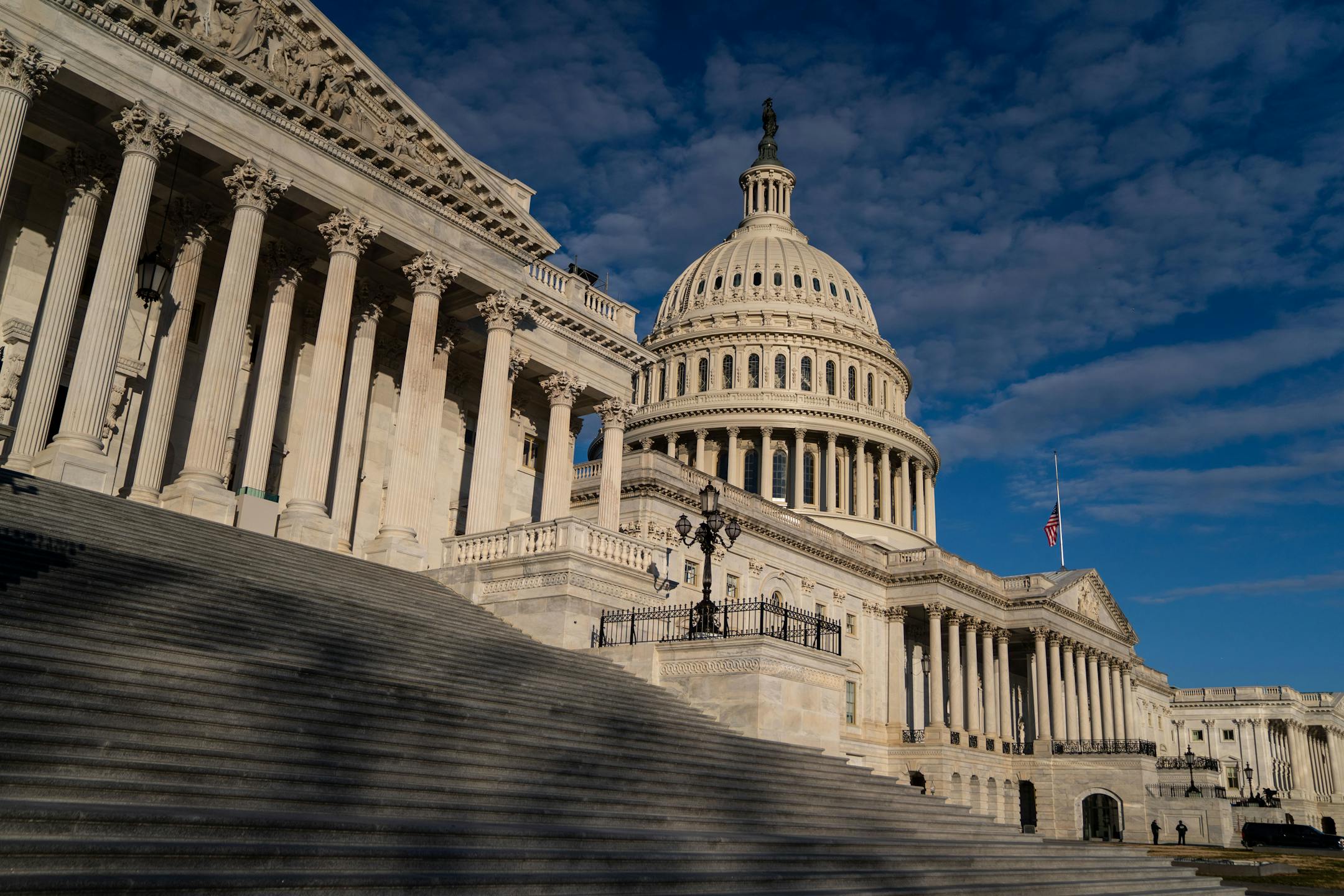
Wednesday is a crucial day on Capitol Hill as Congress tries to avert a government shutdown, faces hitting the debt ceiling in a few weeks, and continues negotiations on an infrastructure and tax and spending bills key to President Joe Biden's agenda. (Kent Nishimura/Los Angeles Times/TNS) ORG XMIT: 28269816W
About one-third of the spending in the $1.75 trillion framework that Biden has agreed to with Democratic lawmakers is devoted to bolstering families. (Kent Nishimura, Los Angeles Times/The Minnesota Star Tribune)

While the details of President Joe Biden's signature social-spending bill are still being haggled over, one big takeaway is clear: the $1.75 trillion package marks a dramatic shift toward boosting support for families with children after decades of government benefits being skewed toward the elderly.

The turn reflects new attention among Democrats to the lasting damage growing up in poverty does to someone's lifelong prospects, and a growing recognition across party lines of how the financial squeeze on many working- and middle-class families often hits hardest when parents confront the costs of caring for younger children.

About one-third of the spending in the $1.75 trillion framework that Biden has agreed to with Democratic lawmakers is devoted to bolstering families through direct cash payments, subsidized child care and universal pre-kindergarten for 3- and 4-year-olds.

Greater help with minding young children could encourage more parents — especially women — to take up some of the record levels of job openings. And reducing the costs of bringing up children could address some of the longer-term economic challenges the nation faces by propping up falling birth rates.

"This effort is historic in terms of families with children — there is no question about that," said Irwin Garfinkel, co-director of Columbia University's Center on Poverty and Social Policy.

It's a sharp break from other major expansions in social spending. Lyndon Johnson's 1960s Great Society programs channeled about three-quarters of new spending to the elderly, including establishing Medicare health insurance and a doubling of the real value of Social Security benefits from 1965 to 1972, which were then indexed to inflation, according to Garfinkel.

Families with children haven't been ignored — President Bill Clinton created a $500 annual child tax credit that was later increased under Presidents George W. Bush and Donald Trump. And President Barack Obama's Affordable Care Act helped with health care expenses across age groups.

Still, only 9% of federal spending in 2019 was devoted to children, while about 36% went to the elderly, according to the Committee for a Responsible Federal Budget.

Biden's expanded child tax credit alone would reduce child poverty by more than 40%, lifting 4.3 million children out of dire circumstances, according to an Urban Institute analysis. It also would ease the strain on families making as much as $182,000.

For Democrats, there's a political element as well: an appeal to the white working-class families Democrats have been losing to Trump populism and many of the suburban voters who recently shifted to Democrats but aren't firmly tied to the party.

Reducing child poverty also advances Democrats' racial-equity agenda. A disproportionate 24% of Black children and 22% of Hispanic children versus 7% of whites are raised in poverty, according to an analysis of 2018 census data by the Center on Budget and Policy Priorities.

The Biden framework agreement funds an expanded tax credit for families of as much as $300 per month for each child under six and $250 for each older child, continuing for another year a benefit from Biden's March coronavirus relief package that ends next month.

Subsidies for the next six years also would limit child-care costs to no more than 7% of income for middle- and low-earning families.

Senate Majority Leader Chuck Schumer says senators would strive to act by Thanksgiving.

Increasing attention to families isn't just a Democratic phenomenon.

Senator Mitt Romney of Utah, a former GOP presidential nominee, proposed an even larger child tax credit, though its cost would be offset by reducing other benefits for families and eliminating the federal deduction for state and local taxes.

Plenty of Republican lawmakers vehemently oppose Biden's aid for families as promoting dependency.

But Samuel Hammond, director of poverty and welfare policy at the center-right Niskanen Institute — who advised Romney on his plan — said the socially conservative white working class voters that Trump has attracted to the Republican Party are more comfortable with cash assistance to families than were Republicans of the Ronald Reagan and Newt Gingrich eras.

"Today, the issues are rural economic decline, escalating costs of core services like child care and housing and the inability of a younger generation to start a family without making enormous sacrifices," Hammond said.

Bloomberg · Mike Dorning

about the writer

about the writer

Bloomberg News

More from Business

See More
card image
Paul B Jones

Minneapolis-based health system wants to intervene in court proceedings guiding the health insurer’s wind-down.

card image