

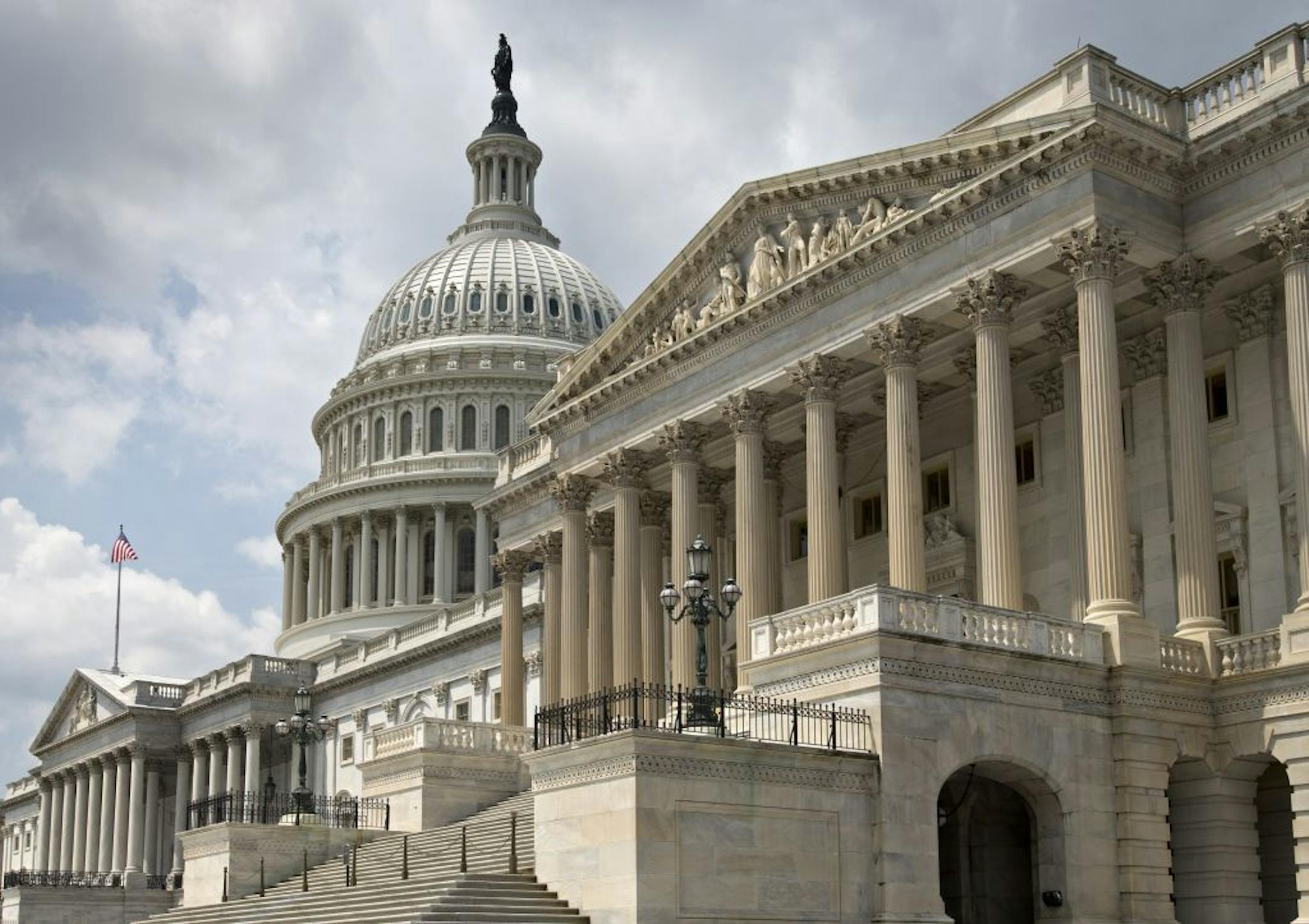
President Obama had barely announced his new climate strategy late last month when the criticism began. The plan, which will regulate carbon pollution from the nation's power plants for the first time, is an important step in addressing global warming. Republican reaction in Congress was predictably scathing. And while most green groups praised the proposal, some environmentalists were frustrated, calling it "too little, too late" or "not nearly enough."
Are they right?
The plan could have been bolder, but only if the administration took bigger political and legal risks. For example, the Environmental Protection Agency might have set a national air quality standard for carbon dioxide, as it has done for conventional pollutants such as smog and soot, and required the states to issue implementation plans for how they would comply. The EPA has authority under the Clean Air Act to do this, and it would have amounted to an economywide program for cutting greenhouse gas emissions, potentially yielding much bigger cuts than the president's plan.
But the EPA has consistently rejected this approach, on grounds that it could take more than a decade to implement, would enrage many states and would risk a backlash in Congress. Critics say that this approach is appropriate for ground-level pollution that states can more easily control but not for greenhouse gas concentrations, which are the result of global emissions that the states alone cannot change.
The agency could also make a difference — without setting a national standard for CO2 — by using a little-known provision of the Clean Air Act that addresses international air pollution. If the EPA finds, either on its own or at the request of the State Department, that U.S. emissions contribute to pollution that may "endanger" other nations, it must direct states to revise their pollution plans to prevent the endangerment.
Roger Martella, the EPA's general counsel in the George W. Bush administration, has called this strategy "the most effective, flexible, economically reasonable and legally supportable means by which to regulate greenhouse gas emissions." And an NYU think tank has petitioned the EPA to use it.
So far the administration seems to consider this untried provision too risky, perhaps worrying that it would provoke Congress to block individual EPA regulations or, worse yet, amend the Clean Air Act to deny the agency authority over greenhouse gases.
Thus, the administration's new climate plan is carefully calibrated to manage these risks while making incremental progress. Going after power plants and pushing efficiency standards may not be bold, but it is pragmatic.


