

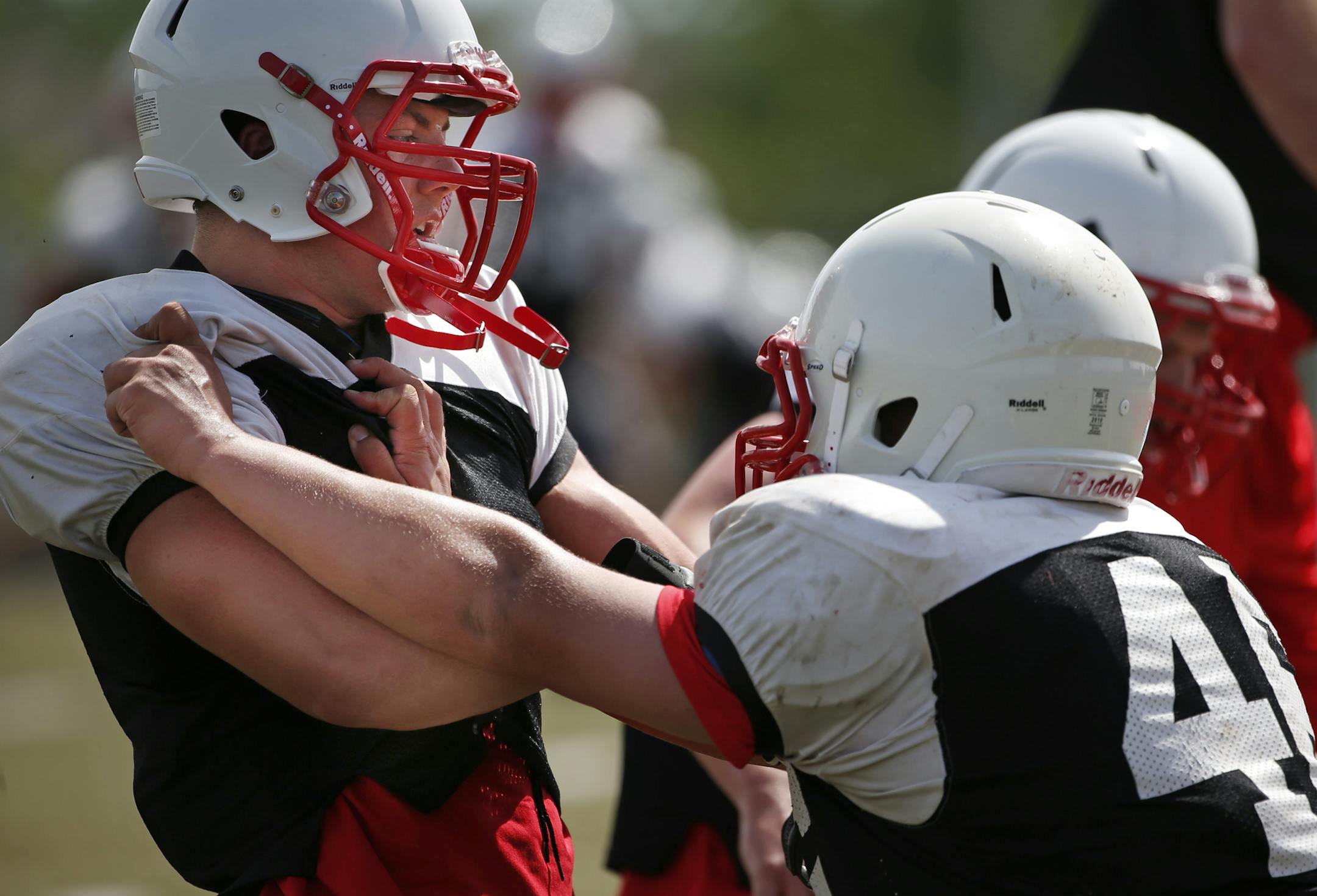
Concussions, football's scourge from Pop Warner to the pros, have prompted changes to summer practices throughout Minnesota high schools.
Under a bylaw approved in May by the Minnesota State High School League Representative Assembly, football teams can conduct six contact practices during the combined months of June and July. Players must go through a four-day acclimatization process before participating in contact practices. And no practice can last no longer than 2½ hours, including time spent in meetings or watching film. The new rules take effect in 2015.
The high school league sought the changes in a state that it claims "has the most liberal rules in the country in regard to what is allowed" during summer football practices. Fewer contact practices, defined as those in which players wear full pads and block or tackle, means fewer repetitive hits to the head.
While no one doubts player safety is paramount, differences exist on methods for reducing contact above the shoulders and lessening brain injury risks. While free to conduct summer practices as they see fit, most teams already impose limits within the coming guidelines.
Players at two of the state's top programs, Lakeville North and Totino-Grace, wear only helmets and shoulder pads. Contact practices are "thud tempo," meaning players are engaging in close-range contact used to teach form blocking and tackling.
Both programs hold just one contact practice per week. But the new acclimatization process must be restarted if three consecutive days pass without contact. As a result, coaches at both programs are lamenting more time spent practicing just to maintain their normal workload.
Members of the Football Coaches Association are expected to push for changes to some aspects of the new rules.
"Any policy needs tweaking," said Kevin Merkle, league associate director and head of the football task force. "You always need education and interpretation. But we don't want them banging heads all the time."


