

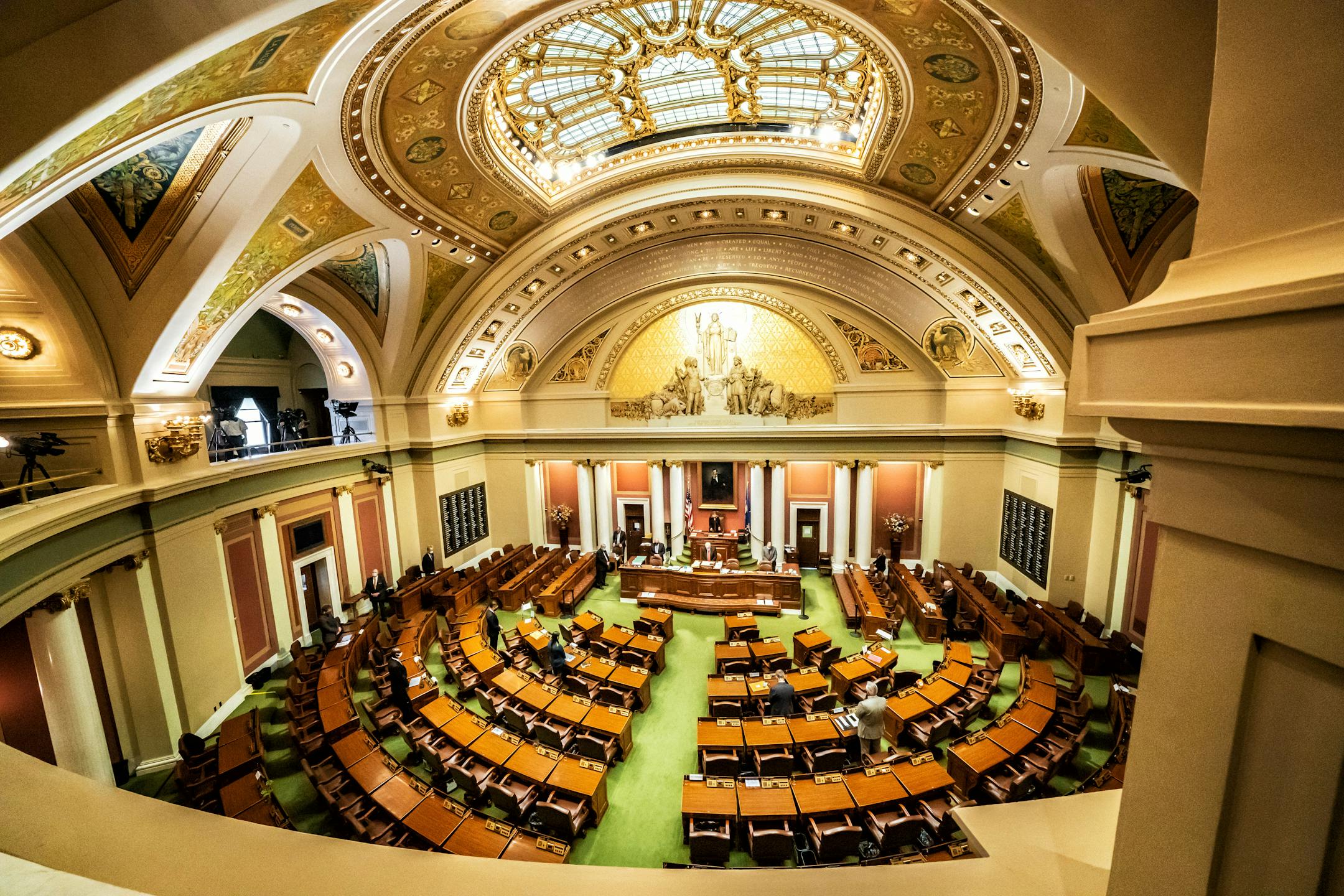
The end of a legislative session that ran into overtime is nearly in sight, and the final result is shaping up to be remarkably bipartisan, with serious compromises on both sides.
It appears the state will, sometime early this week, arrive at a deal for a $52 billion, two-year budget that gives a $1 billion boost to education, cuts $1 billion in taxes and funds roads and bridges along with transit.
A process to end a pandemic-related halt on rental evictions is also in the works. The health and human services bill, where consensus is often elusive, is a good mix that includes increased funds for child-care programs, $250 million in bonuses for front-line workers, pay raises for personal-care attendants and extension of a reinsurance plan sought by Republicans.
Gov. Tim Walz's clean cars initiative survived, requiring car dealers to offer consumers more choices in electric vehicles, though Republicans have said the issue will be carried over into the election.
Some potential last-minute disasters were averted. A short-lived attempt by some Republicans to defund a small program that allows low-income Minnesotans to use a $10 coupon at farmers markets was dropped. That funding, for the program called "Market Bucks," remains sensibly intact.
On Friday, Senate Majority Leader Paul Gazelka, R-East Gull Lake, shook up negotiations with a surprise amendment to the state government bill, which funds state agencies. The amendment would have ended Walz's emergency powers "upon enactment." Walz had already agreed to let those powers lapse at the end of July. Gazelka told an editorial writer on Friday that 15 states had already ended emergency powers. But the vast majority of states still operate under those powers, which have certain federal funding attached to them.
The temptation to score points is undoubtedly strong, but an orderly conclusion is needed here. Additionally, creating further delays in the state government bill, which now must go back to the House and pushes the session into the coming week, seems an unwise tactic that gains too little just to prove a point. We trust Gazelka is indicating his party's displeasure with the continuation, but will not jeopardize the entire deal over it. Every day of delay pushes the state closer to the June 30 deadline, when the current budget expires. It creates greater uncertainty for government employees, and for those who depend on the many things for which state government is responsible.
An accord on public safety has also been elusive, but leaders announced late Saturday that an agreement was at hand on funding for law enforcement and corrections as well as some police reform measures.


