

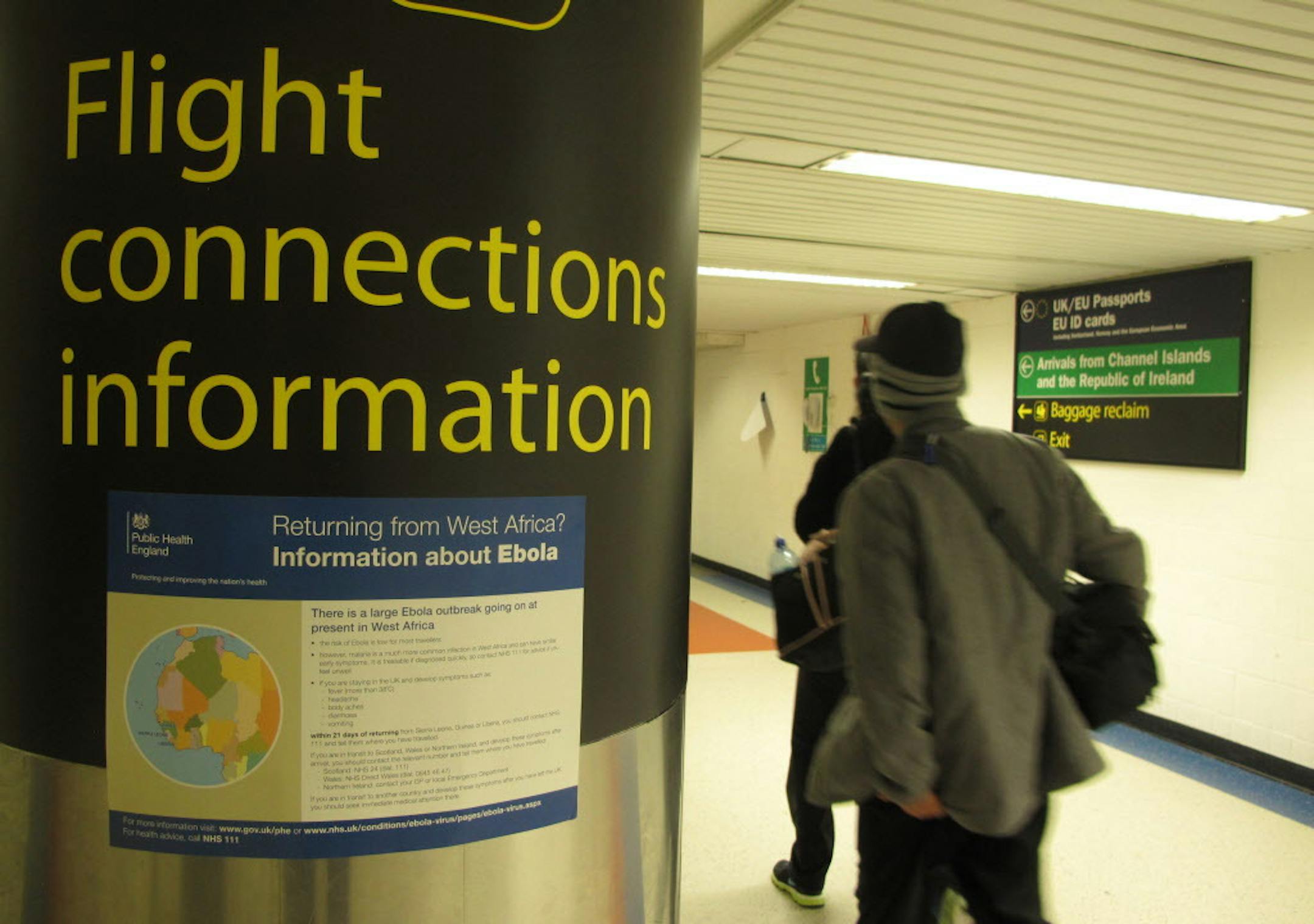
The death toll and the devastation caused by the Ebola outbreak continue to rise. As many as 5,000 people are now recorded as having been killed by the virus rampaging through Liberia, Sierra Leone, and Guinea (with a few cases elsewhere), and about double that number have been infected. Although there were some encouraging signs in the past week that the outbreak is being curbed in Liberia, its real toll may be much higher than official figures show.
The economic damage is rising, as fields lie fallow and traders stop going to market. The World Bank reckons that the cost to the region's economies may be as much as $33 billion over the next 18 months if the virus is not quickly contained. Countries that have struggled to emerge from wars or strife may be set back years. Yet some businesses are continuing to operate, keeping open essential transport arteries and generating export earnings that will provide a base for recovery once the disease is contained.
Among the first consequences of the outbreak were the cancellation of most international flights and the closing of land borders. One of the remaining air carriers providing service is Brussels Airlines, Belgium's largest carrier. It has continued to fly scheduled flights to Monrovia, Liberia; Freetown, Sierra Leone; and Conakry, Guinea, with some flights hopping from one capital to the next. "It's become the Ebola express," said a businessman who has been flying the route frequently.
The airline is not flying directly from Brussels to the three cities because it does not want its staff to have to stay overnight. So its flights are stopping at Dakar, Senegal, to change crews — though not passengers, because Senegal has banned flights to or from the affected countries. To assure its crews they are safe, the airline has a small jet on standby to whisk them out should the passenger plane develop technical faults. It also carries technicians on every flight to make repairs and turn the plane round.
"We're not making a lot of money," said Geert Sciot, a spokesman. "But we see it as our humanitarian duty to continue."
Building a buffer against Ebola
One group of firms the affected countries especially need to keep operating is miners: In Sierra Leone, for example, they generate 80 percent of export revenues. African Minerals and Sierra Rutile, two big miners operating in the country, have isolated themselves as much as possible and built a buffer in the surrounding villages by giving them training and equipment to fight the disease, from soap and chlorine to thermometer guns, some of which are used at checkpoints on roads leading to the mines.
Sierra Rutile takes workers' temperatures twice a day and asks them where they have been if they leave the area around the mine. Those who have been in outbreak areas are quarantined. Anyone who falls ill with the virus will go to a specially-equipped isolation unit before being transferred to a hospital. One benefit of enhanced screening is that diagnosis and treatment of other diseases, such as malaria, have also improved.
The firm's boss, John Sisay, said employees are complying well with the safeguards. "There is an overwhelming desire to keep the virus out of the area," he said. It has jets standing by to evacuate employees should the remaining scheduled flights be stopped.



