

Opinion editor's note: Star Tribune Opinion publishes a mix of national and local commentaries online and in print each day. To contribute, click here.
•••
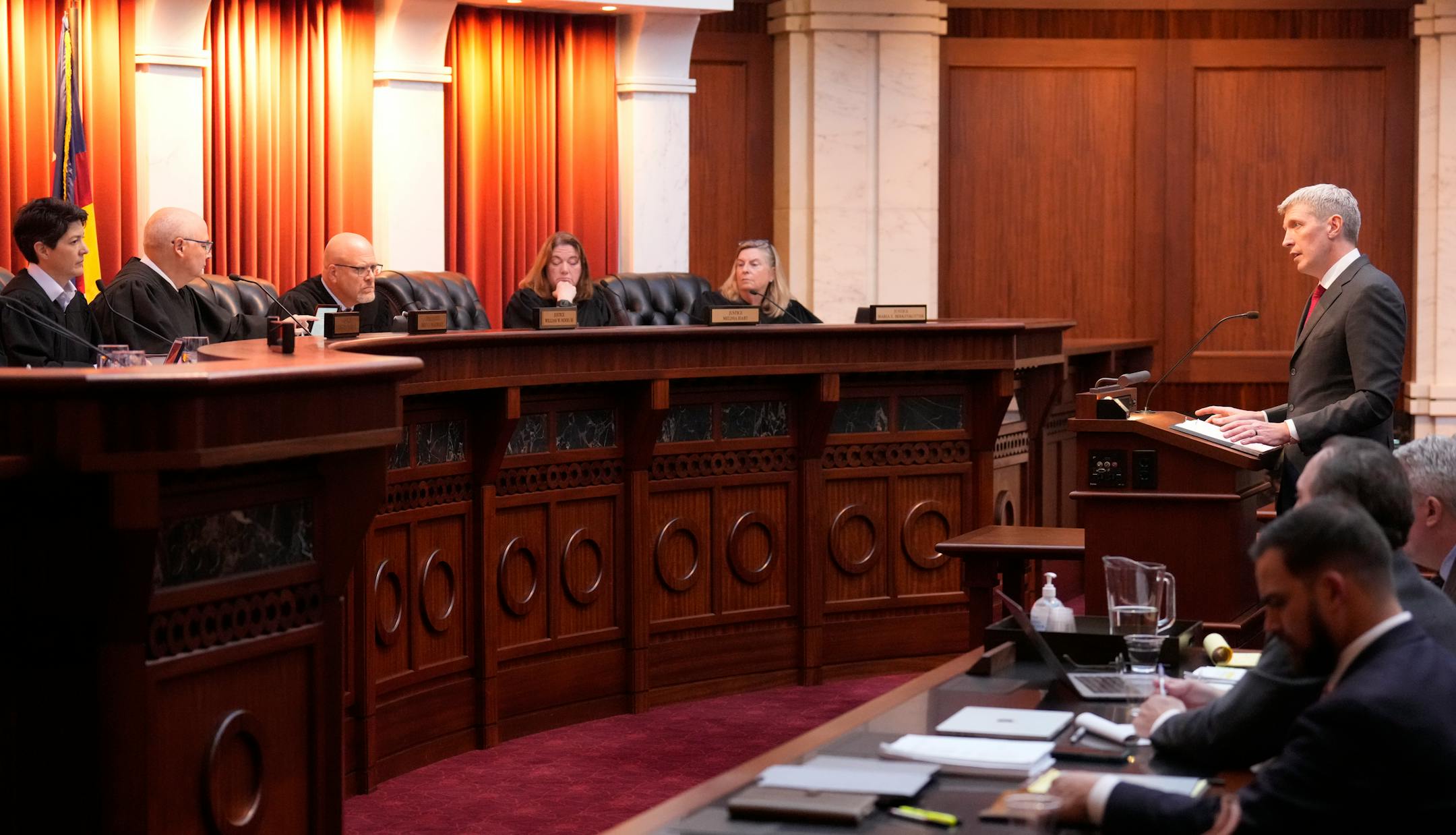
Former President Donald Trump has taken the country into unexplored legal territory often, but rarely so far as in Tuesday's ruling by the Colorado Supreme Court. The decision leaves the fate of his presidential candidacy hinging on a constitutional amendment adopted in the aftermath of the Civil War.
In a stunning but not totally unanticipated 4-3 ruling, Colorado's highest court ordered its top elections official to remove Trump from the state's ballots on the ground that he is disqualified from the presidency by Section 3 of the 14th Amendment. Originally aimed at the leaders of the Confederacy, the provision disqualifies officials who "have engaged in insurrection" against the U.S. from holding federal office.
By most readings, it's one of very few constitutional qualifications for the presidency along with the original document's requirements, in Article 2, that the president be at least 35 years old and born in the United States. In that sense, the Colorado Supreme Court's holding is no more exotic than dozens of past court rulings that a candidate fails to meet constitutional qualifications such as age. And were we to adopt the view of Trump's lawyers, Colorado and other states could not exclude candidates from the ballot even if they plainly fail to satisfy age, residency, citizenship and other requirements.
The potential political impact of the ruling, however, could not be more seismic. It stands to upend the 2024 election by providing a deus ex machina solution to the problem of Trump's attempt to return to the presidency while under multiple criminal indictments — two of them for attempting to overturn the results of the last election.
But the complications of the case going forward are many and extreme.
The first question is whether the U.S. Supreme Court will take up the case, which seems very likely. This is an unprecedented and hugely important question of constitutional law on which the next election turns. So notwithstanding the justices' already more-than-full plate — including an expedited review of Trump's claim of immunity from prosecution over the Jan. 6, 2021, insurrection — the court's hand will be virtually forced.


