

During his day shift at the Hospital of the University of Pennsylvania, Anthony Scarpone-Lambert steps into a patient's room. The lights are off, but he knows he has to change the IV without disturbing the patient.
He has two choices: turn on the overhead lights or attempt to use some sort of hand-held light to navigate in the darkness.
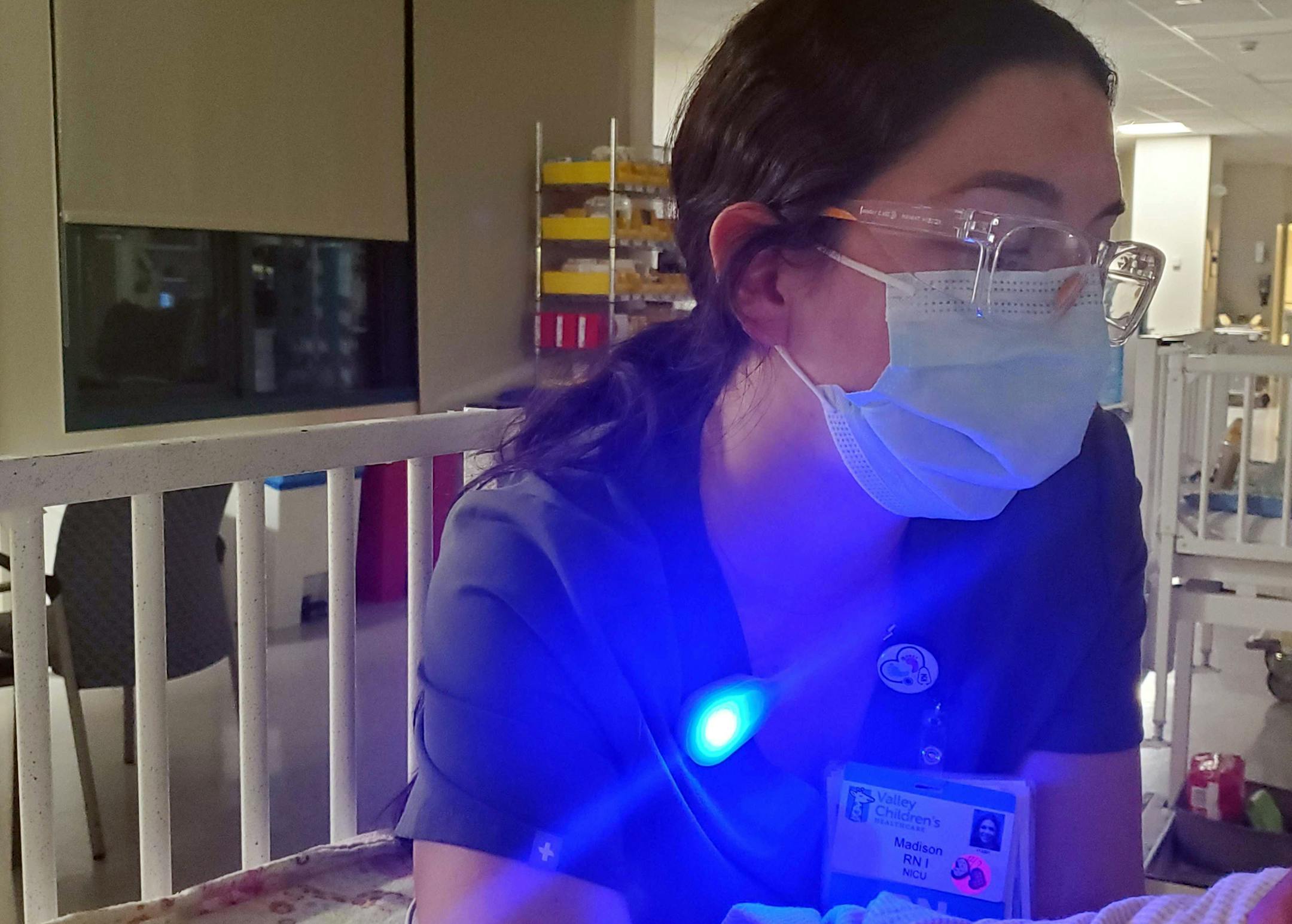
It's this quandary that he sought to fix by inventing what he and his co-founder call the uNight Light, a wearable light-emitting diode, or LED, that allows nurses to illuminate their workspace without interrupting a patient's sleep.
Scarpone-Lambert and his co-founder, Jennifferre Mancillas, are calling the light a breakthrough for front-line health care workers.
"We really pride ourselves on being very specifically designed for the clinical setting," said Scarpone-Lambert, 21, a senior at the University of Pennsylvania School of Nursing who met Mancillas, 36, in 2019 at a hackathon sponsored by Johnson & Johnson that encouraged nurses to collaborate on solutions to health care problems.
They were able to finance the product, which went through 30 prototypes and iterations, with grants and personal money as well as funding from startup accelerators and awards, Mancillas said. Through their startup, Lumify Care, the pair raised about $50,000.
On its face, uNight Light, which retails for $22, may not seem different from other portable lights, such as those used by cyclists and runners. However, it has features that distinguish it from others on the market, including different light modes — blue, red and white. The blue light can help promote alertness, Scarpone-Lambert said.
"Your red light can be used to really kind of amplify your main vision," he said. "And it's also less disruptive than bright white light. The white light can be used for dental assessments and kind of like if you need to look at something a little bit more closely, like blood or fluid."



