1:02
1:02Lynne Rudd sat in a pink lawn chair outside an Edina library on Monday, ready to experience an eclipse for the ages.
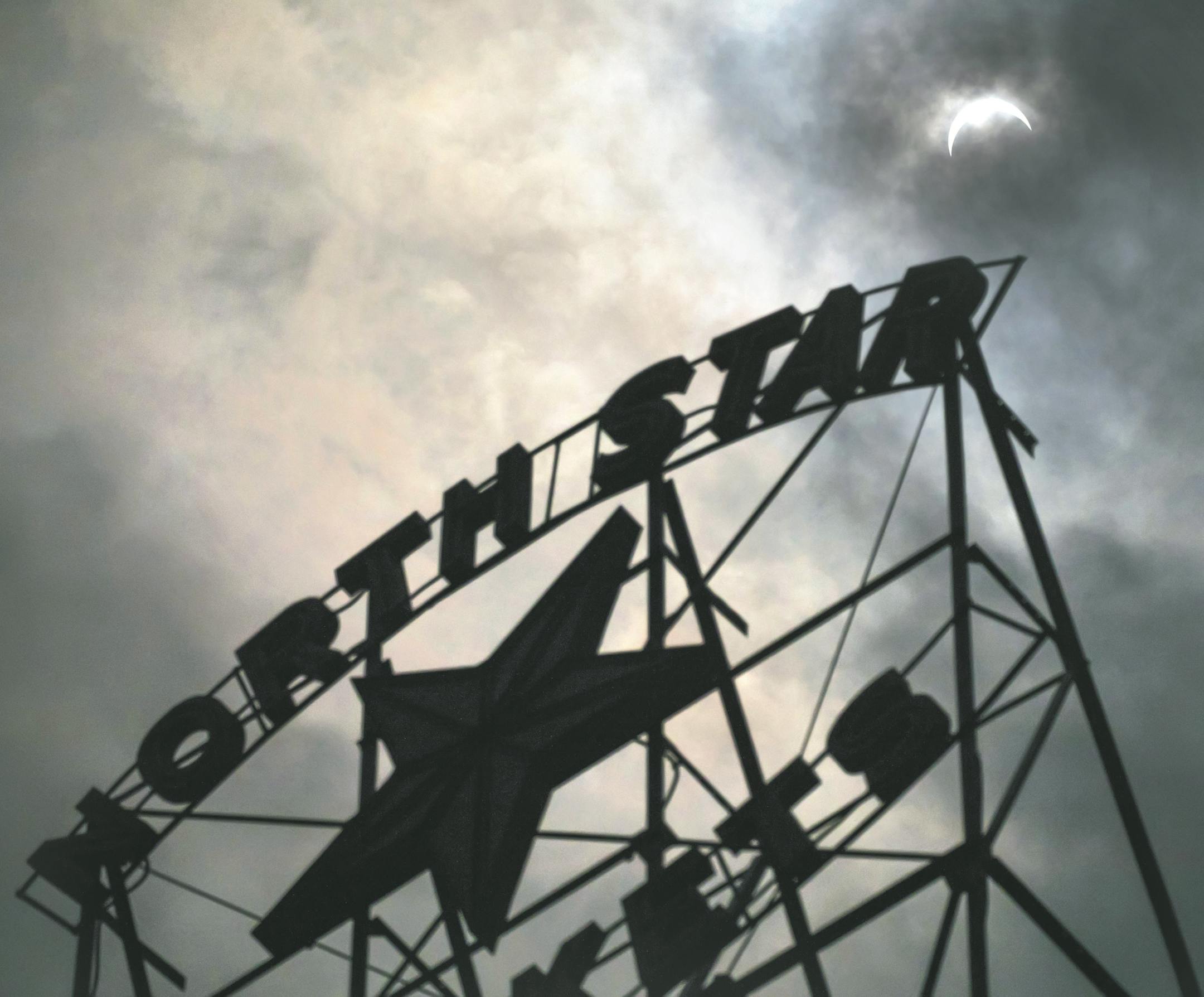
"There it is! Look at that … Wow!" she said, as the moon blocked nearly 80 percent of the sun. It was a fleeting moment before clouds obstructed her view and the crowd around her groaned. "Where did it go?"
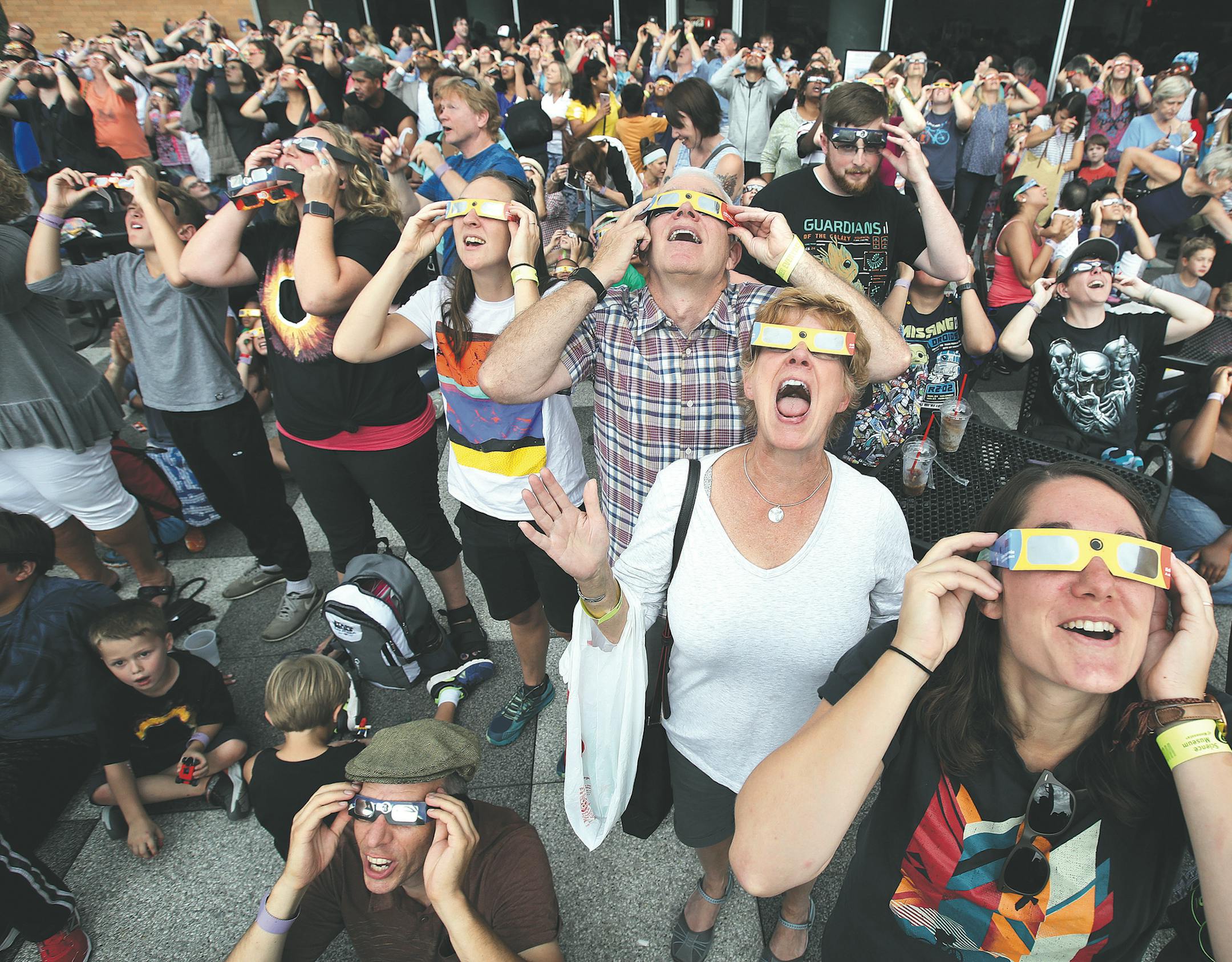
Across most of Minnesota, overcast skies granted only glimpses of the much-anticipated solar eclipse. In the Twin Cities, throngs of people gathered on corners and scattered across parks to stare upward, hoping to catch a quick glance. Crowds with special glasses and foil-lined boxes on their heads erupted in cheers, oohing and ahhing as the eclipse peeked through for short stints, a sliver of the sun's bright orange peering out from behind the passing moon.
Outside the Science Museum of Minnesota in St. Paul, when 9-year-old Madi Rosario's mother told her the sun would go dark, the girl responded: "What, is it a magical day or something?"
In a way it was.
Monday's eclipse inspired enormous excitement because it was one of the few times a total eclipse has been visible across a broad swath of the United States, said Jack Ungerleider, a Science Museum volunteer. The last time was in 1918.
Eclipses occur when the moon lines up between the Earth and sun along an imaginary line that represents the intersection of the orbital planes of all three bodies. Most people saw only a partial eclipse.
The next partial solar eclipse in the U.S. will occur in 2023, and the moon will cover slightly less than half of the sun as seen from Minnesota. There will be a total eclipse in parts of the country six months later, but it will cover only three-quarters of the sun here.