

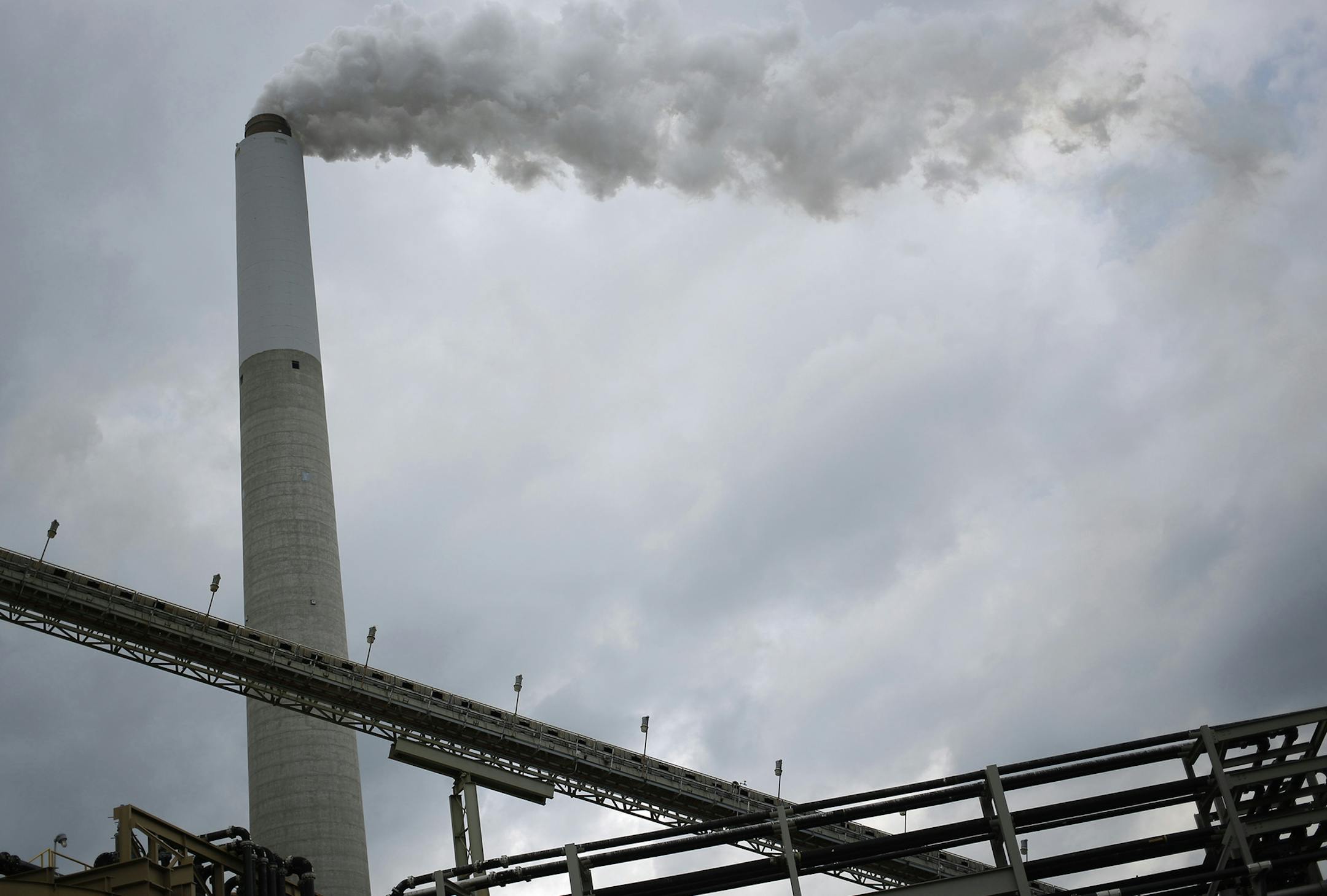
In a decision that was a legal defeat for the Obama administration but that may well be a practical victory, the U.S. Supreme Court's conservative justices voted 5-4 to block the Environmental Protection Agency from a creative-yet-practical interpretation of the Clean Air Act that would have let the EPA significantly increase its regulation of greenhouse gases.
Nevertheless, in an opinion by Justice Antonin Scalia, the conservatives threw the EPA a bone, allowing regulation of greenhouse gases from plants that already emitted significant pollutants of other kinds.
The opinion's official message was that the EPA can't regulate specifically greenhouse-gas polluters unless Congress passes a new law. But in comments from the bench, Scalia said the EPA was getting "almost everything it wanted" — that it had sought to regulate 86 percent of greenhouse gases and that it would be able to regulate 83 percent.
The legal and regulatory background is devilishly complicated. Consider what follows a simplification by a nonexpert for readers who are nonexperts as well.
In 2007, in what seemed like a landmark case called Massachusetts vs. EPA, Justice Anthony Kennedy joined the court's four then-liberals in holding that the George W. Bush administration's EPA had not only the authority but also the obligation to regulate carbon dioxide and greenhouse gases, which until then had not been treated as "pollutants" under the relevant environmental laws. Environmentalists considered the case a major win for increased regulation that would combat climate change.
On Monday, the Supreme Court had to decide whether one of the plans the EPA adopted on the basis of that earlier case satisfied the requirement of the law. The particular program in question had to do with Title I of the Clean Air Act, which concerns major, stationary polluting sources. The way the act was written, it gave the EPA authority over stationary sources such as plants that emitted more than 250 tons a year of pollutants into the air. (This is, again, a simplification.)
Once the EPA got authority over greenhouse gases in 2007, however, the 250-tons-a-year standard no longer made practical sense. It turns out that vast numbers of plants produce more than 250 tons a year of carbon dioxide. Common sense required a higher number where this new pollutant was concerned. So the EPA picked one: It enacted a rule saying that it would regulate stationary sources that emitted more than 100,000 tons a year of carbon dioxide.
As a matter of regulatory common sense, the EPA's decision was perfectly reasonable. It now had the obligation to regulate greenhouse gases, and it wanted to regulate them sensibly.


