

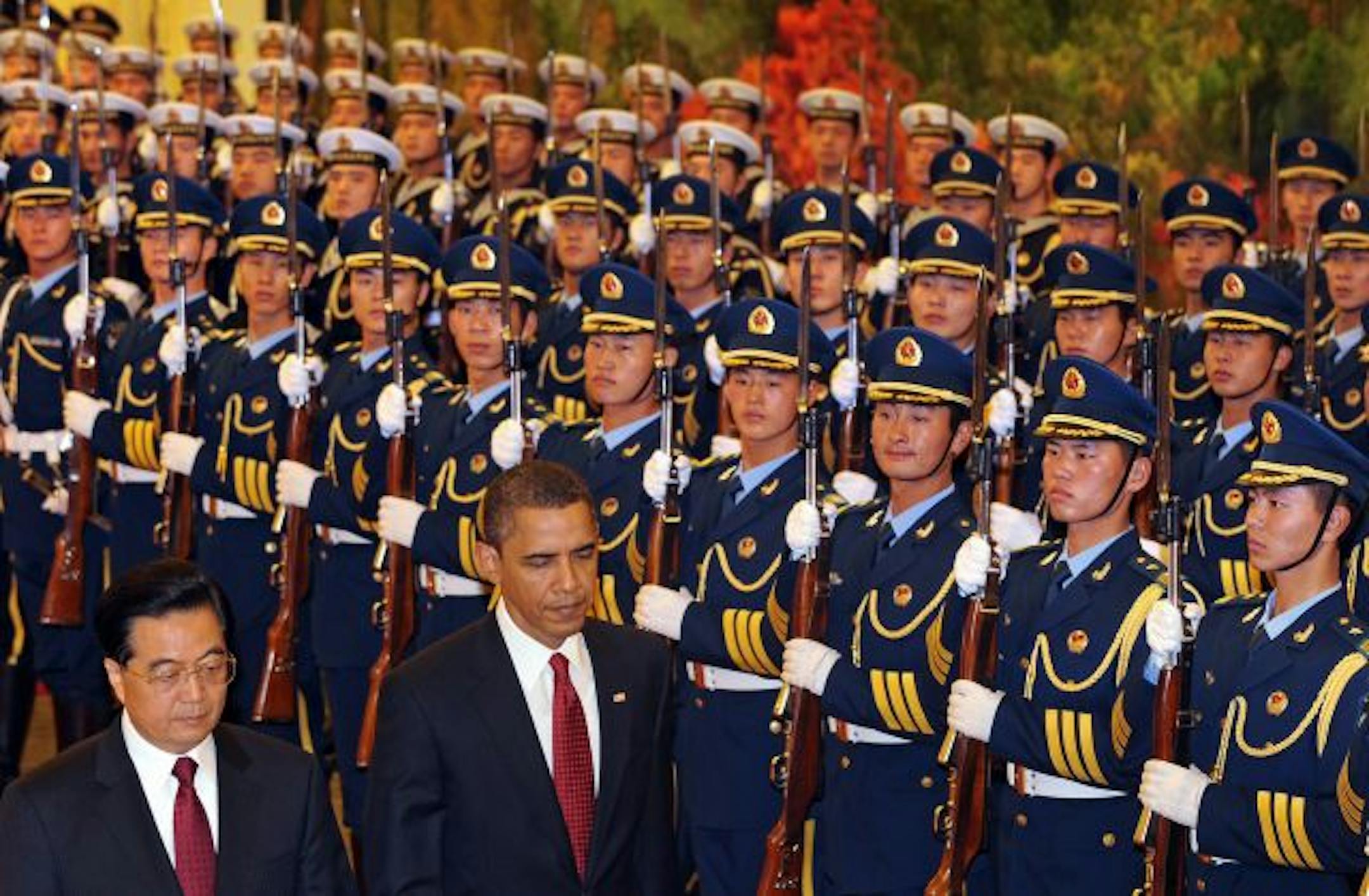
Since the dawn of geopolitics, there has always been tension between the world's greatest power and the world's greatest emerging power. No great power likes to cede its No. 1 spot. One of the few times the top power ceded its position to the No. 2 power peacefully was when Great Britain allowed the United States to surge ahead in the late 19th century. The basic reason seems cultural: One Anglo-Saxon power was giving way to another.
Today, the situation is different. The No. 1 power is the United States, standard-bearer of the West. No. 2, rapidly catching up, is China. If China passes America in the next decade or two, it will be the first time in more than a century that a non-Western power has emerged as No. 1. (According to economic historian Angus Maddison's calculations, China was the world's No. 1 economy until 1890.)
The logic of history tells us that such power transitions do not happen peacefully. Indeed, we should expect to see a rising level of tension as America worries more and more about losing its primacy. Yet it has done little to act on these fears thus far. It would have been quite natural for America to carry out various moves to thwart China's rise. That's what great powers have done throughout history. That's how America faced the Soviet Union.
So why isn't this happening? Why are we seeing an unnatural degree of geopolitical calm between the world's greatest power and the world's greatest emerging power?
It would be virtually impossible to get Beijing and Washington to agree on the answers to these natural questions, as there are two distinct narratives in the two capitals.
The view in Beijing is that the calm in Sino-American relations is a result of the extraordinary patience and forbearance shown by China. Chinese leaders believe they have followed the wise advice of Deng Xiaoping, the late reformist leader, in deciding not to challenge American leadership in any way or in any area. China has felt that it also has followed Deng's advice when directly provoked, by swallowing its humiliation.
Few Americans remember any instances of provocation; Chinese leaders remember many. In May 1999, during the NATO bombing of Yugoslavia, a U.S. plane bombed the Chinese Embassy in Belgrade. America apologized, but no Chinese leader believed it was a mistake.
Similarly, a Chinese fighter jet was downed when it crashed into a U.S. spy plane near Hainan Island, China, in April 2001. Here, too, China felt humiliated.


