

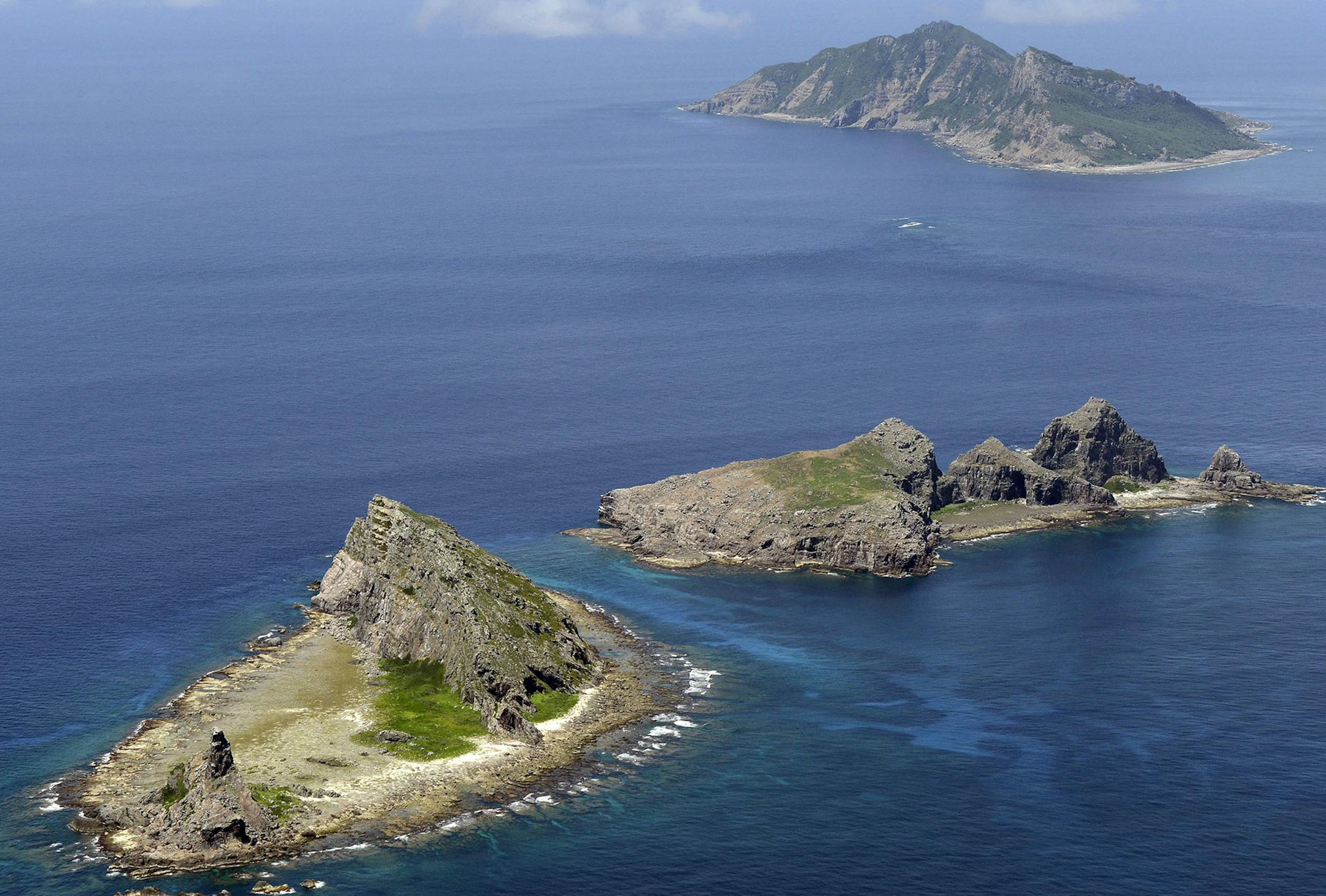
Writing for CNN.com in an article titled "US: China claim over disputed islands 'creates risks of incident,' " Chelsea J. Carter and Kevin Wang laid out clearly the rationale behind Japan's claim of ownership over the disputed islands, called Senkaku Island by Japan and Diaoyu by China. They write that "Japan says it saw no trace of Chinese control of the islands in an 1885 survey, so formally recognized them as Japanese sovereign territory in 1895."
In "Did China make strategic error with air zone?" (also for CNN.com), Michael Mazza argued that China should just be satisfied with the "reality of Japanese control of the islands."
So, if I were to go over to my neighbor's empty house, I can just take it over? And when the rightful owner comes back, I can refuse to let him in due to the "reality" of my control over the house?
If a Chinese plane flies over the disputed islands today, it will not find any Japanese there. Can China, then, just take over the islands with the same logic? Why was Japan surveying land that it did not own in the first place?
It is mind boggling that China is deemed in America to be the aggressive party in its assertion of sovereign rights over the disputed islands.
Let's look at some facts. In a recently discovered edict from the Empress Dowager of the Qing Dynasty — dated October 1893 — the empress granted the three islands in dispute to one of her officials, Sheng Xuanhuai, in reward for giving her medications that made her feel well again.
So, seven years after the supposed survey, China was still in control of the territories. Sheng lived to 1916 and therefore still had legal right to the islands 21 years after the Japanese took it over illegally. It was entirely possible that Sheng did not build a house on the island, possibly because it was far away and required traveling by sea. However, did that give the Japanese government the right to take it over while he still owned it?
In an article titled "Why Asia is arguing over its islands," author Christian Le Miere provided a valid historical reason for the disputes among China and its neighbors: "These disputes are usually viewed in isolation, but there are similarities that they all share. Although claims of occupation and administration stretch back centuries, all of the disputes exist, to some extent, as legacies of Imperial Japan's expansion through East Asia in the first half of the 20th century, and its immediate withdrawal following its defeat in World War II. Before this period, most of the states in East Asia were too militarily weak to enforce their claims; some were entirely occupied by imperial powers, and the modern international concepts of territorial sovereignty were arguably still alien to the region."


