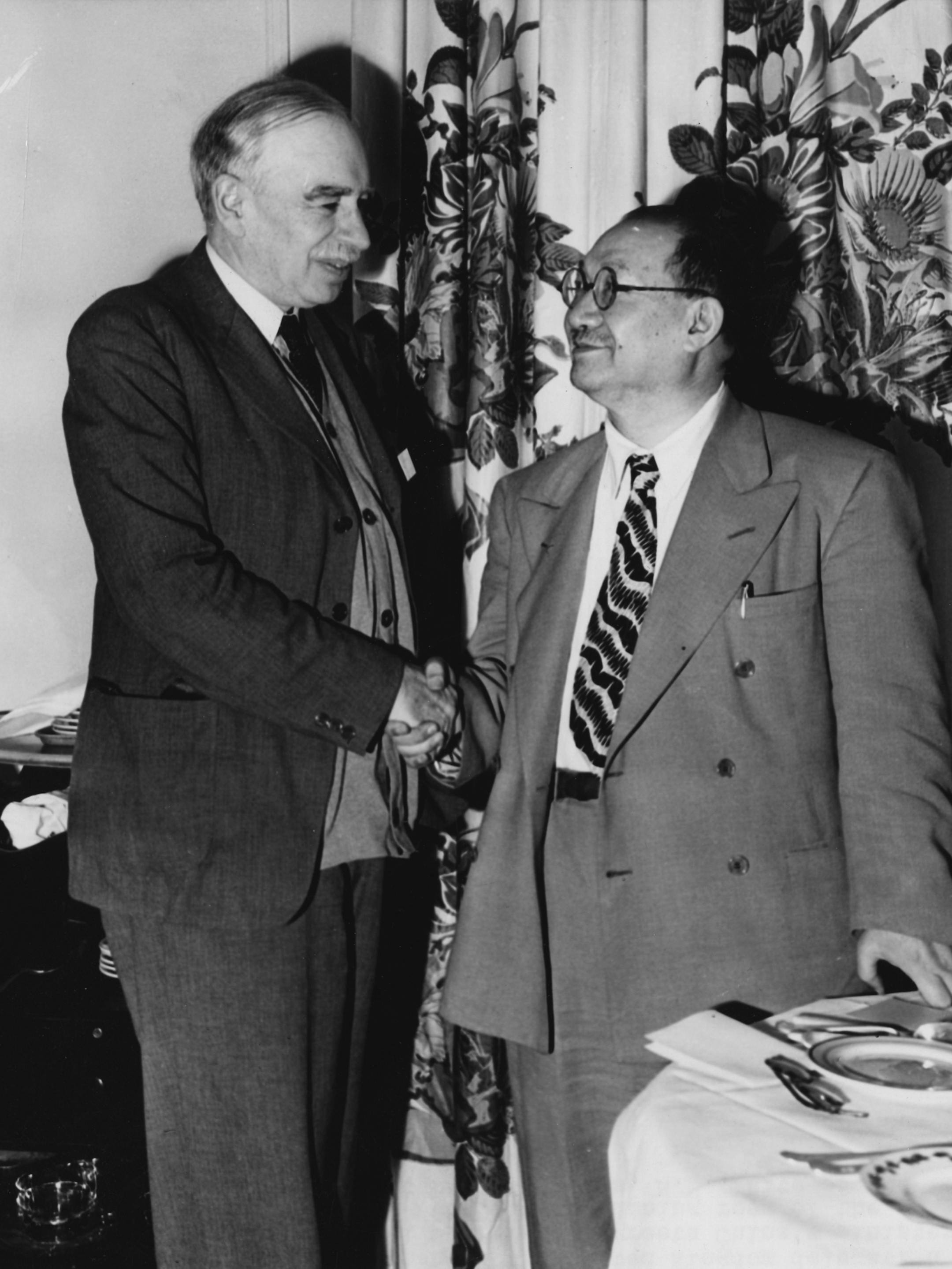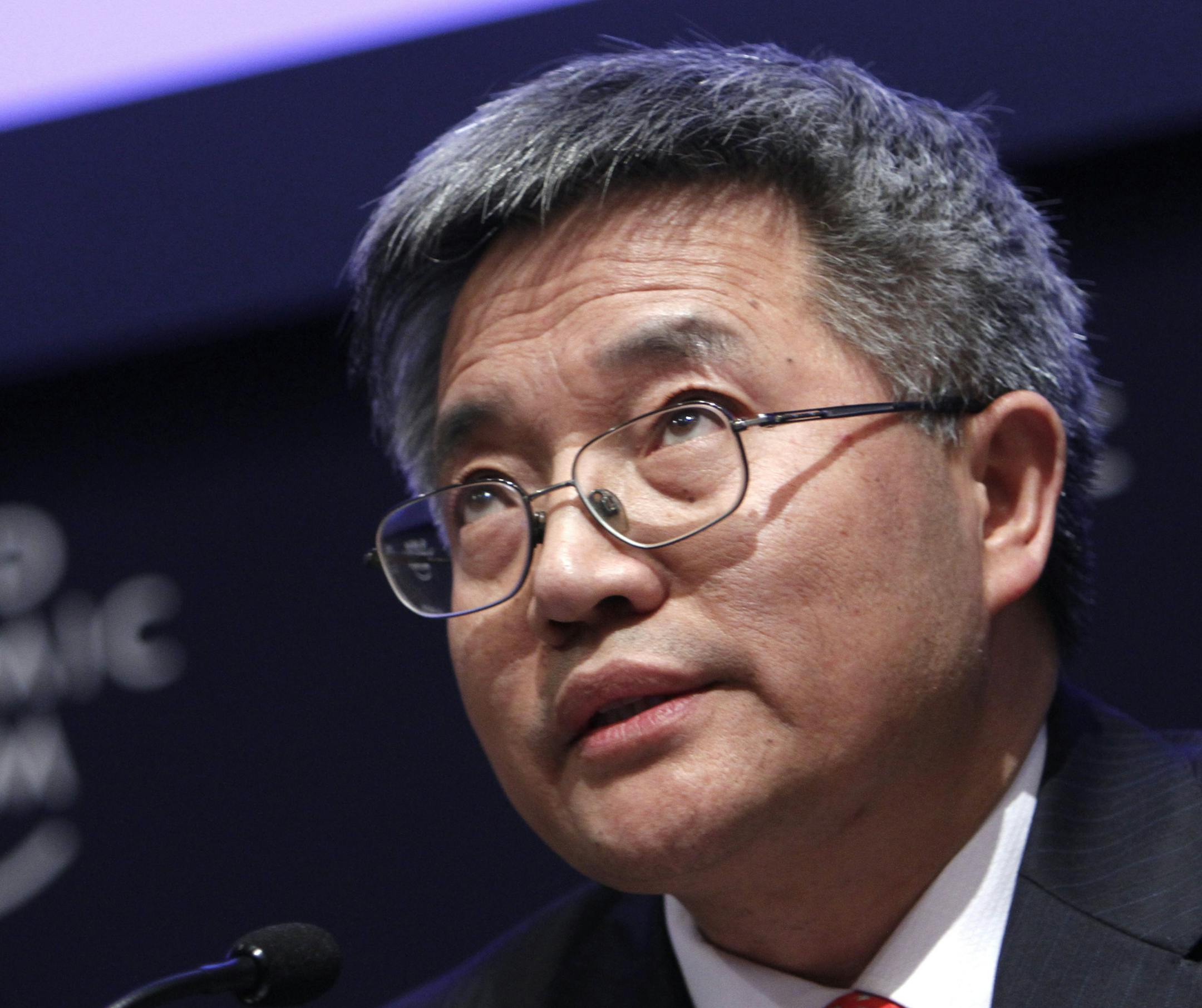
It is not quite Keynes-Hayek, but Lin-Zhang is a marvel in its own right.
Perhaps the most famous debate in the history of economics was that between John Maynard Keynes and Friedrich Hayek — a clash over the benefits and perils of government intervention that exploded in the 1930s and still reverberates today.
It has echoed around Chinese lecture halls in recent months. Justin Lin, a former chief economist of the World Bank, who leans to Keynesian faith in public spending, has squared off against Zhang Weiying, a self-professed Hayekian who doubts bureaucrats can ever beat the free market.
Like their predecessors, Lin and Zhang have been sparring for more than two decades. And whereas Keynes and Hayek were down the road from each other (respectively, in Cambridge and London), the Chinese professors are now only a few paces apart, both at the prestigious Peking University. Their latest debate has been one of their fiercest, becoming a talking point for the domestic press, other academics and even officials.
At issue is one of the big questions facing China's economy: Does industrial policy work? The idea that the government can champion specific industries is central to Chinese policy. Officials have long favored different sectors, from textiles in the 1980s to renewable energy this decade. China's growth record would seem to vindicate this. But critics disagree, arguing that favored companies produce little innovation. The prominent airing of the Lin-Zhang debate reflects concerns as debt levels rise and the economy slows.
Zhang kicked things off in August with a speech on why industrial policy is "certain to fail." The core problem, in his eyes, is the limits of human cognition. State planners may think they know which technologies will be important, but they are gambling. In the 1990s, for example, the Chinese government spent vast sums building a television industry, only for cathode ray tubes to become outdated. Zhang also worries about incentive problems. The safest choice for local officials is simply to follow the central government's direction, but that leads to the kind of overcapacity that has plagued China's solar-panel industry.
For Lin, such views are almost heretical. Much of his work has revolved around the idea that countries can succeed by promoting industries that play to their comparative advantages. Early innovators take big risks and may not be rewarded; the government needs to encourage them by building infrastructure and giving tax breaks. And because resources are limited, it should help identify which industries are most important. China, Lin insists, is a model of this approach.
Others have piled on to the debate, often trying to find a middle ground. Huo Deming, a leading economist, highlighted their different perspectives: Zhang focuses on policy failures and Lin on market failures. Daokui Li, another high-profile economist, noted the irony that government support has been critical to China's growth, but that the best companies rarely start with state backing. An official with the National Development and Reform Commission, a central-planning agency, cryptically acknowledged the need to "adjust" industrial policies in line with China's more challenging economic backdrop.