

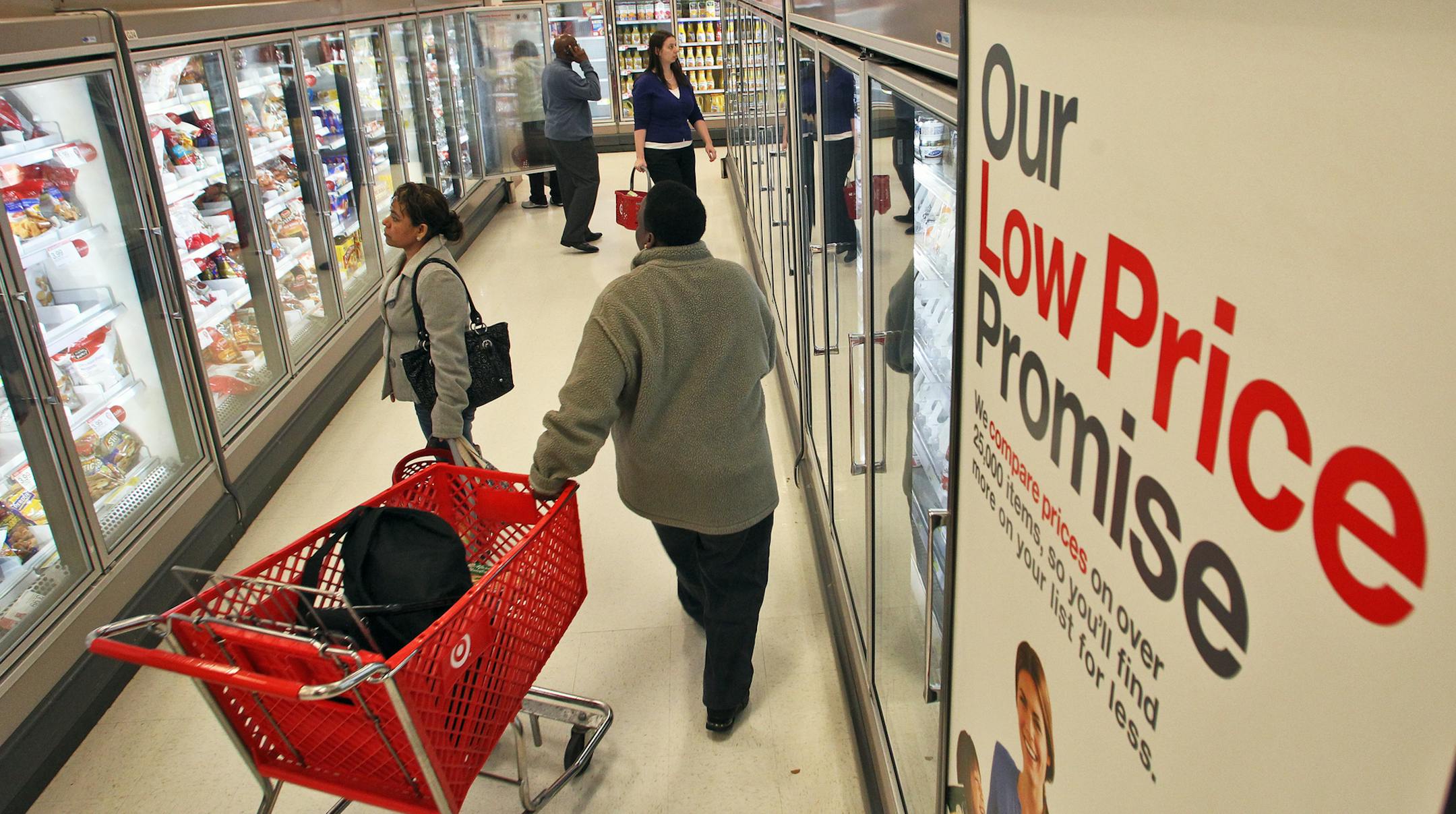
Like increasing numbers of grocery shoppers, Ty Rushmeyer doesn't have a regular store.
The 28-year-old and his wife go to Rainbow once a week, but they also stock up their pantry at Target. Then there are "fun runs" for unique products at Trader Joe's, Whole Foods, an Asian market, the Wedge Co-op and, in season, the farmers market.
"We're looking for healthier options," Rushmeyer said. "But we're also deal seekers. We know which store has the best price for each item."
Welcome to the new grocery landscape, in which traditional grocers like Cub Foods and Rainbow are less able to count on loyal customers who buy everything they need in one visit. Instead, shoppers are spreading their money around and constantly looking for deals.
It's a dynamic that complicates a competitive landscape for Cub Foods, the grocery market leader in the Twin Cities. Supervalu, Cub's parent company, is leaning on the Cub brand to help revive its fortunes after it recently sold several major chains but kept Cub. Just last week, Eden Prairie-based Supervalu said it was cutting 1,100 corporate jobs to get its head count more in line with the company's reduced size.
But Cub and primary rival Rainbow are getting squeezed, not only by Target and Wal-Mart, but also by co-ops, farmers markets, specialty gourmet stores, Aldi, dollar and drugstores. Rainbow recently closed its Forest Lake store and soon will shutter locations in Robbinsdale and Plymouth.
"Consumers are constantly comparing from retailer to retailer," said John Rand, a supermarket analyst for Kantar Retail in Cambridge, Mass. "If a store starts to slip because its prices are out of line or quality is suffering, people will quickly move on."
Cub Foods held 21 percent of the Twin Cities grocery market in 2012, according to data from Metro Market Studies, but that share has shrunk from 24 percent in 2006. In 2012, Metro Market estimated that Target and Rainbow each had 12 percent of the market.
![Richard Sennott•rsennott@startribune.com] Volunteers check out grocery orders at Cub Foods Store to Door is a non-profit grocery delivery servive for elderly shutins. volunteers shop from their lists, then delivery coordinators bring the food into the kitchens. There's a real relationship developed here, and enables seniors to maintain some independence in their meals ORG XMIT: MIN2013032912380021](https://arc.stimg.co/startribunemedia/X6QCEECATQYINETYJAIBIEZOTQ.jpg?&w=1080)



