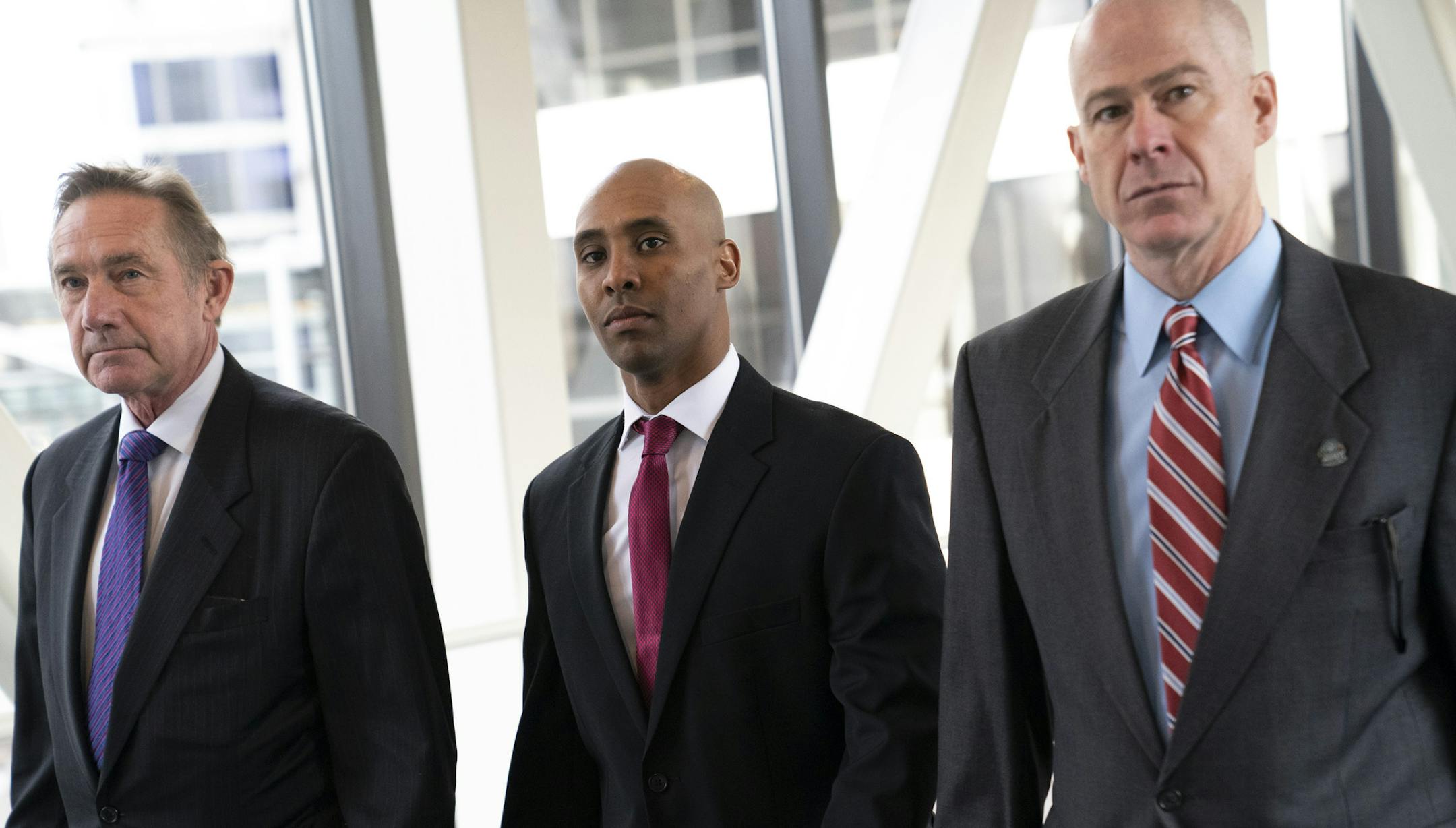
The judge presiding over the murder trial of former Minneapolis police officer Mohamed Noor is scheduled to hear arguments Friday afternoon from attorneys representing a coalition of media partners challenging her decision not to show some body-camera footage or autopsy photos to the public gallery at trial.
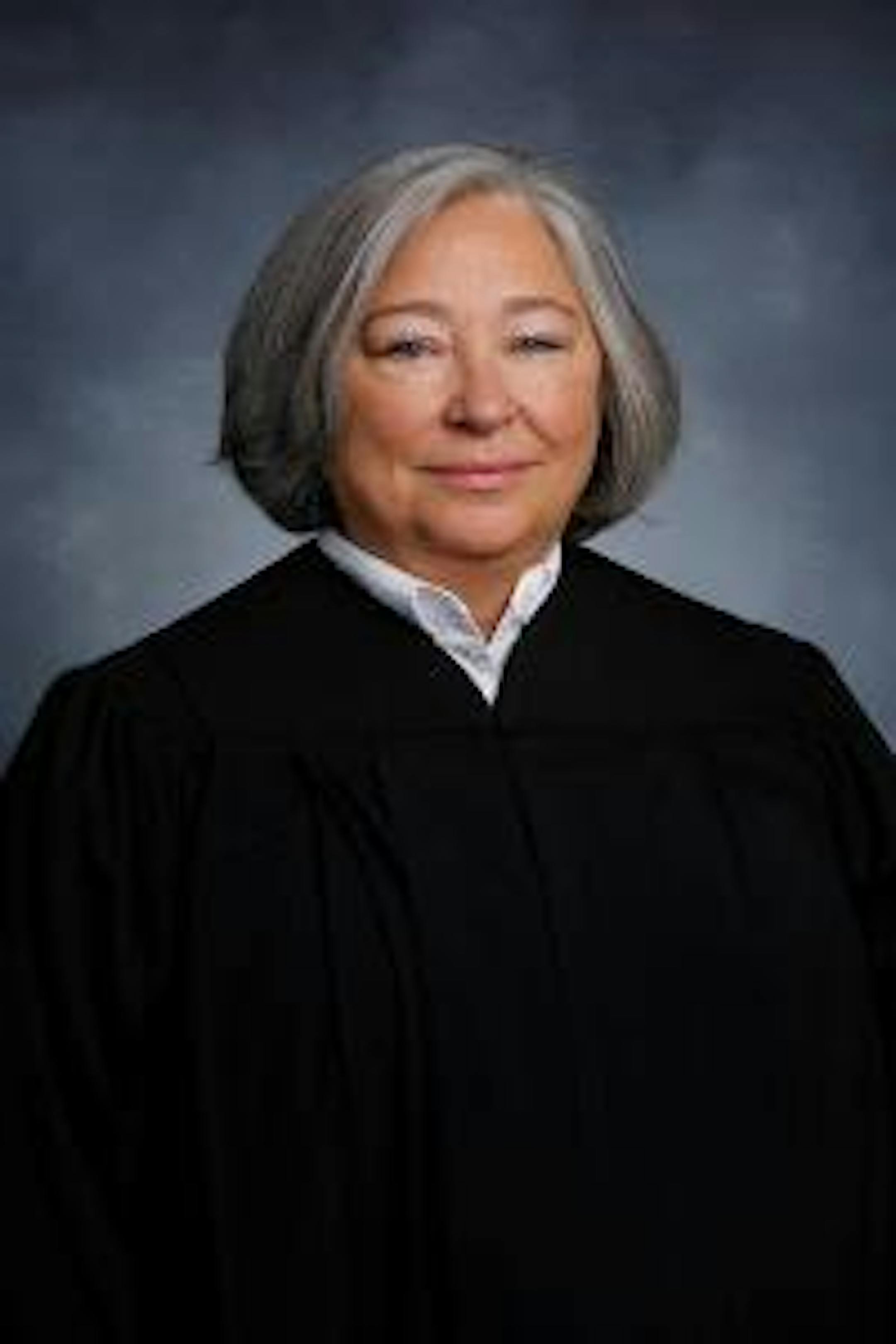
The defense, prosecution and Hennepin County District Judge Kathryn Quaintance, who is presiding over the trial, hashed out details and legal arguments on the matter Thursday afternoon following a morning of jury selection. The defense said it did not want to attend Friday's 3 p.m. hearing, which raised concerns about the potential impact on Noor's constitutional rights to a public trial and due process. The defense attorneys' posture was eventually overruled by Quaintance, who ordered their attendance.
"It is crucial to the case," Quaintance said of the videos in question. "It is highly emotional and will be possibly one of the most dramatic moments of the trial. It is footage of a human being dying."
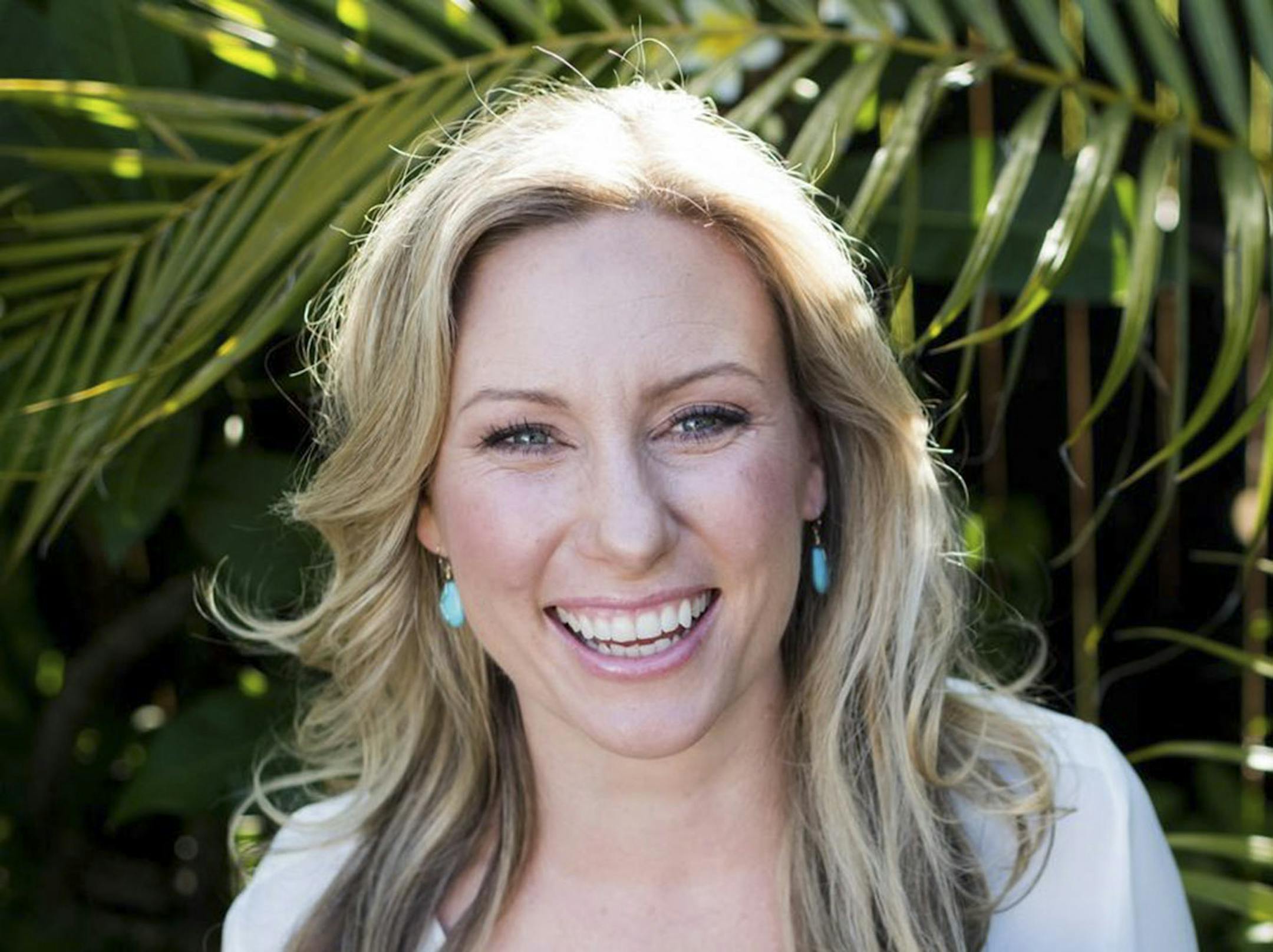
Noor, 33, is on trial for fatally shooting Justine Ruszczyk Damond, 40, on July 15, 2017 after responding to her 911 call about a possible sexual assault in the alley behind her south Minneapolis home.
The judge had ruled at a March 29 motion hearing that body-camera footage that Noor and his partner, Matthew Harrity, recorded immediately after the shooting would be shown on a TV screen with its back turned to the public gallery. Two body-camera videos taken by other officers at the scene and autopsy photos would be displayed the same way, the judge ordered at the time, citing "privacy interest" and depictions of "the deceased in extremely compromising situations."
Quaintance said Thursday that the videos show Noor giving CPR to Damond and Damond dying. Later in the day, she ruled in favor of the prosecution's request to prohibit the admission of evidence and testimony about the long-term psychological effects of a police-involved shooting on an officer. The defense responded that it only intended to show how the shooting had affected Noor at the scene, writing in a court filing that Noor's "immediate response" was of "an officer distraught by his actions."
"He pled for [Damond's] life and when asked by Officer Harrity, he performed CPR until the first responders arrived," the filing read.
On Tuesday, a coalition of local print and broadcast news organizations filed their objection to the March 29 ruling, arguing that the First Amendment and common-law rights of access to criminal trials prohibit Quaintance from prohibiting public viewing of the body-camera footage.