

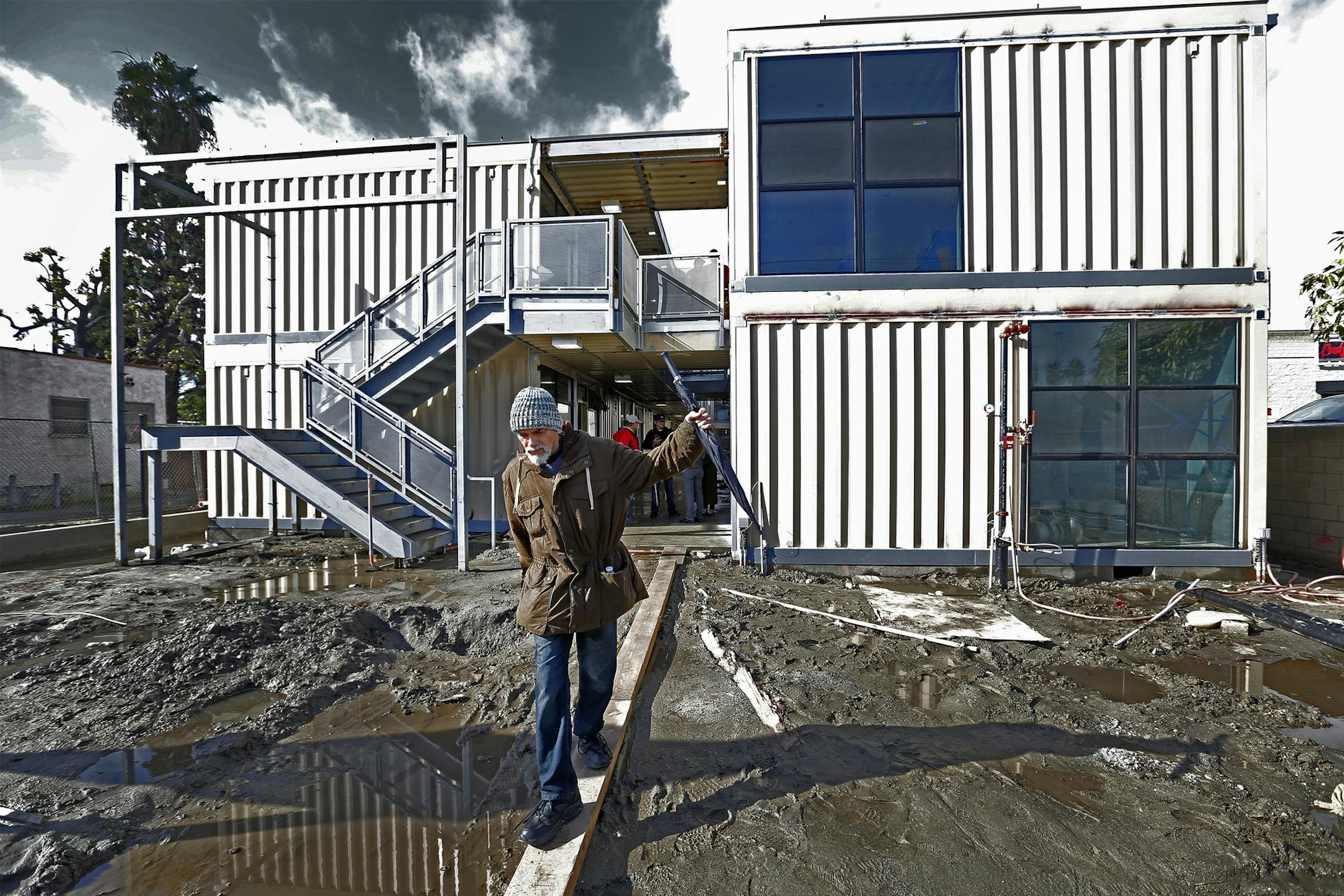
ORLANDO — Central Florida might soon become one of the few places in the nation using metal shipping containers to build affordable apartment complexes.
JPMorgan Chase funded $600,000 so that the nonprofit Crisis Housing Solutions could launch about two dozen units expected to rent for less than $1,000, about three-fourths the median rental rate of $1,300 in Orange County, where the county seat is Orlando. Now the nonprofit is scouting for a site with at least a half-acre in metropolitan Orlando, particularly near downtown or in Kissimmee, Fla.
"I think there are a lot of people out there who really like the idea," said University of Florida adjunct architecture professor Stephen Bender, part of the nonprofit's team. "What we don't have in Florida are these chic industrial apartments. They have a certain funkiness, a certain authenticity."
Project backers said the metal-frame apartments, 40 feet long and 8 feet wide, are aimed at millennials, baby boomers and anyone else on a budget and seeking nontraditional living quarters. Government subsidies aren't part of the plans, they said.
"We have a young workforce, young talent and college graduates. When and if they get a job, they can barely afford to get a place," Crisis Housing co-founder Craig Vanderlaan said. "They are leaving the state. Senior citizens are having a hard time finding affordable housing too."
Shipping-container houses, shops and workspaces are more common in urban areas of Europe and are beginning to emerge in a few U.S. markets. In Orange County, Calif., the nonprofit American Family Housing built a two-story shipping-container apartment complex for veterans. It has 16 units, each smaller than 500 square feet. Las Vegas has a container-built shopping center. And in Florida, a restaurateur in Miami's Wynwood community used containers to build an eatery for 25 patrons. Bender designed two houses built in the Gainesville, Fla., area.
The relatively new concept in residential construction anchors the shipping containers to a concrete pad. Generally, the sides of two units are connected and the adjoining walls removed to open up 640 square feet of living space. An internal support system is key to the structures, which can also feature balconies, overhangs, windows and new walls for bedrooms and bathrooms. The projects are generally three stories or fewer. For the units proposed in the Orlando area, the size could double to offer three-bedroom units.
Construction costs are less because of savings on labor and materials, which enables Vanderlaan to estimate rent at less than $1,000.



