

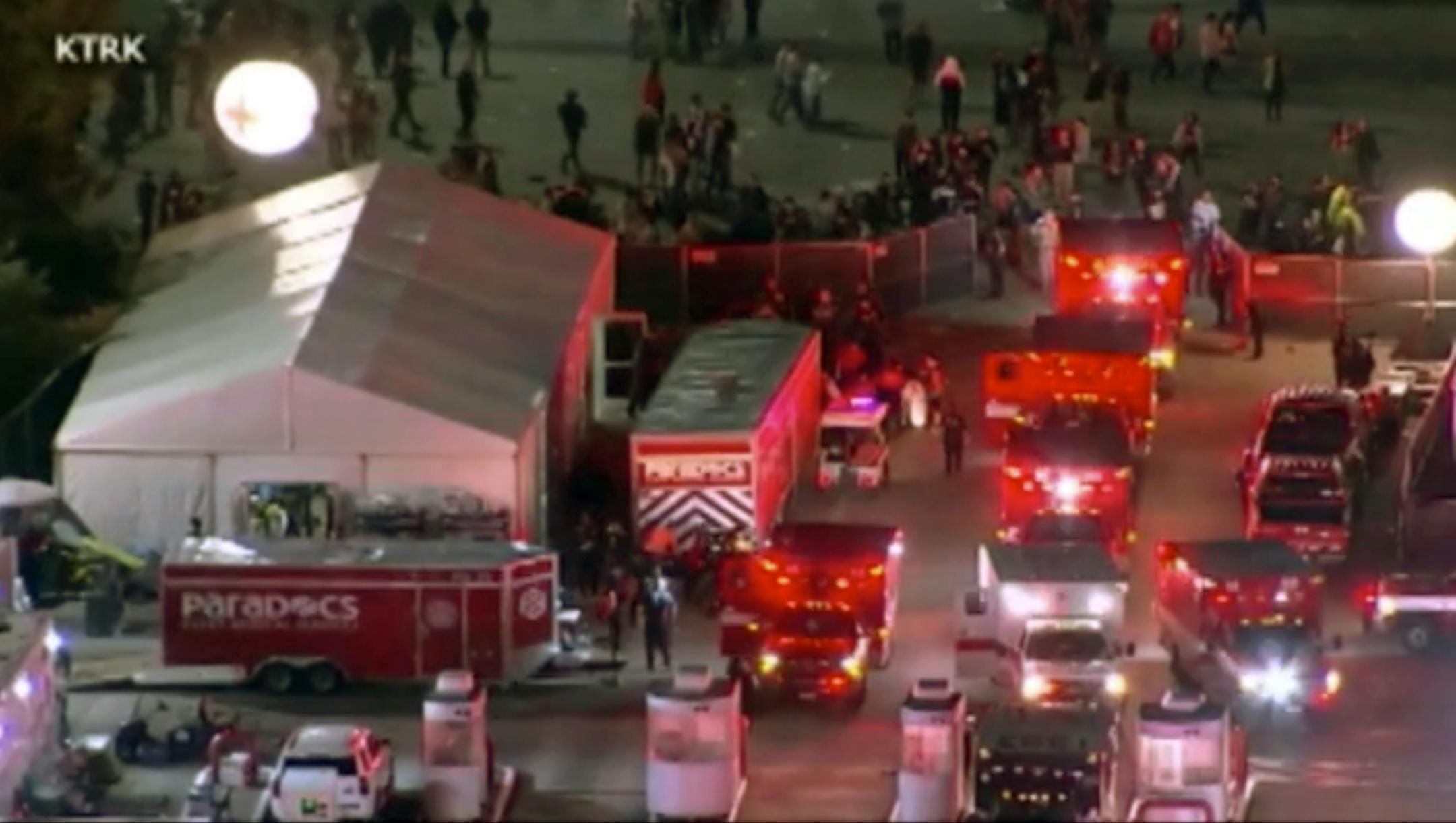
There is still much to learn about the horrific events Friday night at the Astroworld festival in Houston, which resulted in at least eight deaths (including two college students from Naperville and teens as young as 14 years old), along with hundreds of injuries. But let's all be clear about one thing: The continuation of the Travis Scott concert for a prolonged period after it became clear some of the young people in the audience were being crushed was unforgivable.
Precisely who was to blame for that decision, and when and to what degree the artist on stage could have known what was transpiring and its scale, will be something for investigators and courts to find out. But it's already clear there was no adequate emergency communication between those aware of what was transpiring on the crowded floor and the stage.
It certainly appears that the crush of people compounded difficulties faced by emergency services needing access to the injured and that some fans tried desperately to get attention from the production staff for the unfolding human catastrophe but went unheard for too long.
Scott's ebulliently interactive concerts are famous for whipping attendees into a kind of free-flowing euphoria. His young fans adore such experiences, but we should have all been far more cognizant of the perils of thousands of unseated fans at high-energy public events, where perceived rewards accrue from pushing toward the front or enjoying the feeling of losing oneself in a ecstatic wave of like-minded people, moving together like a serpent.
History offers lessons.
The most obvious one is the infamous concert by The Who at Cincinnati's Riverfront Coliseum in 1979, where a stampede among general-admission attendees rushing for the best spot resulted in a nightmare that killed 11 people. That event, which came after prior crowd-control issues at a Led Zeppelin show some two years earlier, led to a realization that concerts that had nonreserved seating had baked-in dangers. Thereafter, Cincinnati banned so-called "festival" seating, only to see that decision overturned some 24 years later.
These days, general-admission seating at concerts is common practice again. At Scott concerts, as at many others, die-hard fans, especially teenagers, aren't interested in seats. They want to be on their feet in the crowd, swaying and moving with Scott as the conductor. Scott's concerts are, to some degree, like amusement-park rides, and that's the thrill for sale.
We've all apparently forgotten what happened in Cincinnati. And at a soccer game in Sheffield, England, in 1989.


